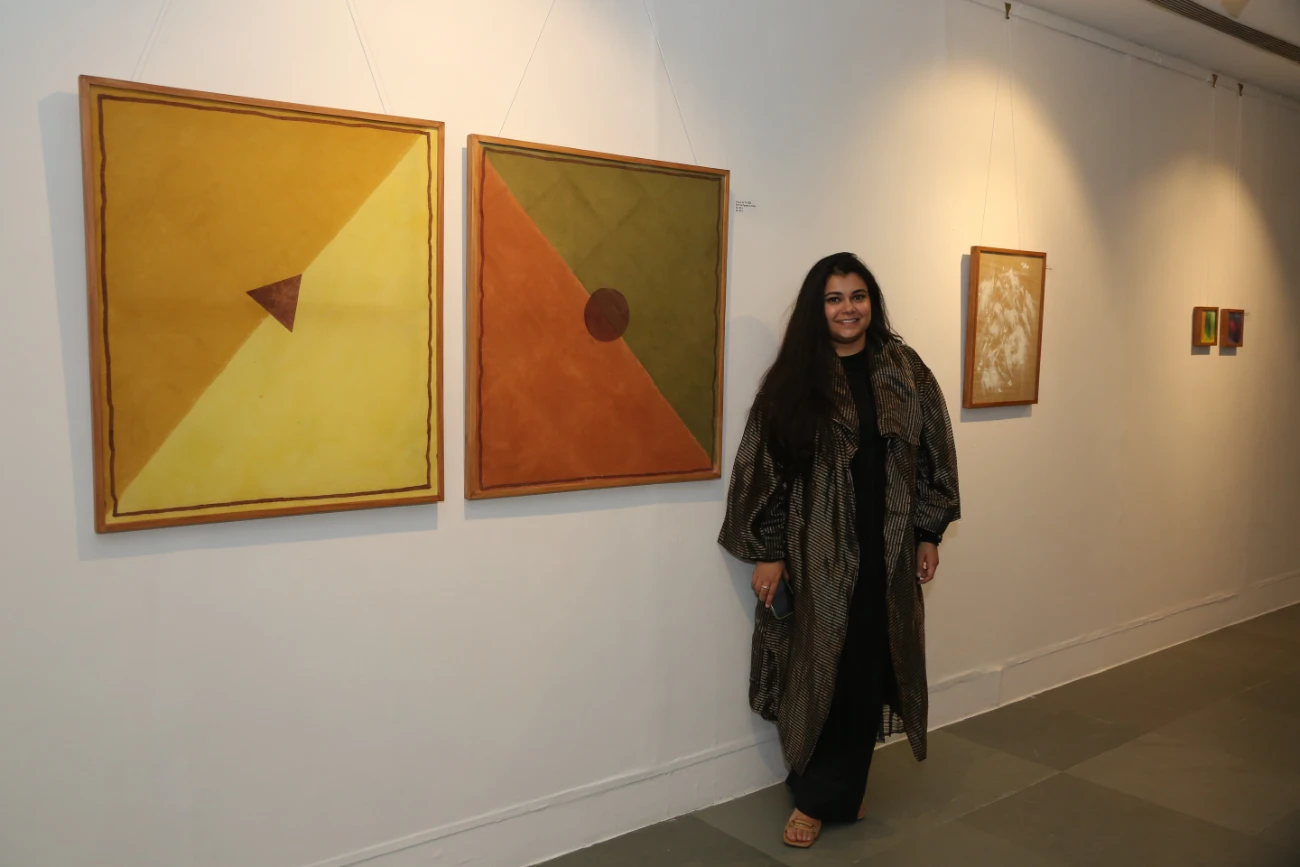
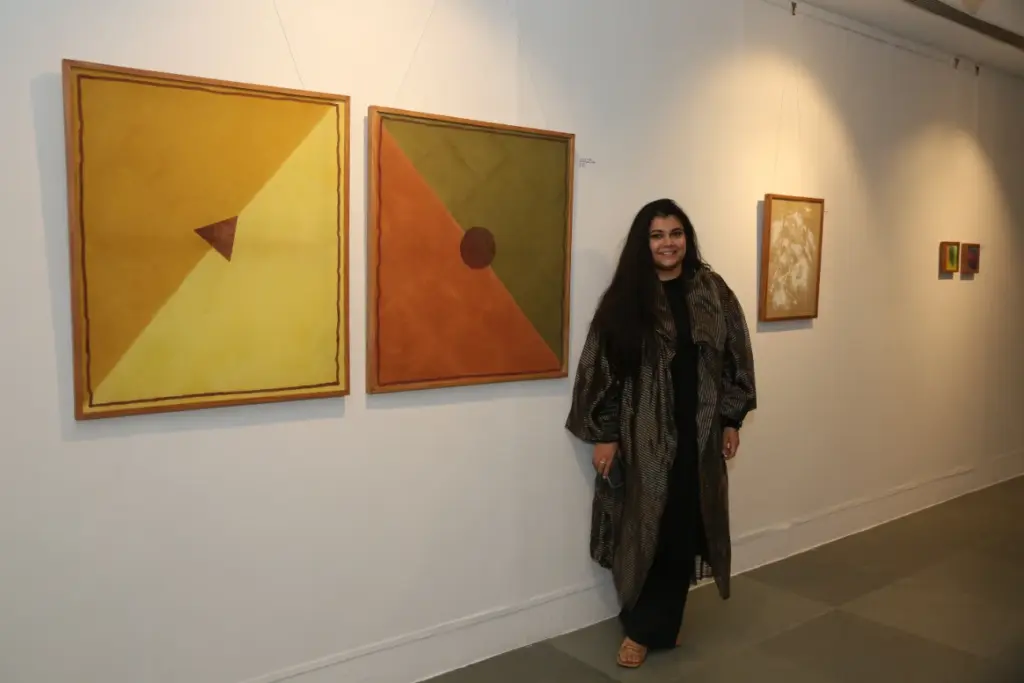
What happens when an artist spends three months walking a city with a camera before she touches a single piece of cloth? For Sayali Goyal, textile art begins with place: a street, a community, or a colour that refuses to leave her alone. Trained in textiles at University of the Arts London and later in anthropology, she works between Delhi and London as a visual artist, ethnographer, author and founding editor of an independent print magazine on material culture. Her abstract works on textile and paper, including the series Ether and Indigo, grow out of genuine collaborations with artisan communities, from Jaipur’s block printers to embroiderers in Punjab.
Her work has been shown at the Japan Foundation, the British Council and the Nehru Centre in London, among others. Yet her conversation with SST’s Head of Centre, Gail Cowley, is refreshingly unguarded. Sayali talks about the block printer who was convinced she was doing it wrong, the ethics of documenting other people’s crafts, and why she still hesitates to call herself an artist after fifteen years of practice. For anyone who has wondered where research ends and making begins, this episode offers a wonderfully liberating answer.
Textile Talk with Sayali Goyal
The episode is also available on Spotify, Apple Podcasts and all major podcast platforms.
Listen to the Podcast episode here >>
Or watch this captions on YouTube
How a Decade of Documenting Craft Shaped Sayali Goyal’s Textile Art
Creative arts were part of Sayali’s school life in Delhi, encouraged by a mother who loved making, painting and culture. By the time she left for London to study, majoring in textiles on a design course, she already knew which direction her career would take. Yet it was London, with its museums and its mix of cultures, that showed her the true value of what she had grown up surrounded by: India’s extraordinary handmade heritage.
After graduating, she worked in design and launched a print publication that quickly became a vehicle for primary research, travelling to interview communities and record their crafts. Around a decade later, she chose to study anthropology formally, to “unlearn and relearn” what she already knew. In the episode, she explains how ethnography did not replace her instincts so much as sharpen them, giving her a new lens on work she had been doing all along.
For listeners inspired by Sayali’s decision to return to structured study, SST’s City & Guilds accredited courses offer a tutor-supported route into textile art at Skill Stages 2, 3 and 4. Find out more at sofst.org/courses.

Two Hundred Conversations for Two Collaborations: Fieldwork Built on Trust
Sayali’s magazine, Coco and Jasmine, has been published annually since 2017, without advertisers and with Sayali herself as its only full-time team member. Each issue takes at least six months of groundwork before she travels. She tells Gail that she may contact around 200 people before two collaborations come together.
That patience is deliberate. Sayali always establishes a relationship with someone in the community before she arrives, makes sure people are paid for their time and credits their culture on every platform. She carries a copy of the magazine so people can see exactly how their stories will be told, and she leaves the big cameras at home in favour of a phone or a small camera that feels less intimidating.
Listen for her stories from the Omo Valley in Ethiopia, the beading and natural dyeing communities around Cusco in Peru, and a wool and knitting retreat in Iceland. Having worked with communities in every Indian state, her conclusion is simple: people fundamentally want to connect.
The Block Printer Who Thought She Was Doing It Wrong
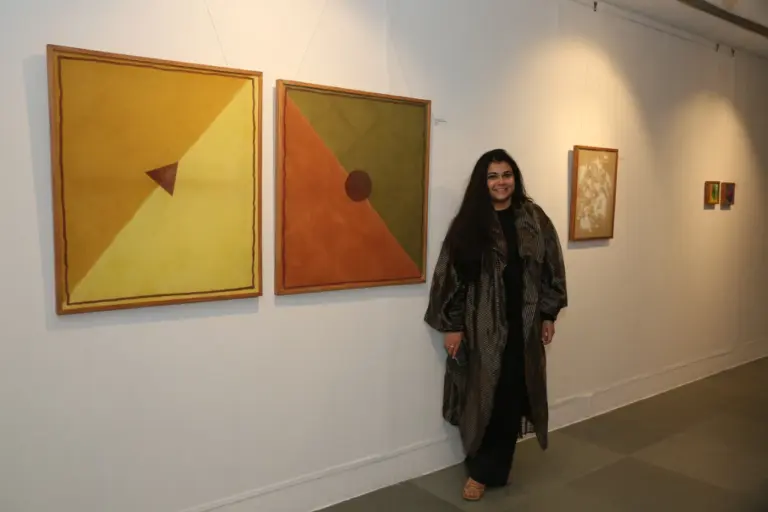
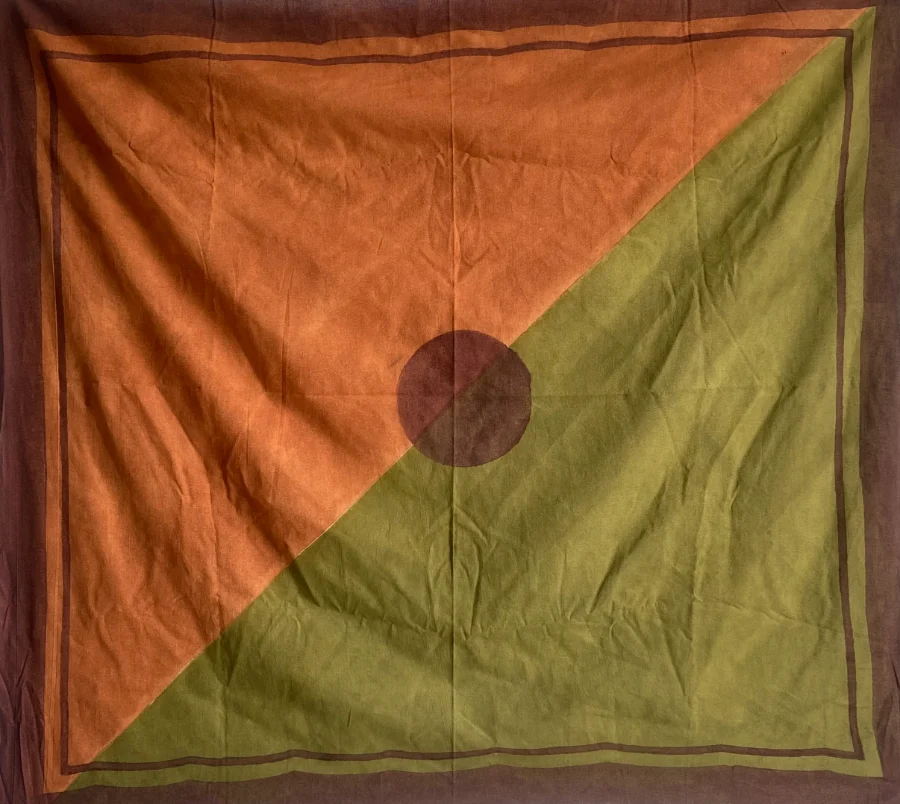
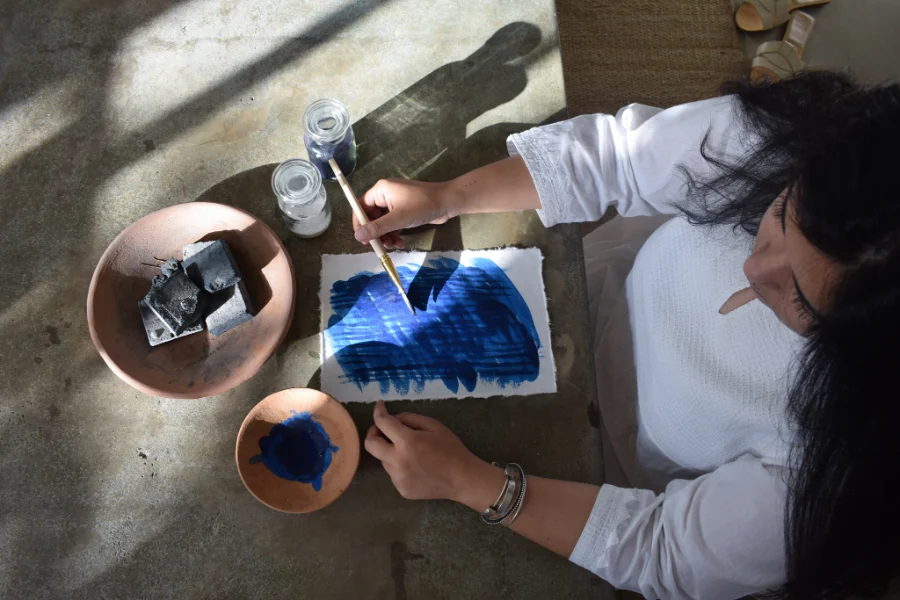
Ether began with a question. Jaipur is famous as the Pink City, so Sayali spent three months walking its old city documenting every other colour she could find. The result was a photographic book that mapped the city by colour. Most strikingly, she then took that palette to one of Jaipur’s block printing communities and commissioned them to make pigments to match.
Working in their studio, she hand painted on textiles, using a single symbol from tantric painting as a block in each piece. Beyond the colour palette, nothing was planned. She arrived with plain white fabric and simply began.
Her collaborator was baffled at first: no repeat pattern, no symmetry, no traditional method. Sayali describes, with real warmth, how he came to enjoy the intuitive, free-flowing process, and how she in turn respected his insistence on certain rules. It is a fascinating glimpse of the moment craft and art meet, and of a series she holds close because it brings together her two great inspirations: colour and spirituality.
Indigo, Safed and the Colour She Made for Years Without Noticing
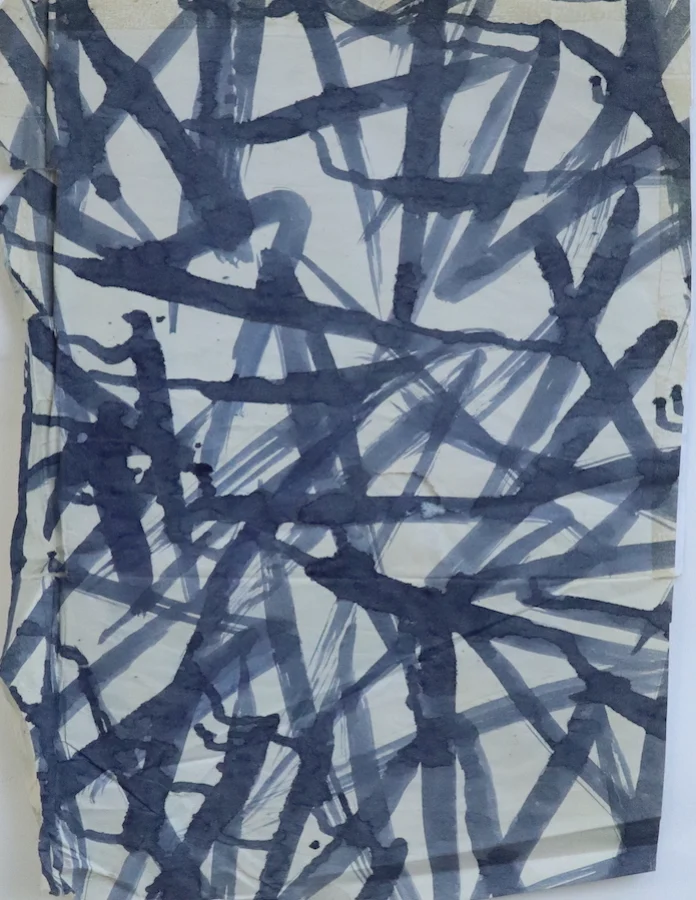
Some of Sayali’s indigo works date back to 2008 and 2009, long before she knew much about indigo as a material. It was only when she dyed textiles during a residency in Jaipur, and began gathering work for an exhibition, that she realised she had been making indigo pieces, almost subconsciously, for ten years. The colour is still pulling her forward, with an indigo piece in progress for a forthcoming UK museum exhibition.
Gail shares that one of SST’s own tutors recently travelled to Japan to learn indigo dyeing, which opens up a lovely exchange about how this dye connects cultures across Asia and Africa.
In contrast, her installation Safed, meaning white, gathered handspun and handwoven khadi in cotton, wool and silk from across India. By removing colour entirely, Sayali invited viewers to experience texture, and to see a minimal, Gandhian side of Indian aesthetics that challenges the maximalist stereotype.
Why Walking Through a City Counts as Research
This part of the conversation will resonate with every SST student who has ever rushed through research to reach the making. Sayali admits she works backwards. Rather than setting a research timeline, she lets material accumulate naturally through travel, conversation, photography and a daily journal, then returns to it when she feels ready to make.
Her book, Everyday Indian Aesthetic (2024), grew exactly this way. A decade of photographs taken while travelling became a curated visual dictionary, organised around architecture and interiors, objects, adornment and typography. She deliberately left out place names so readers would notice the connections between cultures, rather than reaching for regional stereotypes.
Perhaps most usefully, she offers a gentle challenge to rigid frameworks: talking to someone, walking in a new city, taking photographs and reading are all valid research methods. Listen for how she is now experimenting with dry pastels and screen printing from film photographs, too.
Craft, Art and the Courage to Call Yourself an Artist
Is textile art finally being taken seriously by the fine art world? Sayali believes so, and explains how shifts in patronage, curating and criticism have fuelled a growing market for textile work in India. She is equally clear about the responsibility that comes with it: craft only becomes art through genuine artistic intervention and ethical collaboration with the makers involved.
She also reflects on how the same work is read differently in the US, the UK and India, before answering a question many SST students quietly ask themselves. Even after fifteen years of practice, she admits that she struggles to call herself an artist. Her advice is to stop waiting for external validation, because, as she puts it, “anybody who feels like an artist is an artist.”
Looking ahead, Sayali shares plans for her next magazine issue, a museum exhibition of work made with artisans in Punjab, a new book, her Punjab craft residencies and a long-held dream of opening her personal textile collection to the world as an archive.
Hear the Full Conversation
There is so much more in this conversation than we can share here, from language barriers at a Mexican loom to the joy of a studio full of collected treasures. Settle in with a cup of tea and listen to Sayali Goyal on Textile Talk, available on Spotify, Apple Podcasts and all major podcast platforms, or directly via the link below. It is a conversation that may change how you think about research, collaboration and your own creative practice.