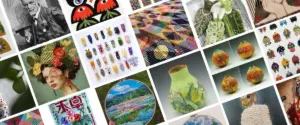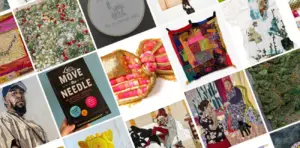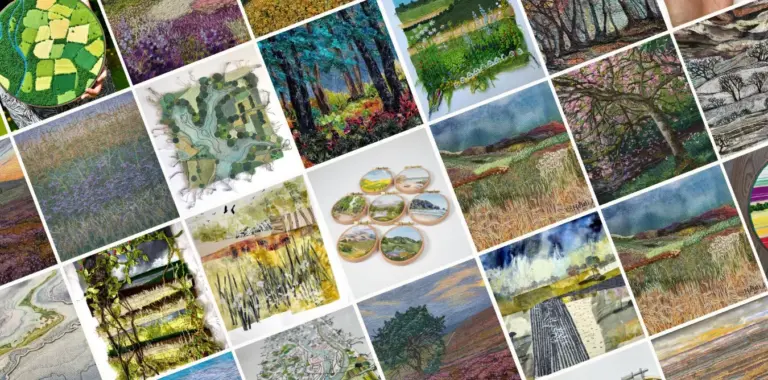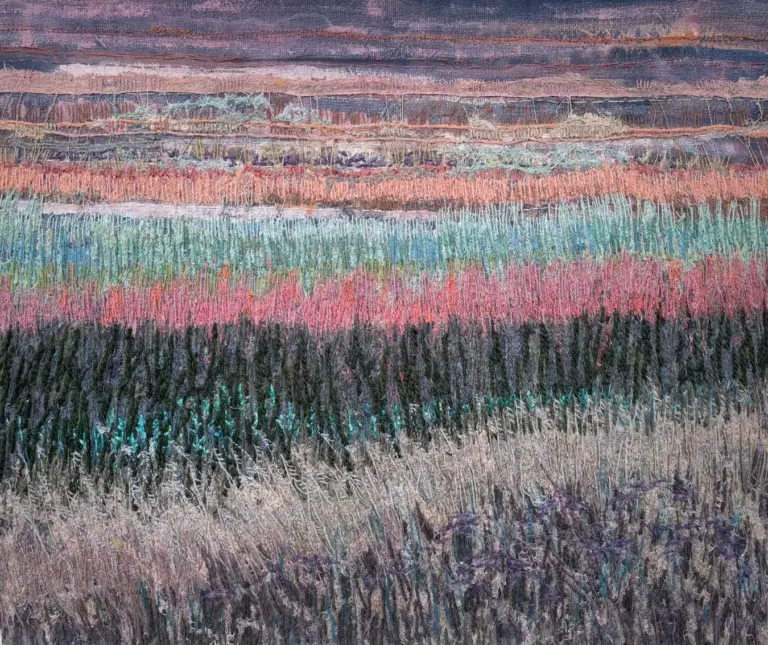
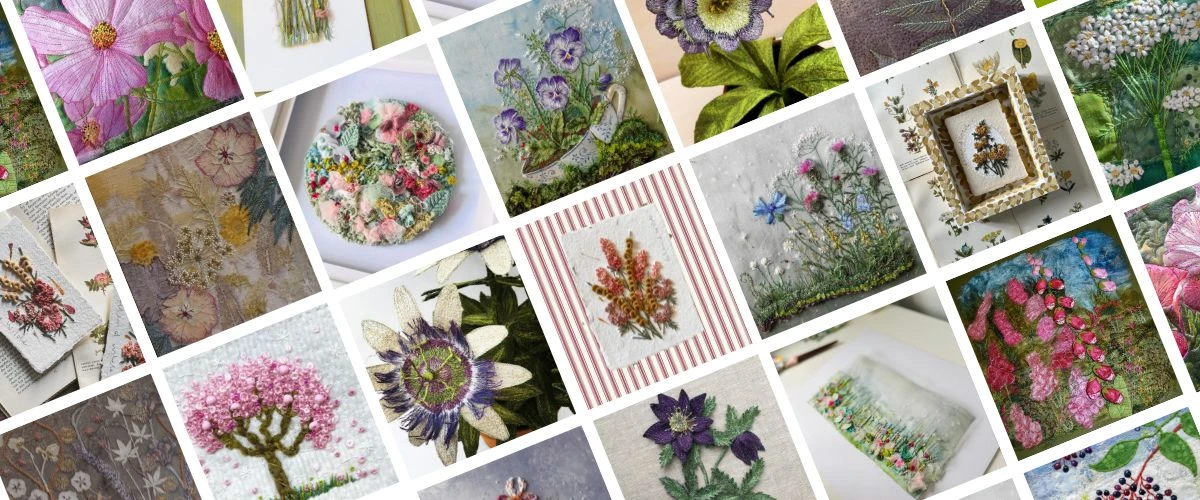
From the jewel-bright geometry of a seedhead to the papery translucence of a poppy petal, plants have long inspired textiles and have been a common theme through the history of embroidery. What distinguishes the artists gathered here is not simply that they look at the natural world, but the rigour and intention they bring to the looking. Each one has developed a practice that is genuinely her own: a set of techniques, a particular way of seeing, a body of work that rewards close attention.
As a school rooted in the traditions of stitched textiles, we find botanical practice especially compelling. It demands observation, patience, technical range and, above all, the willingness to let a subject reveal itself slowly, stitch by stitch. The artists below do exactly that. We hope their work gives you something to aspire to. Before we get started, you may also enjoy some of our other blogs in the series of ‘artists you have to follow’, including textile artists inspired by nature, and textile artists inspired by animals.
1. Corinne Young
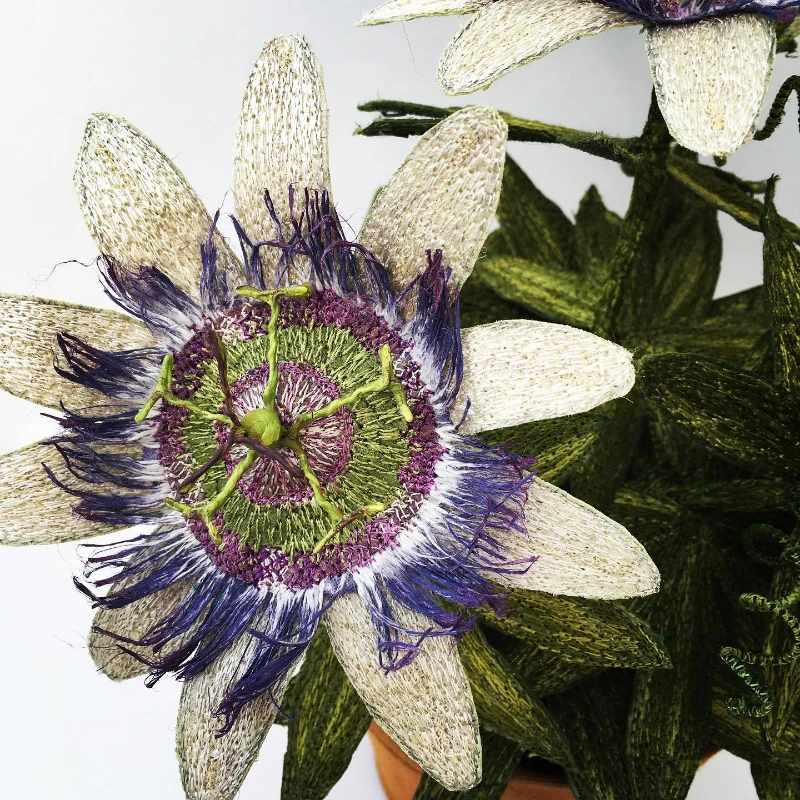
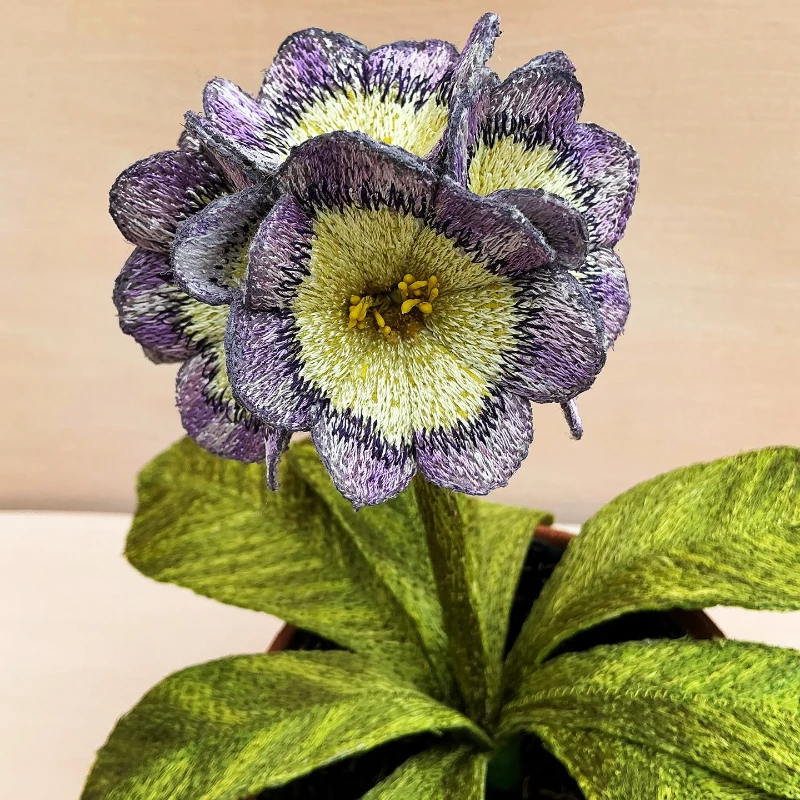
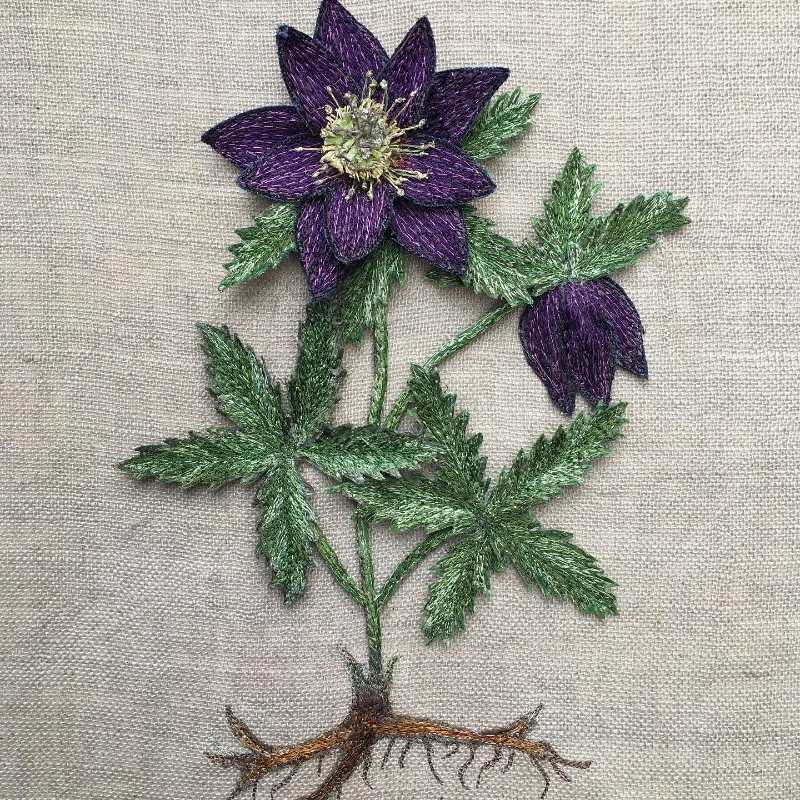
Corinne Young works in a tradition with deep roots, but she has made it entirely her own. Based in North Lancashire, she creates three-dimensional embroidered sculptures that draw on botanical illustration, stumpwork, and the vocabulary of historic house collections. Her work begins with direct study, sketching from her garden and researching plants through antique botanical books, and ends in objects of extraordinary physical presence: pot plants of Auriculas, Poppies, Peonies and Passion Flowers, each one constructed on handmade linen paper she produces herself using silk-paper-making techniques developed during her Textile Design degree at Bradford College.
The Auricula collections, which she has been exhibiting at the Chelsea Flower Show since 2021 and at Bonadea in Belgravia, are a case in point. The flower has a long history of textile associations, and Corinne leans into that deliberately. Her versions are always in bloom, always exactly as she intends them, which says something interesting about what it means to interpret the natural world through stitch rather than simply record it.
Her work has featured in Country Living magazine and is held in private collections internationally. She has undertaken commissions ranging from intimate personal pieces to major public works, including a set of large embroidered hangings for the opening night of the Lord of the Rings stage show.
Why we’ve included her
Corinne’s practice is a masterclass in how botanical study and technical ambition can produce work that is genuinely moving. The three-dimensional construction of her pieces is something our students on advanced courses often explore as a natural development from stumpwork fundamentals. Looking at her Auriculas, you understand immediately why the best textile art demands the same careful observation as botanical drawing. Exceptional for texture, structure and surface complexity.
Follow Corinne Young
Instagram: @corinneyoungtextiles
Website: corinneyoungtextiles.co.uk
2. Helen Wilde (Ovo Bloom)
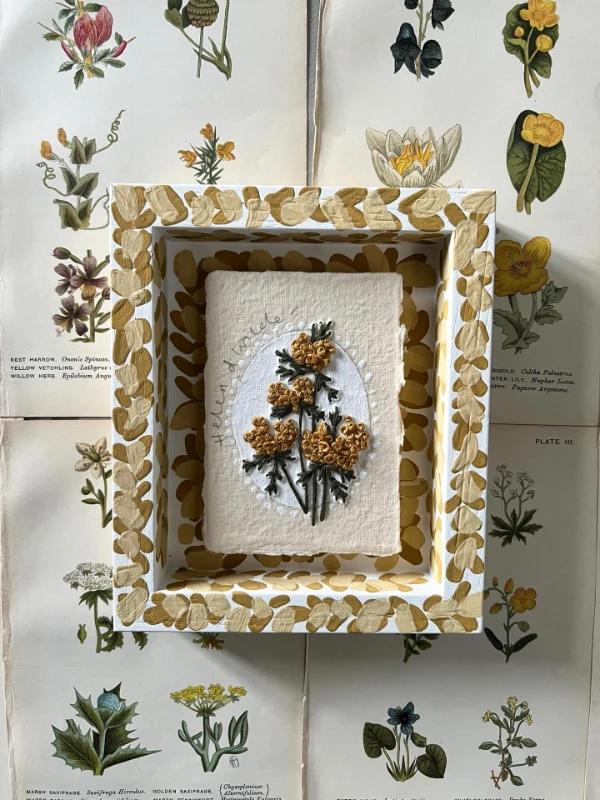
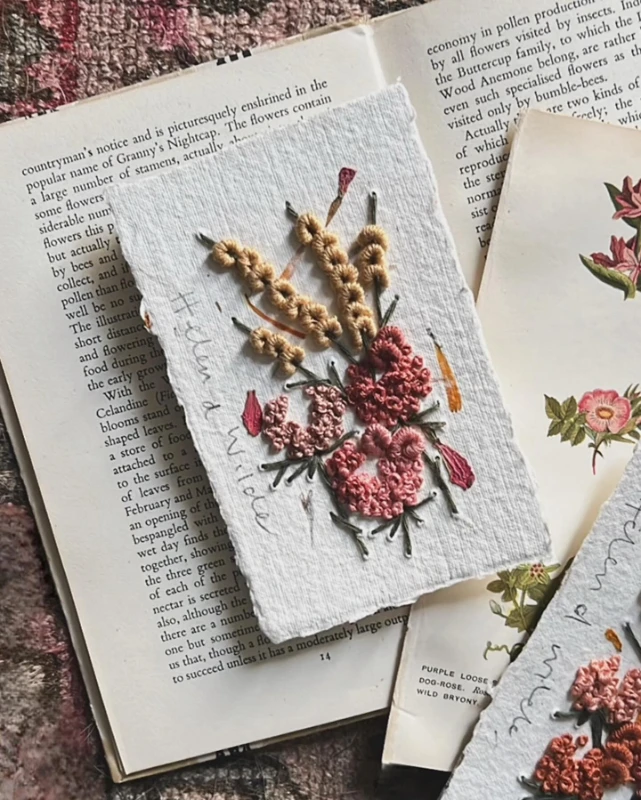
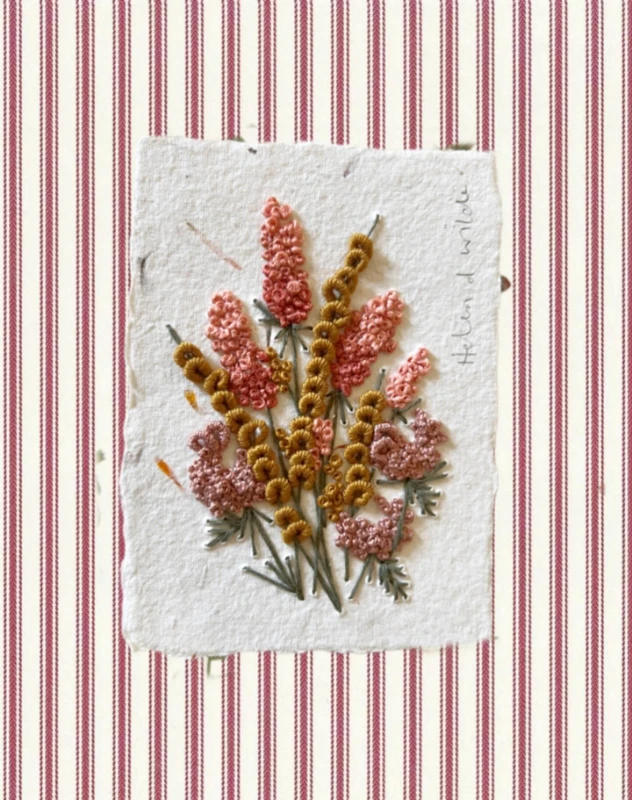
Helen Wilde works from her studio in Derbyshire and describes her practice as existing in the space between the natural world and the realm of imagination. That is a precise description. She is a Decorative Arts graduate from Nottingham Trent University and works in a genuinely mixed media way, combining hand embroidery with acrylic painting, ceramic elements, plant-dyed yarns, silk on organza, and handwoven fabrics. The palette of any given piece shifts with the material itself: dyes, like plants, behave unpredictably, and Helen builds that variability into her process rather than trying to control it out.
Her botanical and coastal work has been published in Elle Decoration globally, Architectural Digest, and the English Home, and she has exhibited internationally including at the Clitheroe Gallery in Lancashire and at Nahcotta Gallery in the United States. Her work hangs in the Dorchester Hotel in London. Elle Decoration singled her out as an ambassador for the modern embroidery movement, which feels right: her work is ambitious in scale, painterly in feeling, and unafraid of combining materials that more conventional practitioners would keep separate.
Why we’ve included her
Helen’s willingness to bring paint and ceramic elements into conversation with thread is instructive for anyone who has felt constrained by the question of whether something ‘counts’ as textile art. It does not matter what it is made of; it matters whether the material is serving the idea. Her colour instincts are outstanding, and her work is a particularly rich reference for students exploring surface design, mixed media, and the expressive possibilities of combining stitch with other mark-making approaches.
Follow Helen Wilde
Instagram: @ovobloom
Website:ovobloom.com
3. Caroline Nixon
Caroline Nixon works with ecoprinting and natural dyes, a practice she describes as both contemporary and ancient. The process involves laying botanicals directly onto cloth, binding them tightly, and steaming or immersing the bundle in natural dye to coax the plant’s own pigment into the fabric. The results are never entirely predictable: the smallest variation in plant species, water source, or climate conditions produces different marks. Every piece is unique, not as a selling point but as a structural fact of how the work is made.
She works with naturally produced, organically sourced fibres, and extends her palette through the addition of dyes derived from madder, logwood and indigo, many of which she grows in her own garden. The mordanting agents she uses, naturally occurring substances such as alum, soya and rust solution, are chosen as much for their ethics as their chemistry. Vintage garments and textiles from French brocantes are regularly upcycled, and even the copper preserving pans and cast iron laundry pots used for processing contribute metallic ions that intensify colour. She is also a sought-after workshop teacher, leading retreats in the Dordogne and Morocco alongside her online courses.
Why we’ve included her
Caroline’s practice offers something that is genuinely hard to find elsewhere: a rigorous, material-led exploration of what the plant itself brings to the surface. There is no digital file, no pre-drawn template, no repeat. For our students working in surface design or developing their understanding of colour and mark-making, following Caroline’s process reveals how much information is already held in the natural world, if you are patient enough to listen to it. Her use of colour, particularly the relationship between mordants and the botanical marks they intensify, is something we find endlessly instructive.
Follow Caroline Nixon
Instagram: @handmadecaroline
Website: handmadetextilesbycaroline.co.uk
4. Helen Poremba
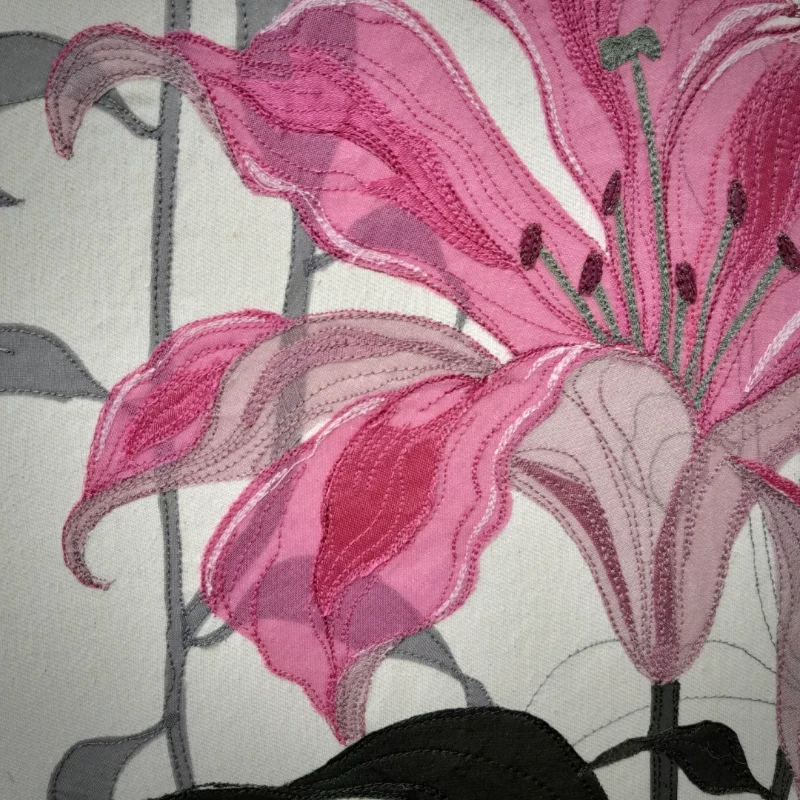
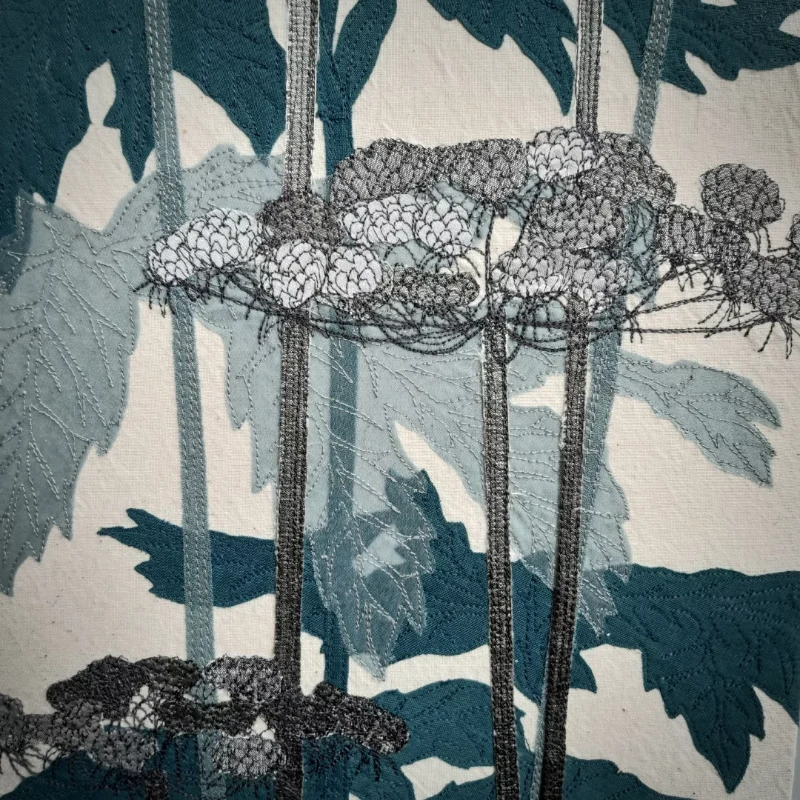
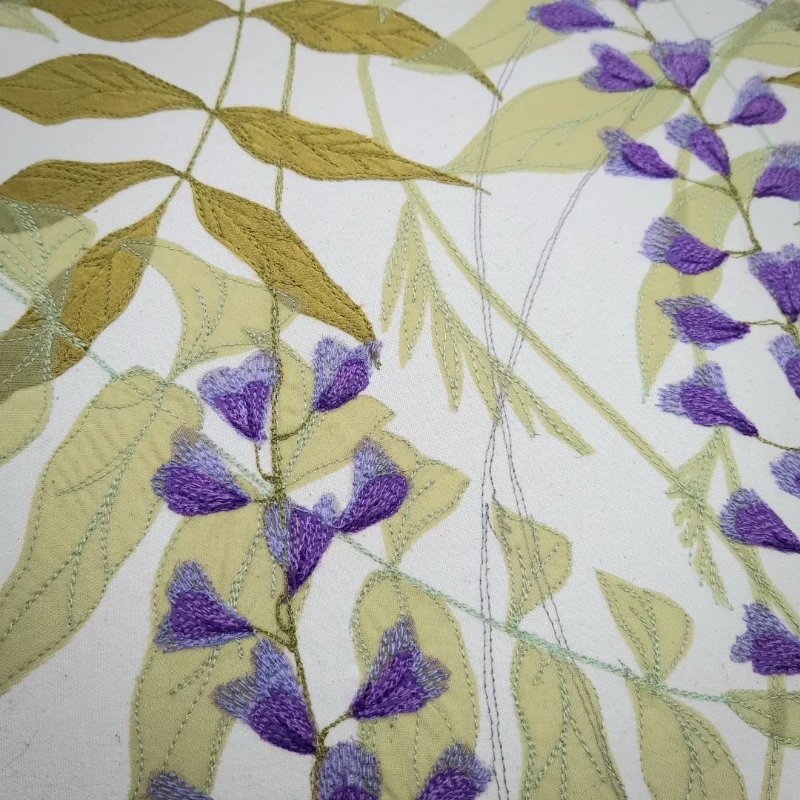
Helen Poremba lives and works in Felton, a village in rural Northumberland a few miles from both the coast and the hills. The landscape around her, the hedgerows, riversides, woodlands and gardens, is the direct source of everything she makes. She uses free-motion embroidery to draw with a stitched line and paints with recycled fabrics, working with botanical subjects to combine bold pattern with intricate workmanship. The results are pieces that are simultaneously graphic and intimate: you can read them from a distance as strong compositional statements, and then you step closer and find the surface is alive with detail.
Her subjects include Hogweed, Brambles, Clematis, Nasturtiums, Tulips, Poppies and Irises, all observed from immediate surroundings rather than reference images. She begins each piece with plant sketches, working out the logic of a subject before she begins to stitch, which means her work has the authority that comes from genuine observation. She also runs workshops and offers commissions.
Why we’ve included her
The particular skill Helen demonstrates is the capacity to use composition and colour as primary design decisions, rather than as afterthoughts to a technically accomplished stitch. Her pieces have a boldness that belies the intricacy of their construction. For students learning to think about how a textile artwork reads as a whole, as well as in detail, her work is genuinely valuable. There is also something important in the fact that she begins with drawing; the relationship between mark-making and stitch is one we encourage our students to explore from the very start.
Follow Helen Poremba
Instagram: @helenporembatextileartist
Website: helenporemba.uk
5. Karen Selk
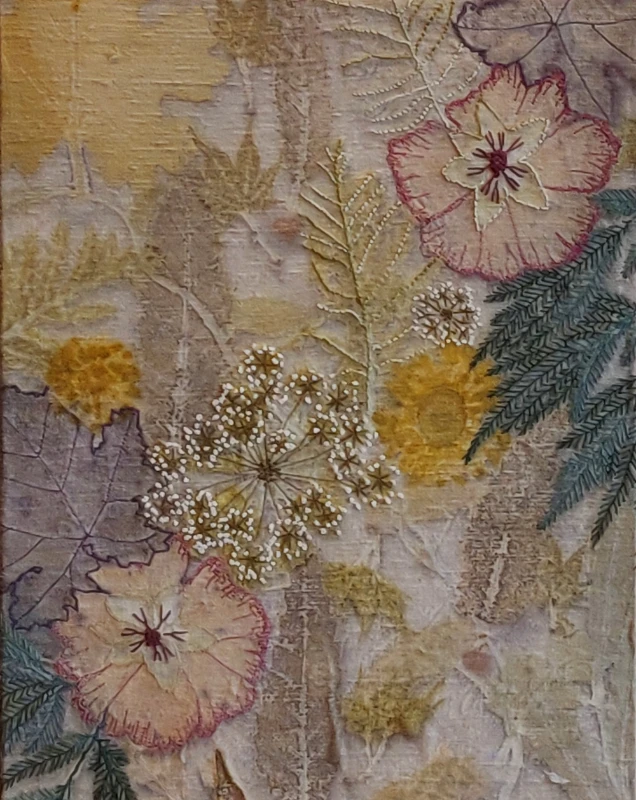
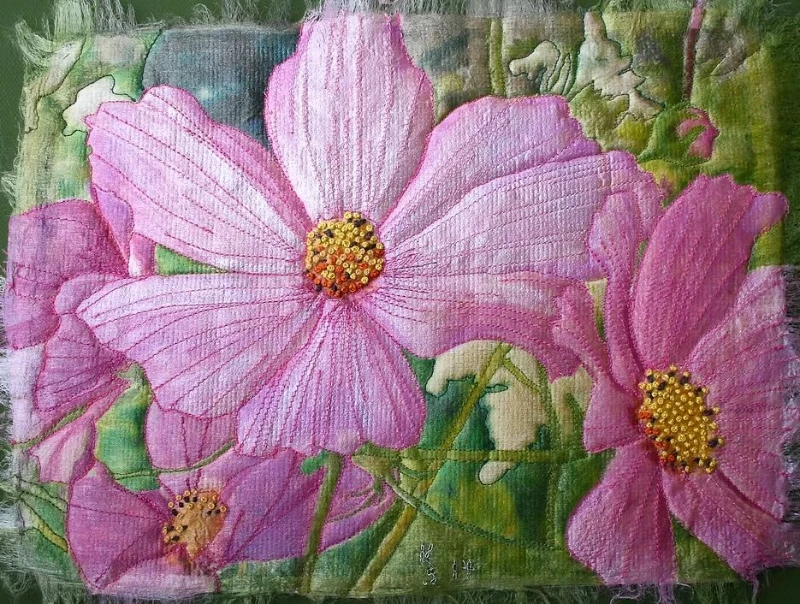
Karen Selk is based on Salt Spring Island on the west coast of Canada, and brings an unusual depth of knowledge to her botanical textile practice. She co-founded Treenway Silks, a silk fibre and yarn company, in 1978, and spent over thirty years immersed in the history, production and traditions of silk across Asia, leading research trips to India and Laos and teaching weaving throughout Canada, the United States, Australia, New Zealand and beyond. That education is visible in every aspect of her current work.
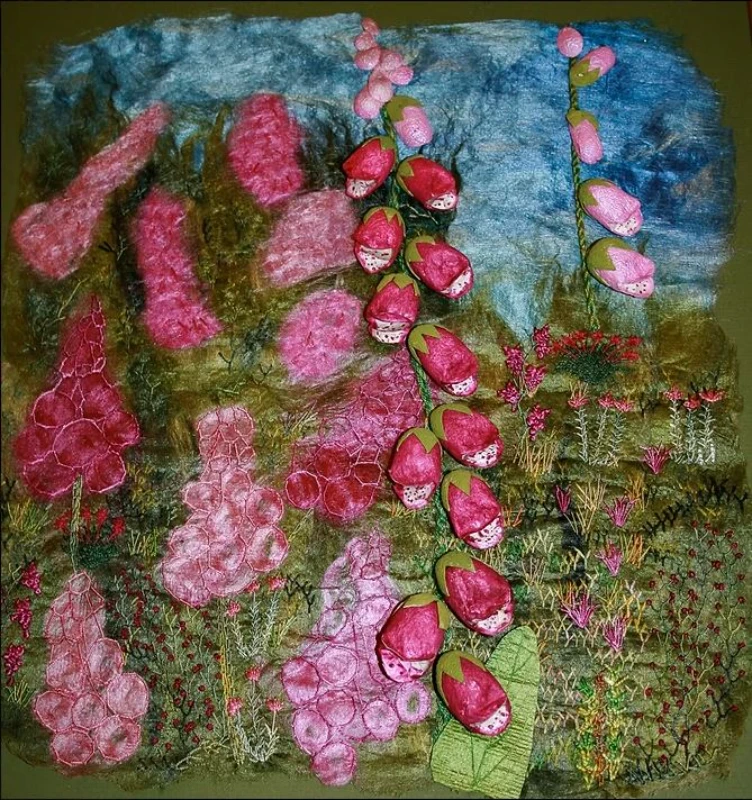
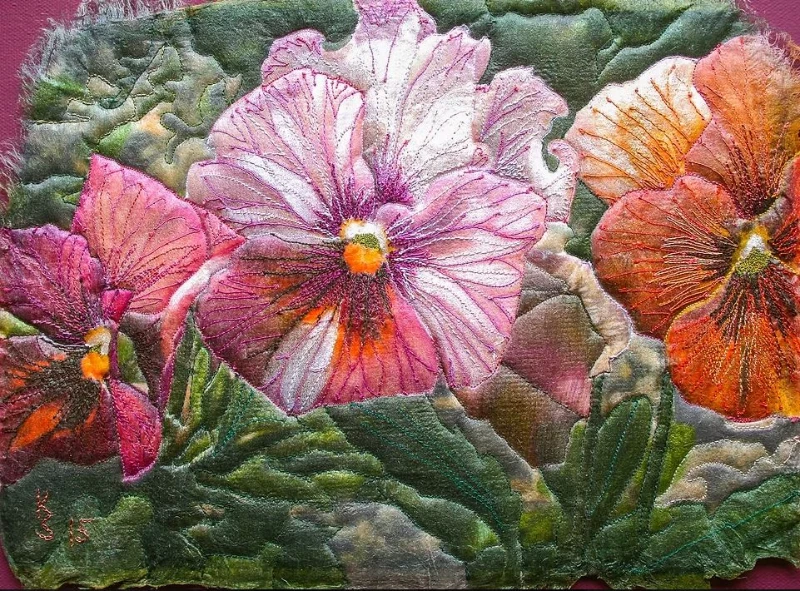
She works primarily with natural dyes obtained from plants, roots, barks and insects, thickened and painted directly onto botanicals collected from her garden. These are then bundled against fine silk, rolled, bound, and steamed for an hour to set the dye. The resulting fabric is fused onto silk fusion, a fabric she makes herself from unspun silk fibre, and the pieces are embellished with machine and hand stitch, sometimes quilted for depth. The edges are deliberately ragged and organic, and her artist statement names this intentionally: the temperament of the tools is not exact, she says, creating blurred images and ragged edges, much like nature and the state of humankind.
Why we’ve included her
Karen’s work is important in this list because it shows the conceptual richness that becomes available when technical knowledge is genuinely deep. Her understanding of silk and natural dye is not decorative background knowledge; it shapes every material decision she makes. For students wanting to understand how a long engagement with a tradition can eventually generate something entirely original, her practice is exemplary. Particularly strong for its exploration of surface and edge, natural colour relationships, and the role that material knowledge plays in creative confidence.
Follow Karen Selk
Instagram: @k.selk
Website: karenselk.com
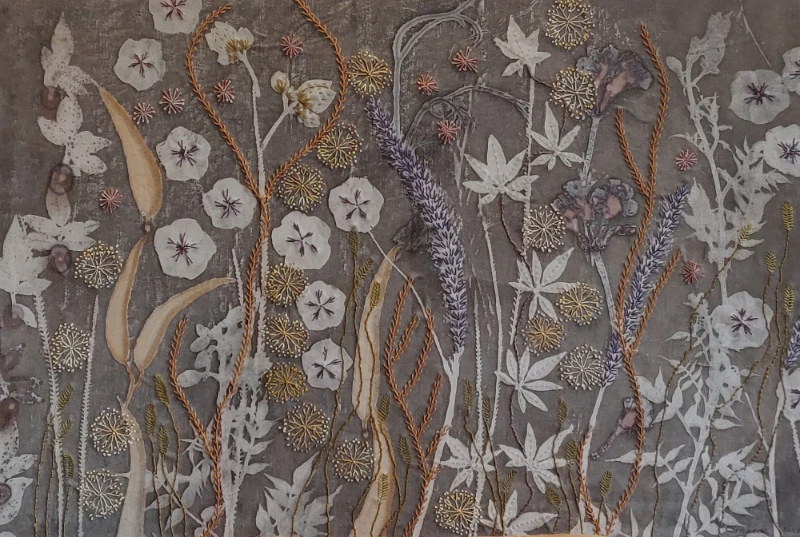
6. Rosa Andreeva
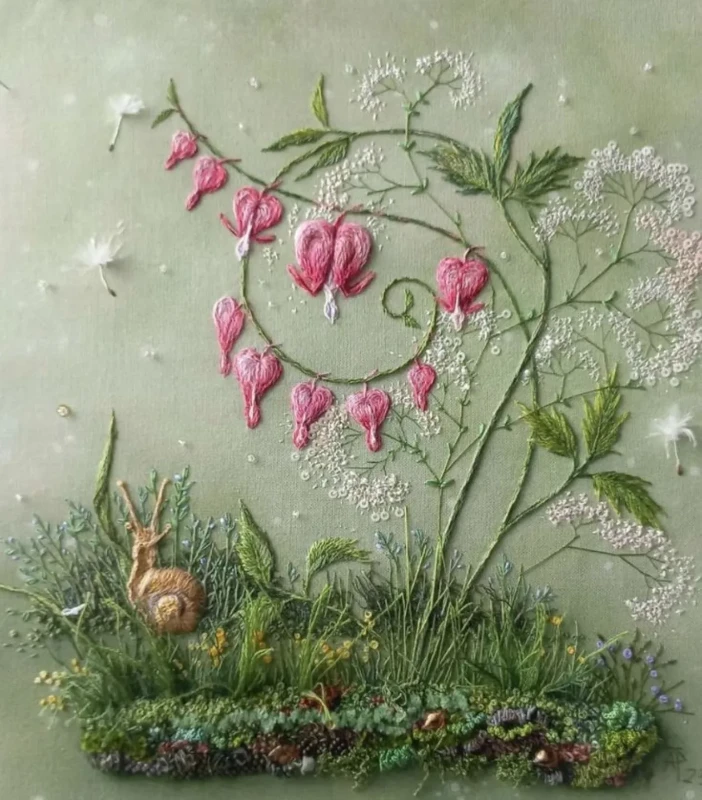
Rosa Andreeva is a Moscow-based fibre artist whose work sits at the intersection of stumpwork, bead embroidery, surface embroidery, and something that has no single name: a kind of stitched botanical dreamscape. She began embroidery at twelve, moved through cross-stitch into her own original practice, and since 2018 has been developing her drawing through formal study at an academic painting studio. That training is visible. Her work begins with pencil sketches of her floral and botanical subjects, but she does not work from templates, because, as she has said, nature cannot be planned.
Her pieces are small, densely wrought, and extraordinary. Wild gardens spill from cracked silk teacups. Mosses and thistles, floating pollen and fragile cobwebs emerge in three dimensions from fabric. She combines tight and loose stitches deliberately, leaves thread ends free where the three-dimensional form requires it, and integrates beads and occasionally fragments of real plant material. The result is something that hovers between embroidery and sculpture, between observation and fairy tale. Her work has been featured by Colossal, My Modern Met and numerous international publications, and she sells and exhibits through Instagram.
Why we’ve included her
Rosa’s work is a reminder that stumpwork is not a historical curiosity. In her hands, a tradition with roots in 17th-century needlework becomes a vehicle for something distinctly contemporary. For students exploring three-dimensional textile techniques, her ability to balance density with lightness is instructive: the weight of beads against the freedom of loose thread ends, the solidity of a silk teacup against the delicacy of a silk petal. She is also, practically speaking, a superb example of how Instagram can serve as a genuine gallery space for an artist who builds an audience through the quality of the work alone.
Follow Rosa Andreeva
Instagram: @roniy1983
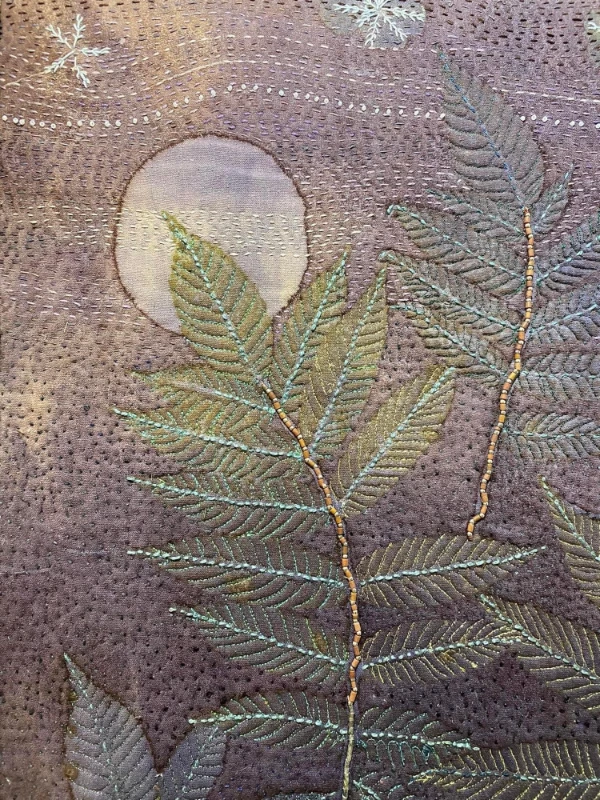
7. Kirsten Chursinoff
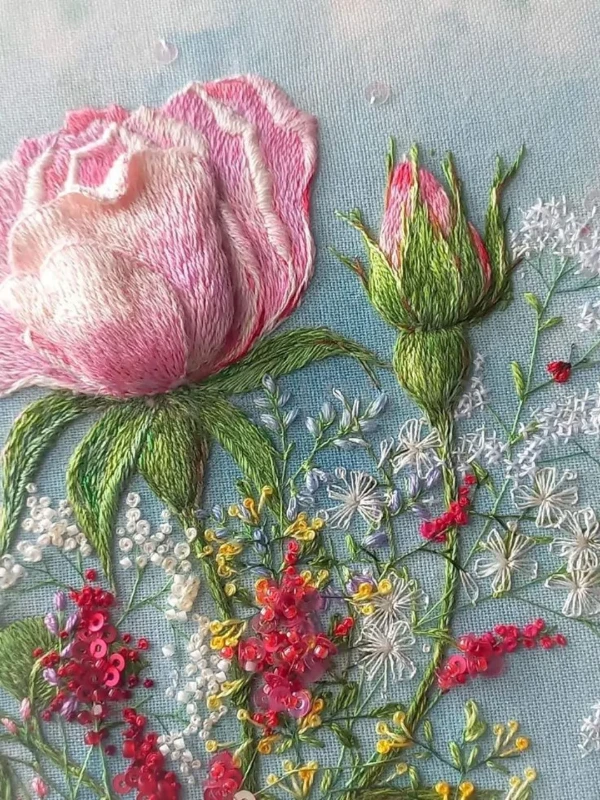
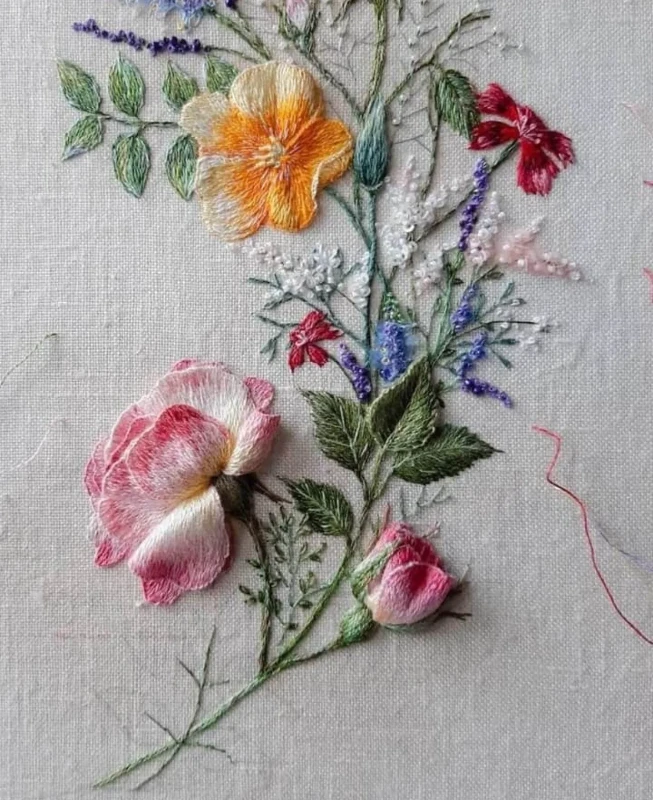
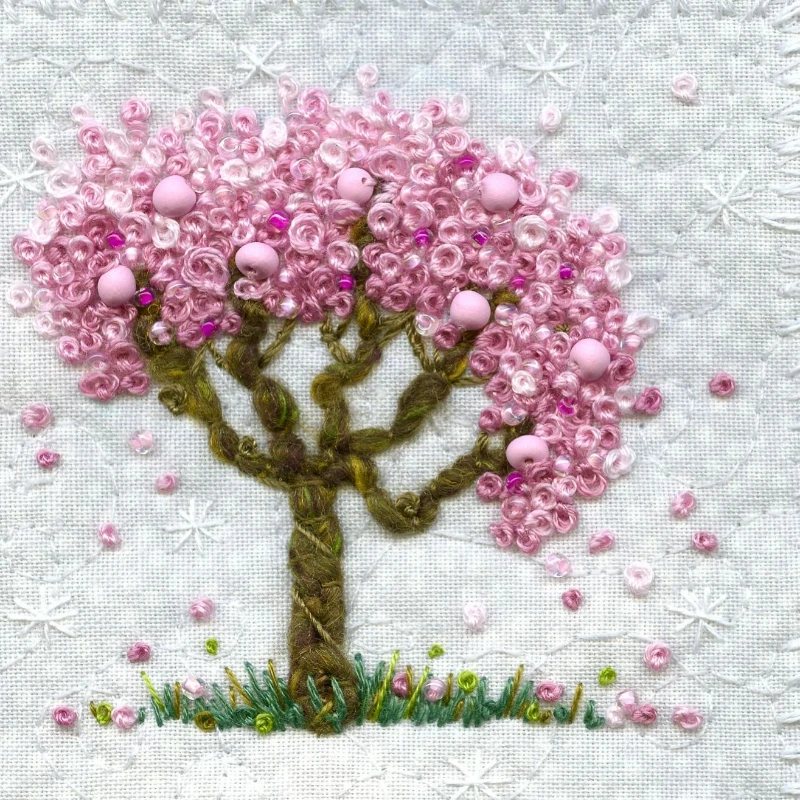
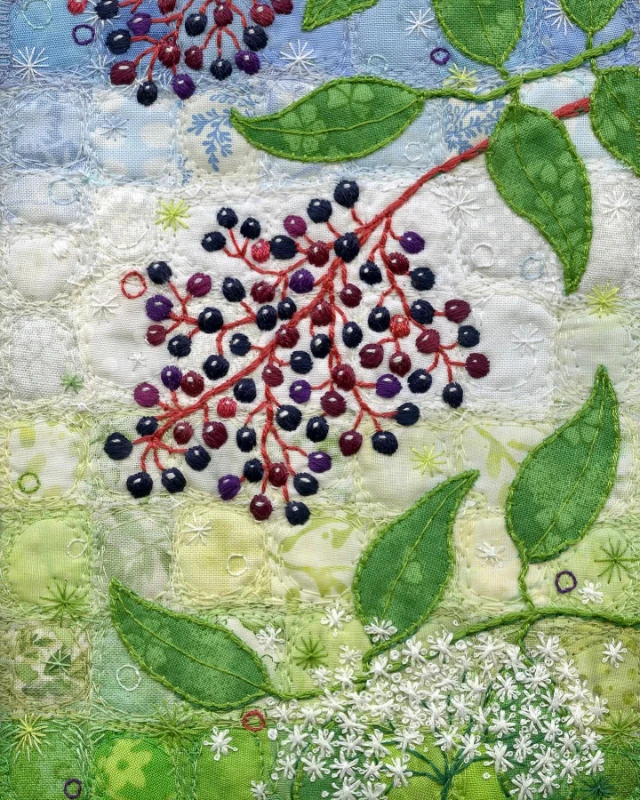
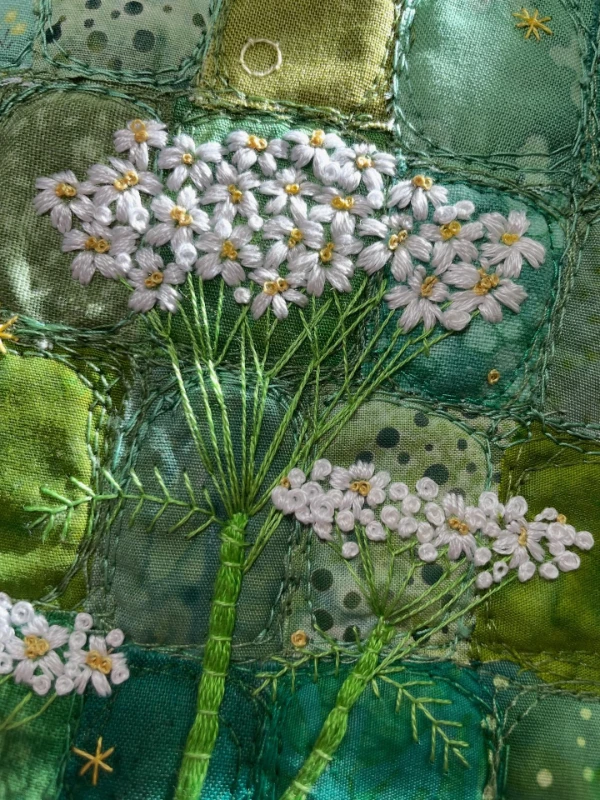
Kirsten Chursinoff is a Vancouver-based textile artist who works primarily by combining machine piecing, hand embroidery and quilting to create botanical art that rewards both a long view and a close one. She holds a Diploma in Textile Art from Capilano University, and her work has been published in Quilting Arts Magazine, Art Quilting Studio, and the anthology Hoopla: The Art of Unexpected Embroidery. She has received the Visual Arts Development Award presented by the Contemporary Art Gallery and the Vancouver Foundation, and her work is held in international collections.
Her process is distinctive. She begins by piecing small fragments of fabric onto a background in a manner that resembles collage or mosaic, building up a surface with the sewing machine before moving to hand embroidery, applique, beading and couching. The resulting works have real visual depth: layers of fabric, thread and stitch that read differently depending on how close you stand. Her subjects include flowers, berries, seeds, mushrooms, garden plants and wild overgrown lots, and her most recent work has moved into nocturnal territory: moonlit snowdrops, yarrow and cowslip rendered in silvery palettes.
Her recent exhibitions include Botanical Stitches at Place des Arts in Coquitlam, and Botanically Inspired at the Amelia Douglas Gallery in 2025.
Why we’ve included her
Kirsten’s practice demonstrates the expressive possibilities of treating the background as a designed element rather than a neutral field. The pieced fabric beneath her embroidery is not a support; it is part of the composition. For students thinking about surface, colour and how different layers of making contribute to a finished piece, her approach opens up important questions. Her handling of texture is exceptional, and her combination of machine and hand techniques is a useful reminder that neither is inherently more ‘serious’ than the other.
Follow Kristen Chursinoff
Instagram: @kirsten_chursinoff
Website: chursinoff.com/
8. Emily Notman
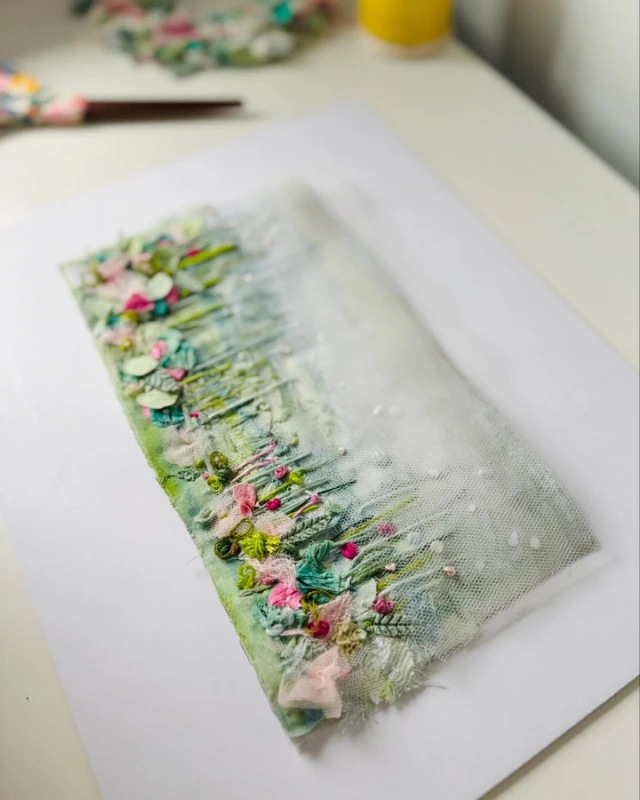
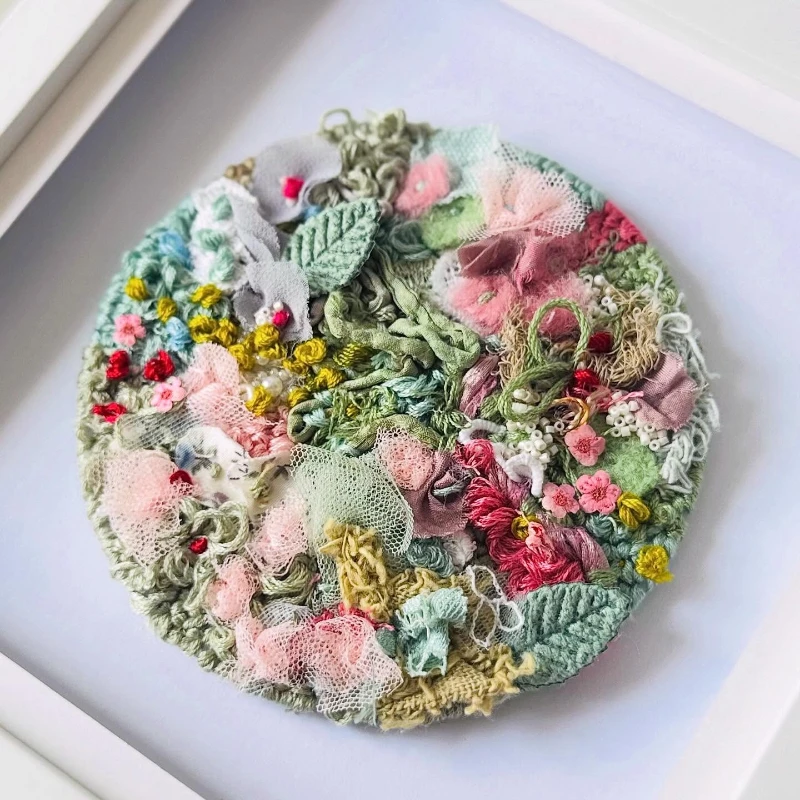
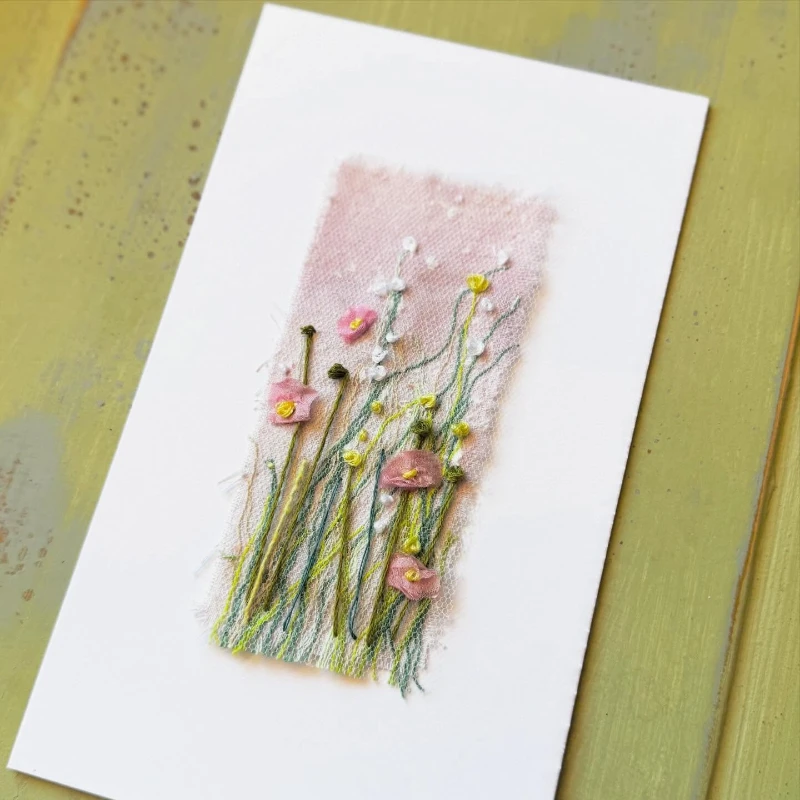
Emily Notman was described, accurately, as ‘The Textile Florist’ in a profile by TextileArtist.org, and it is hard to improve on that as a summary. Based in the north of England, she creates what she calls delicate textile compositions where stitched flowers and foliage intertwine. Her work is directly personal in its origins: it pays homage to her mother’s floristry career and the cottage garden she grew up with, and the sensibility that produces, a feeling for the ephemeral, the overgrown, the quietly beautiful, runs through everything she makes.
She trained in Fine Art at Leeds College of Art and Design before completing a First Class BA (Hons) in Contemporary Applied Arts at the University of Cumbria, specialising in embroidery, printed textiles and ceramics. That background in ceramics is not incidental; her practice involves merging heavy textures, fine stitching and painted surfaces, and the tendency to think about layering and surface that ceramics cultivates has found its way into her textile work. She is drawn to what she calls ethereal hues and soft, subtle colour palettes, and to subjects including flaky walls, wild meadows and whimsical botanicals.
Alongside her studio practice, she runs workshops and five-week group courses across the UK and online.
Why we’ve included her
Emily’s work is, at its core, about the emotional relationship between a maker and a subject. That is something that formal training can support but not manufacture, and it shows in her pieces. The layering in her work, tactile, detailed, built up through embellishment over time, is instructive for students who are learning that a textile artwork does not have to declare itself immediately. Her palette is something students of colour often find genuinely useful: the way she works with soft, related hues to create depth without drama takes real sensitivity to understand and to replicate.
Follow Emily Notman
Instagram: @emilynotman
Website: emilynotman.com
Finishing Up
Each of the artists above brings a different understanding of what it means to make work from the natural world. Some begin with rigorous botanical study; others work from instinct, memory, or the materials themselves. What they share is intention: a clarity about why they are making and what they want their work to say.
That quality of intention is precisely what our City & Guilds accredited courses are designed to nurture. Whether you are working at Skill Stage level or pursuing a more advanced specialism, the questions these artists are asking are the questions we encourage our students to ask too. Who is teaching you to look? What do you notice that no one else does? What does the work want to be?
If any of the artists here have sparked something for you, we would love to hear about it.