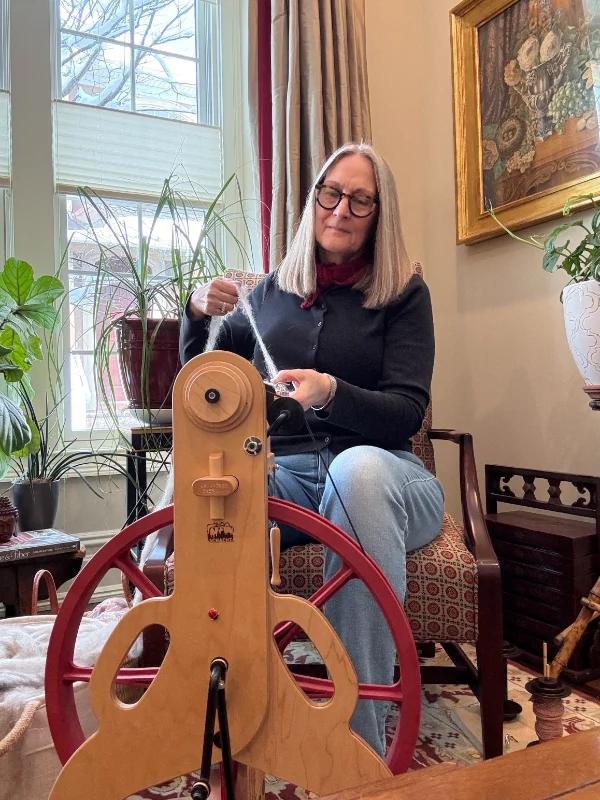
Somewhere between the click of two knitting needles and the settling of a busy nervous system lies the heart of Mary Ann Gebhardt’s mindful knitting practice. A knitter, crocheter, yoga teacher and mindfulness practitioner, Mary Ann has spent years noticing what happens in the body and mind when the hands move in rhythm: the shoulders soften, the breath deepens, and the endless churn of thought begins to quiet.
It started, she explains, long before she had a word for it. As a teenager coping with an unsettling house move, she picked up her knitting and felt something shift. That early discovery, that handwork could be a safe haven as much as a hobby, has shaped everything since: her yoga teaching, her workshops, and a four day retreat in the Colorado mountains built entirely around stitch and stillness.
This conversation moves gently between craft and contemplation, touching on hand mudras, flow states and the quiet wisdom held in our hands. Whether you knit, crochet, embroider or simply long for a little more calm, there is something here worth carrying into your own creative practice.
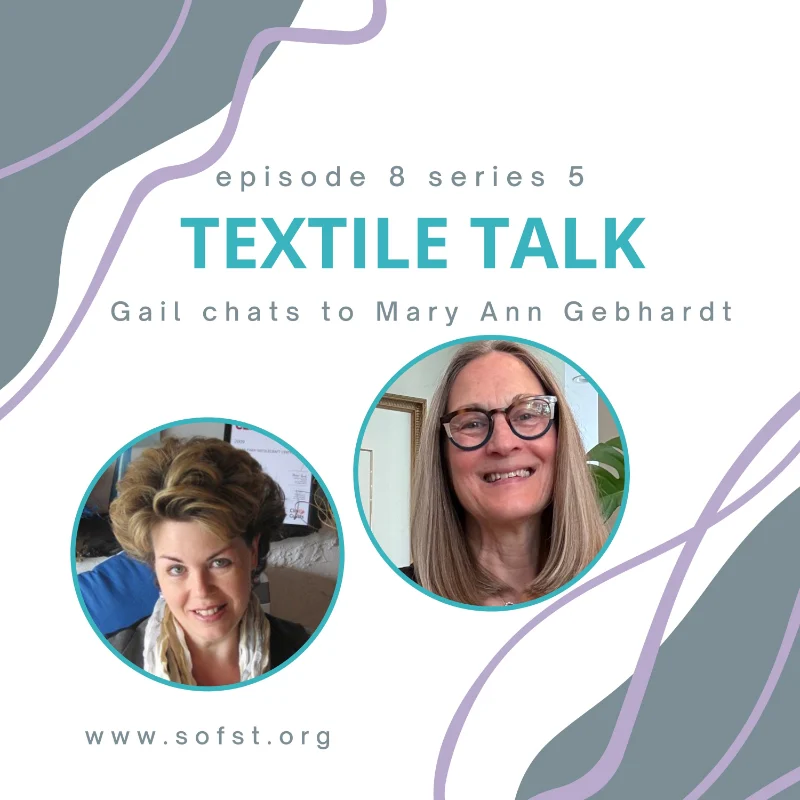
Textile Talk with Mary Ann Gebhardt
The episode is also available on Spotify, Apple Podcasts and all major podcast platforms.
The Moment Handwork Became Her Safe Haven
Mary Ann grew up in a family of makers. Her mother sewed and knitted for a household of five, and Mary Ann learned young how to settle herself through a craft. But the moment that changed everything came later, during a difficult house move in her early teens. Starting a new school was daunting, and she picked up her knitting almost instinctively.
What she felt in that moment was simple and clear: here, in this stitch, she had everything she needed. Handwork became permission to be still, a way to let her hands move while she quietly sorted through what she was feeling. She was around fourteen when she first noticed it, long before she discovered yoga or had language for mindfulness at all. That early, unplanned discovery became the foundation for everything that followed, including a career spent helping others find the same sense of calm through their own needles and thread.
Why Your Hands Are the Wisest Part of You
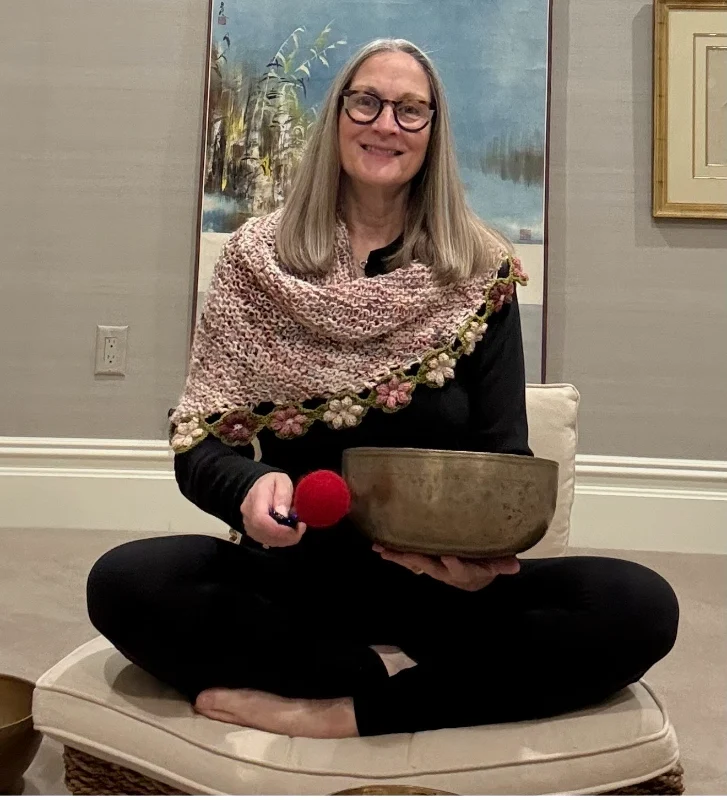
Ask Mary Ann about her hands and she lights up. She talks about mudras, the hand gestures used in yoga philosophy, and how each finger is thought to connect to a different element and a different sensory pathway to the brain. Before she picks up a project, she will often rub her palms together or simply notice how her hands are resting.
The craft itself becomes part of the practice. She wraps yarn around her pinky and index finger and feels the tension ease as the fibre moves. Closing the hands on an exhale and opening them on an inhale becomes a small, private breathing exercise. Even away from her needles, she uses her hands as a gauge, noticing when she is gripping the steering wheel too tightly, then consciously softening. For Mary Ann, the hands are not just tools. They are messengers between the body and the mind.
Inside a Four Day Retreat Called Stitch and Stillness
Mary Ann’s workshops often begin with someone insisting they cannot sit still. She remembers one student who arrived stressed from work, sceptical that a two hour botanical embroidery class could quiet her mind. By the end, she had stitched five simple leaves and could not quite believe how absorbed she had become.
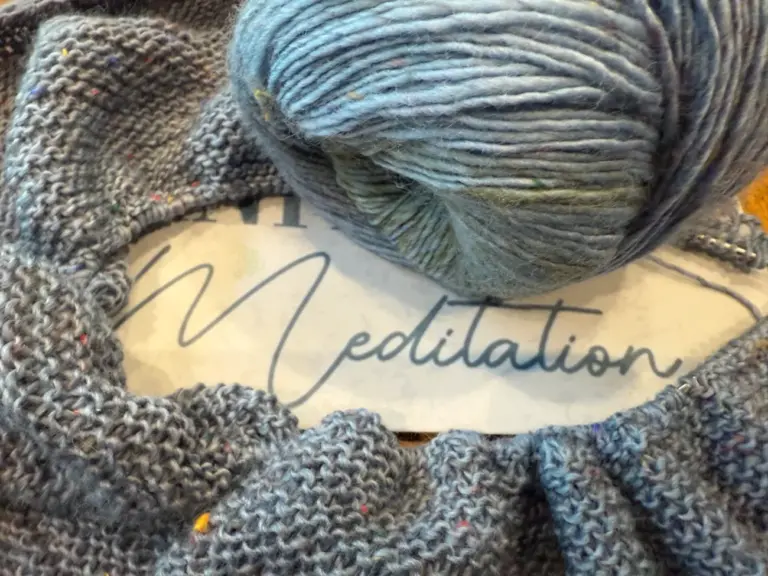
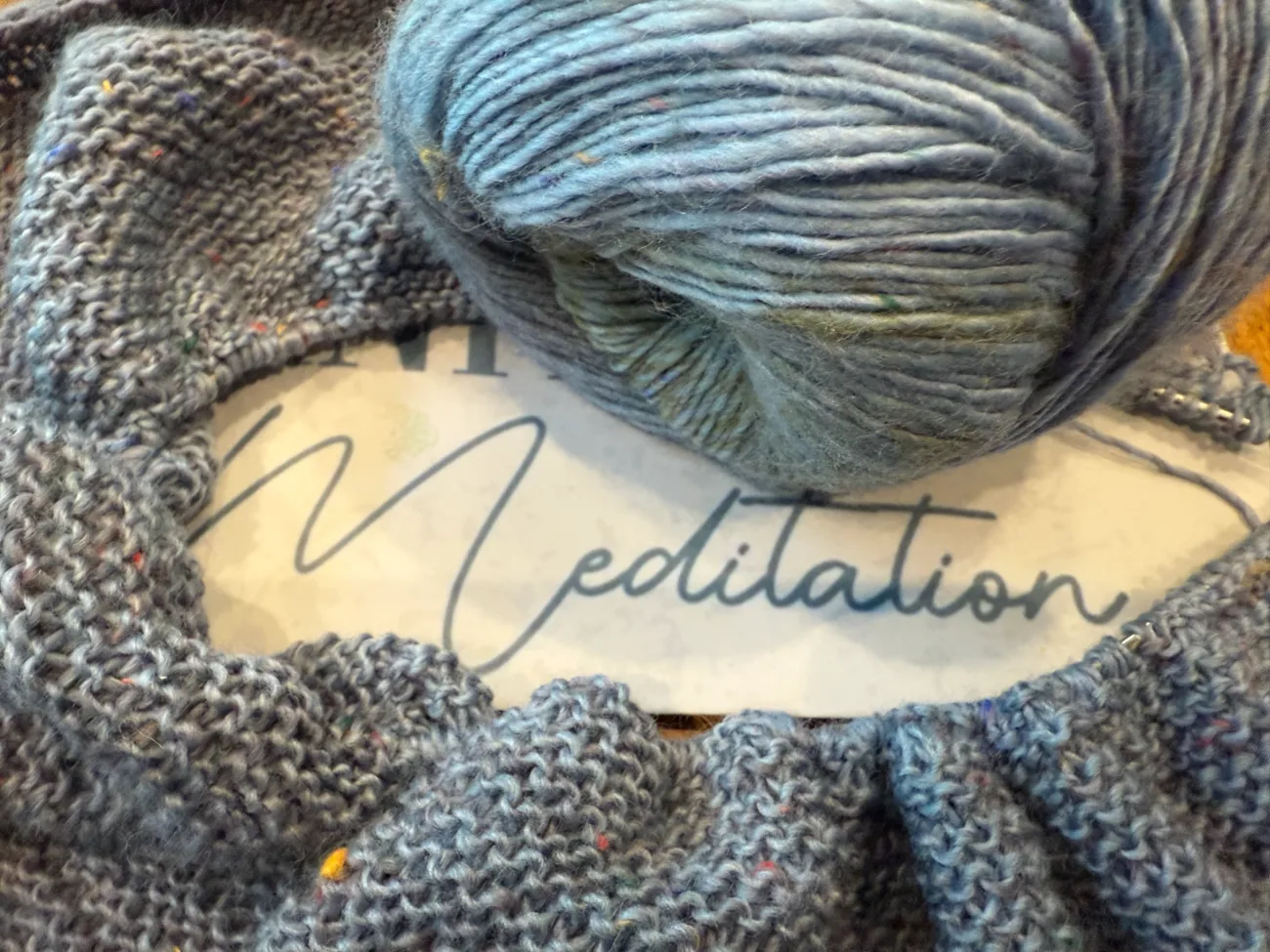
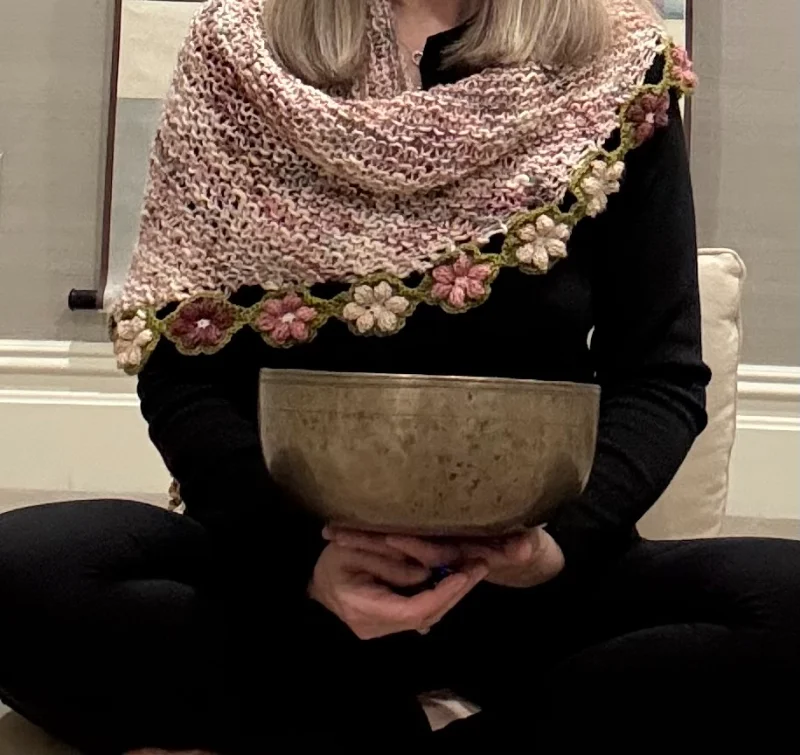
That idea grew into something bigger: a four day retreat in the Colorado mountains called Stitch and Stillness, built around a hand spun, hand dyed meditation shawl knitted entirely in the humble knit stitch. One participant, an athlete who insisted she would never manage the meditation, ended up so deep in flow during a guided session that she put her knitting down, closed her eyes and leaned back in her chair. She only realised what had happened days later, over breakfast on the final morning.
You Already Have Everything You Need
If there is one message Mary Ann returns to again and again, it is this: you already have everything you need. Self doubt, she says, is often the first thing that gets in the way, and simply naming that doubt can set an unhelpful intention before a single stitch is made.
Her advice for beginners is refreshingly gentle. Start small. Notice your breath, one hand at the chest and one at the belly, before you even pick up your needles or hoop. Find where your body meets the chair, build yourself a comfortable nest with cushions and support, and let your shoulders soften. Frustration, she says, is not a sign to give up. It is part of the learning curve, the same one every small child moves through without giving it a second thought. Give yourself the chance, and a small, imperfect first project, to begin.
Why the World Will Need Handwork More, Not Less
Looking ahead, Mary Ann sees handwork playing an even bigger role in how we care for our wellbeing. She points to the pandemic, when knitting and other crafts saw a genuine resurgence among younger makers who suddenly had time, and needed something to do with restless hands and busy minds.
As life continues to speed up, she believes more people will actively seek out the kind of quiet, rhythmic focus that stitching provides. Her closing thought is simple and characteristically warm: believe in yourself, trust the spark of interest when it appears, and know that the seed of intention you plant today can carry real weight tomorrow. It is, she says, pure potential waiting to be picked up.
Ready to hear the full conversation? Listen to this episode of Textile Talk on Spotify, Apple Podcasts, or your favourite platform, or listen directly via the link below. It is a gentle, generous conversation well worth making time for.
Mary Ann Gebhardt: Discover More
Follow Mary on Instagram @mary_ann_gebhardt