There is a particular kind of textile artistry that most of us never think to look for, and it is hiding in plain sight on our television screens. Daniel Byrne, founder and creative director of Puppets Magic Studio, has spent his career proving that hand stitching, fabric selection and careful construction can bring entirely new characters to life. From woodland creatures for Apple’s 2025 holiday campaign to puppets built from pre-loved clothing for Vestiaire Collective, his studio sits at a fascinating crossroads of fine art training, textile craftsmanship and commercial storytelling.
What makes Daniel’s work so compelling for textile lovers is how much of it comes down to techniques many of our own students will recognise: hand sewing over sculpted forms, careful fabric selection, and the quiet skill of the ladder stitch. He trained formally at Central Saint Martins and Goldsmiths, but it is his self-taught, hands-on approach to puppetry, built through years of trial and error, that gives his characters their warmth and believability. In an age of AI-generated imagery, his insistence on visible, human craftsmanship feels more relevant than ever.
We spoke to Daniel about his journey from a childhood spent making cardboard theatres to building puppets for some of the world’s best-known brands, and about what textile makers of every kind can learn from his process.
“The subtle imperfections and human touch are often what bring a puppet to life and give it a sense of authenticity.”
— Daniel Byrne, Founder and Creative Director, Puppets Magic Studio
From Textiles To Television
Could you tell us a little about yourself and how Puppets Magic Studio began?
I’m the founder of Puppets Magic, a company that creates handcrafted puppets and creatures for TV and film. I initially pursued a traditional art education, completing a Foundation Diploma at Central Saint Martins before studying for a BA in Fine Art at Goldsmiths College, London.
Goldsmiths, perhaps best known for producing the Young British Artists (including Damien Hirst and others), offered a highly conceptual approach to art education, where the idea behind a piece was often considered as important as, or even more important than, the work itself. This contrasts greatly with my passion for craft, where the handmade nature of the work is fundamental. However, I’m glad I trained in that environment, as it taught me to think critically about the characters we create today and to continually challenge and push artistic boundaries.

What first sparked your interest in making puppets, and how did that passion develop into a professional business?
I’ve been obsessed with puppetry for as long as I can remember. While other kids were out playing football, I wanted to stay indoors making miniature puppet theatres from cardboard boxes and creating puppets from scrap fabrics or whatever craft supplies I could persuade my parents to buy.
As a teenager, I began taking puppetry more seriously and taught myself as much as I could through books, articles and by studying every puppet performance I could find on television. This was before the days of YouTube tutorials, so there was a real sense of discovery and experimentation, often figuring things out through trial and error.
I took on commissions throughout art school, and after graduating I decided to pursue puppet making full time. So I set up Puppets Magic Studio and never looked back
The Making Process
Many people don’t realise just how textile-based puppet making is. Could you describe the materials, stitches, techniques and construction methods that go into creating one of your puppets?
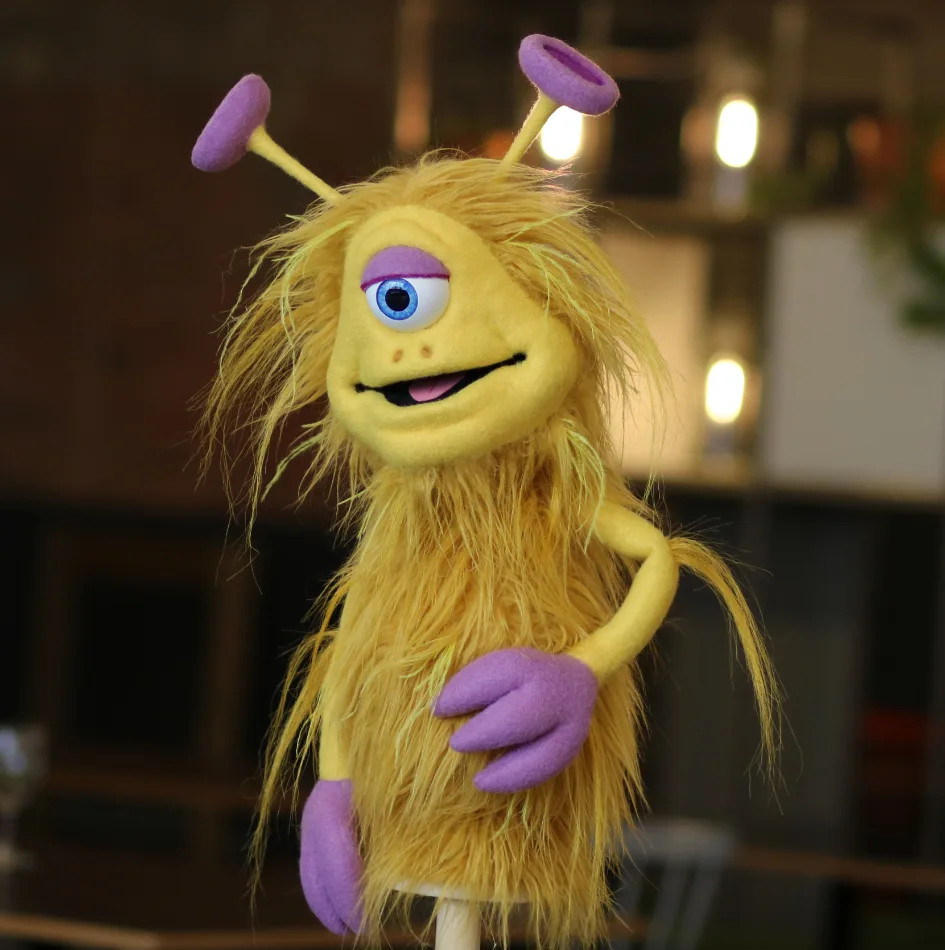
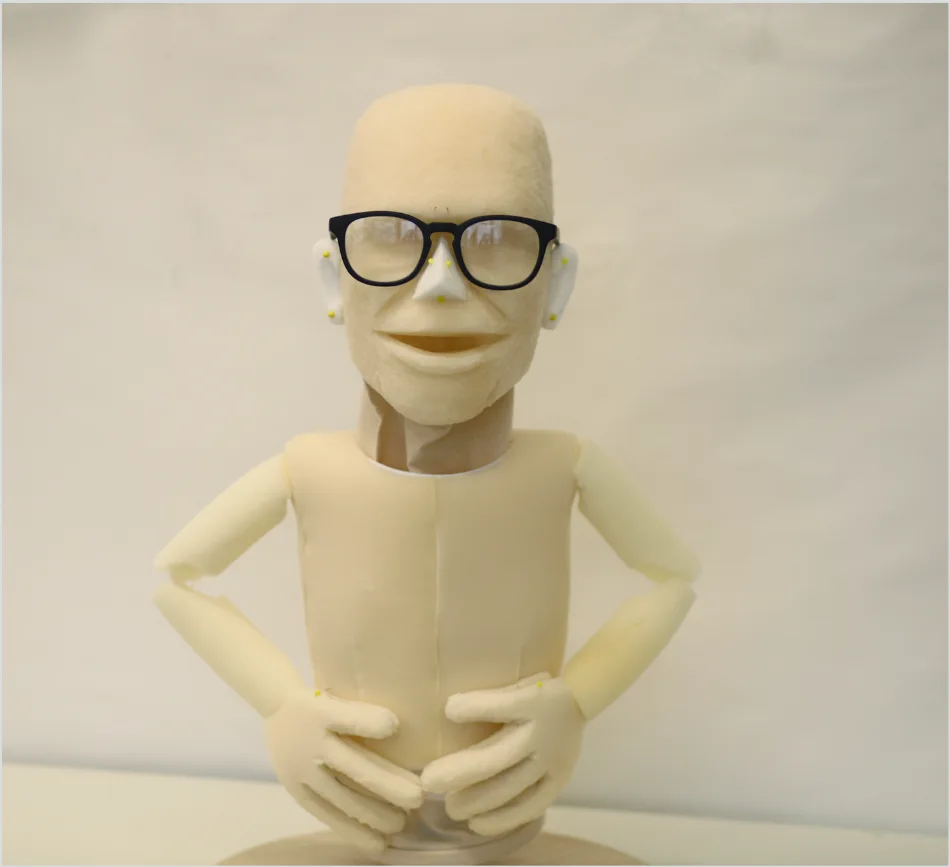
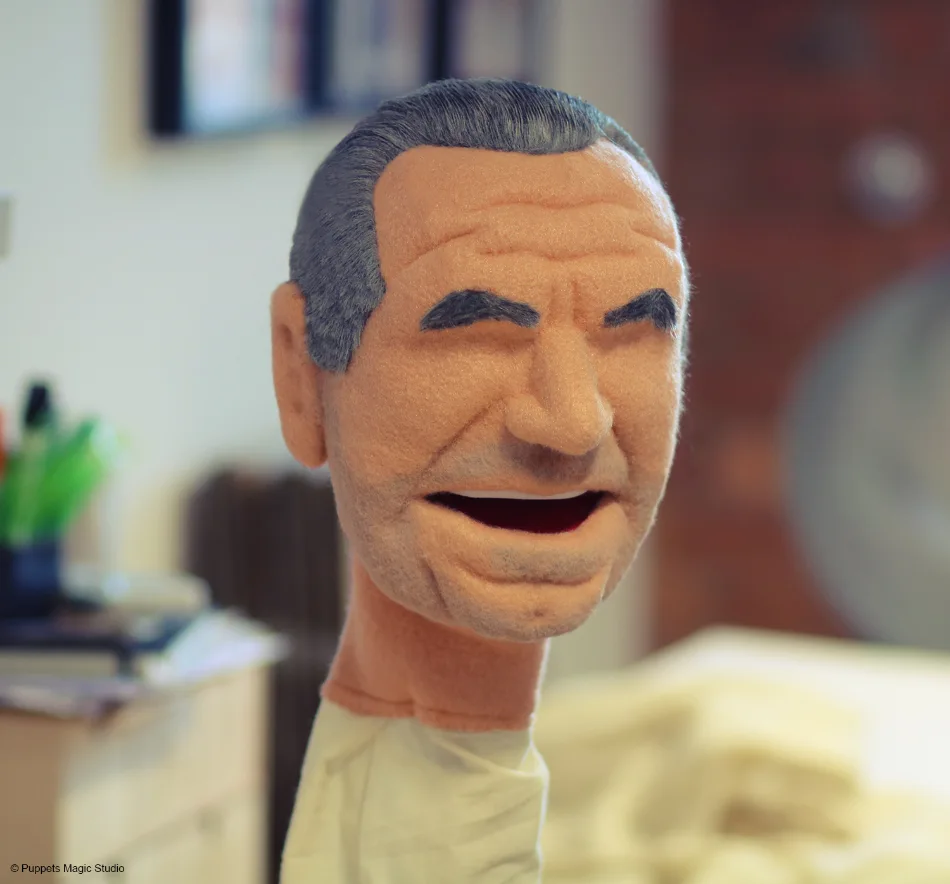
The majority of the puppets we make are fabricated using textiles, whether that’s fleece, synthetic fur or even leather. Puppets need an internal structure to give them shape, so they usually begin with a foam form. This can either be sculpted from a solid block or constructed from patterned sheet foam.
The foam structure is then covered with fabric, and the best results are often achieved through hand sewing. Hand-and-rod puppets are commonly made using a specially manufactured nylon fleece. This fabric has a dense, fuzzy pile, which means that if it is stitched carefully by hand, the fibres can be brushed afterwards to conceal the seam.
Hiding the seams in this way gives the puppet a more lifelike and believable appearance. Of course, there are occasions when visible stitching can be an interesting creative choice: it all depends on the intended aesthetic.
What does the journey look like from an initial client brief through to a finished puppet?
We usually receive some direction regarding the type of character required, what it needs to do and where it will be performed. Sometimes the brief is very specific, while at other times it can be quite open-ended.
We always begin with rough sketches, using them as a way to explore ideas and experiment with different character designs. This process can continue for some time until the right character emerges.
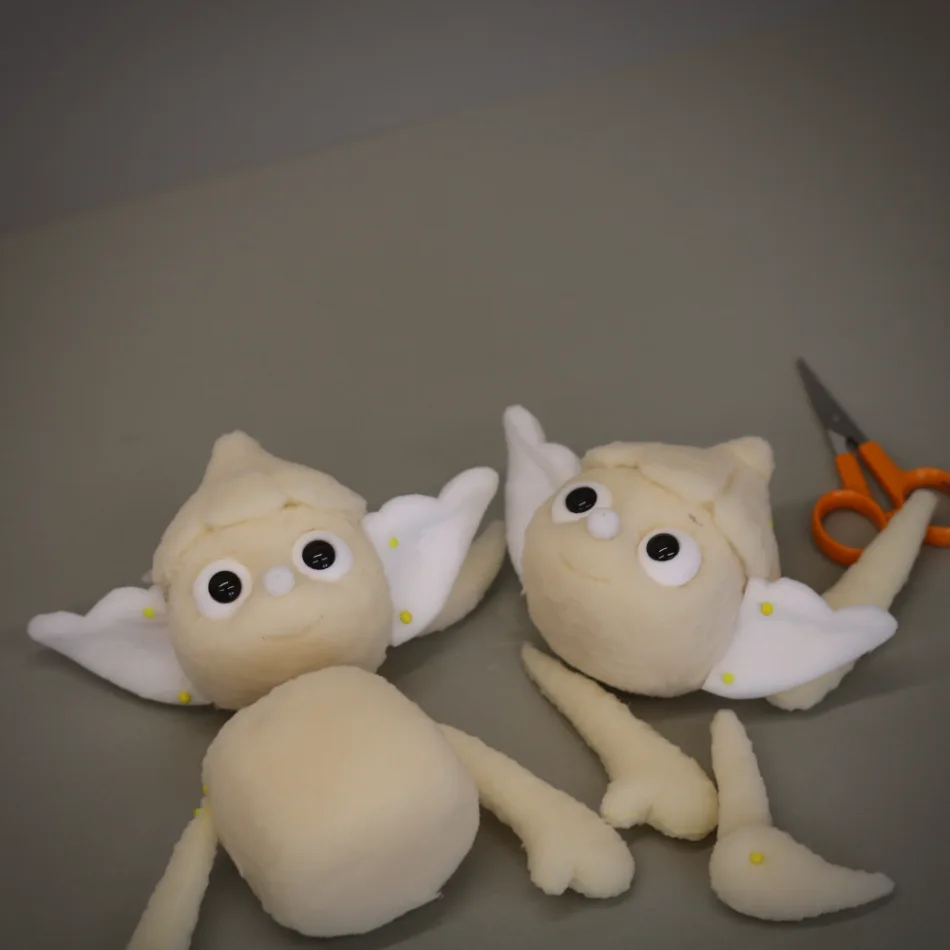
Once the design has been approved, we create a foam sculpture so we can see the character in three-dimensional form. We then source fabric samples to find the right texture and finish, and in some cases we hand-dye fabrics to achieve an exact colour match. As any textile artist will know, dyeing is an art in itself and can take time to get right.
From there comes the many hours of cutting, sewing and assembling the character. Again, hand stitching is usually our preferred method. We also make use of modern technologies where appropriate; for example, facial features such as eyes are often 3D printed, as they would traditionally have been cast in plastic anyway. Some characters also require costumes, and whenever possible these are tailored in-house.
Which parts of the process are still made entirely by hand, and why are those hand-crafted elements so important?
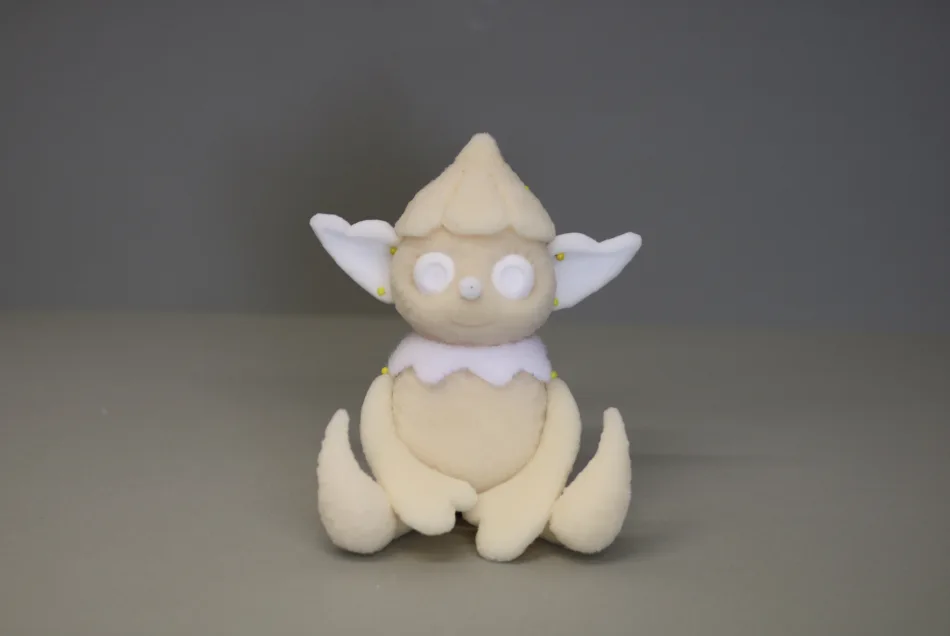
A huge part of the process remains entirely handmade, from sculpting the head and body in foam, to installing mouth plates, cutting fabrics and sewing the textile elements together.
As mentioned before, we happily embrace technologies such as 3D printing where they make sense. However, the handcrafted foundations of a puppet are central to its character and personality. The subtle imperfections and human touch are often what bring a puppet to life and give it a sense of authenticity.
In an increasingly AI-driven world, I think people are seeking out this kind of craftsmanship more than ever.
Creativity and Inspiration
Where do you find inspiration for new ideas and characters?
I think inspiration can come from absolutely anywhere. A shadow cast on a wall might suddenly resemble a face or an animal, and that shape alone can spark a new character idea.
Sometimes inspiration comes directly from materials. A particular fabric swatch or texture can suggest an entirely new creature or personality. I love collecting fabric samples and swatches, both as practical references and as a constant source of creative inspiration.
Is there a project that you’re especially proud of, and what made it so memorable?
At the end of 2025, we created a collection of woodland characters for Apple’s holiday commercial. We had to build eight puppets in just three weeks, which was an ambitious task.
What made the project especially rewarding was seeing a traditional, analogue craft like puppetry chosen for such a high-profile campaign. In a world saturated with AI-generated imagery, it felt refreshing to celebrate something handmade. The response online was fantastic, and many people connected with the craftsmanship and authenticity of the work.
We loved seeing the Vestiaire Collective puppets created from pre-loved clothing. Could you tell us more about that project and how you transformed everyday textiles into expressive characters?
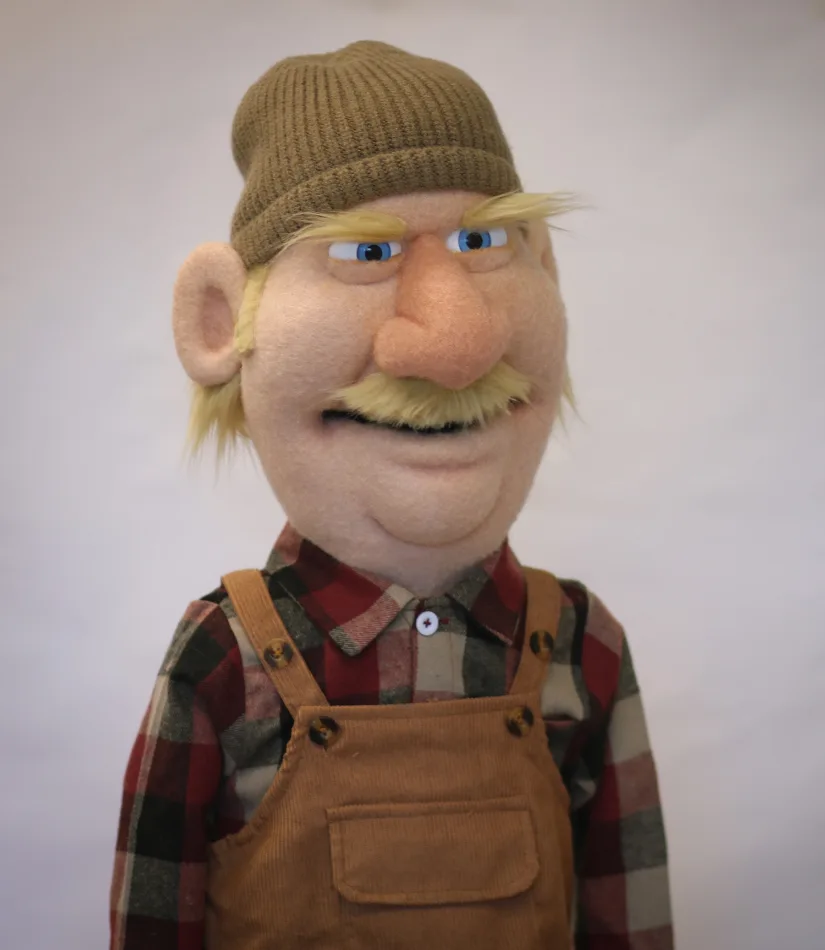
This was a particularly unusual and challenging project. As I mentioned earlier, in puppetry we often try to conceal seams to make the puppet feel more realistic and alive. However, this concept required us to celebrate the textiles themselves and highlight the way garments are constructed.
Visible seams became an important part of the design language. The challenge was ensuring those seams remained visually appealing when the puppet was in motion, particularly around the mouth. Fabric can easily bunch or wrinkle in distracting ways, so we had to carefully pattern and construct the heads to allow for expressive movement while maintaining the intended look.
We also used fashion fabrics instead of the usual textiles we work with, such as fleece and faux fur. Normally the fabrics intended for puppet making have a slight stretch, which makes it easier to cover a solid foam sculpture. However, for this project we needed to use fabrics like denim and leather, which are trickier to use for this purpose. This meant we needed to work with the fabric creatively, embracing the seams and spending time creating a pattern that would contour over the puppet’s face.

Behind The Scenes
Have there been any particularly unusual or challenging commissions that pushed your creativity or technical skills?
As with the answer above, the Vestiaire Collective collaboration is a strong example of a project that pushed both our creativity and our technical skills, given how unconventional the fabric choices were compared with our usual materials.
What does a typical day in your studio look like?
One of the things I love most about my job is that no two days are ever the same. One day we might be building a seven-foot mascot costume, and the next we could be working on a 30cm hand puppet.
The range of skills involved is equally varied. Alongside textile work, puppet making can involve woodworking, metalworking, sculpting, painting and a host of other craft disciplines, which keeps every project fresh and exciting.

Advice for Textile Artists
Many of our readers are passionate textile makers. What skills from embroidery, sewing or textile art have proved most valuable in puppet making?
The ladder stitch is one of the most useful techniques in puppet making. It’s particularly effective when working over a sculpted foam structure and serves as an excellent closure stitch when sewing from the right side of the fabric.
Because so much puppet work involves shaping fabric around three-dimensional forms, having strong hand-sewing skills is invaluable.
What advice would you give someone who dreams of turning their creative passion into a successful business?
Be patient and persistent. Building a business takes time, particularly within the arts. Keep putting your work out there as much as possible and see if people are willing to give you a commission. Try to find your niche within the craft discipline you like working in.
There will inevitably be challenges along the way, but if you genuinely love what you do, the hard work is far easier to sustain, and ultimately far more rewarding.
Looking Ahead
Are there any exciting projects, collaborations or future plans that you can share with us?
Working in the TV and film industry often means signing NDAs, so there’s not a great deal we can talk about just yet!
Finally, where can readers find out more about Puppets Magic Studio and follow your work?
You can find out more about our work on our website at www.puppetsmagic.co.uk or follow us on Instagram at instagram.com/puppetsmagic for behind-the-scenes insights, new projects and the latest creations from the studio.
If you could leave our readers with one piece of creative advice, something you’ve learned through years of making, what would it be?
Always make time to create something purely for yourself, not necessarily to sell, promote or share on social media, but simply because you feel compelled to make it.
It’s often this kind of personal, indulgent creativity that keeps the spark alive. It gives you the freedom to experiment, take risks and discover new ideas without the pressure of an audience or a deadline.
From cardboard theatres to campaigns for Apple, Daniel Byrne’s journey is a reminder of how far hand-sewing skill and creative persistence can take you. For SST’s community of makers, his story is proof that the techniques learnt at the sewing table have a life far beyond the hoop or the sewing machine.
For textile makers keen to build the kind of hand-sewing confidence our City & Guilds accredited Hand Embroidery and Machine Embroidery courses offer a structured route from Skill Stage 2 through to Skill Stage 4.
Links
Website: www.puppetsmagic.co.uk
Facebook: www.facebook.com/PuppetsMagic
Instagram: @puppetsmagic