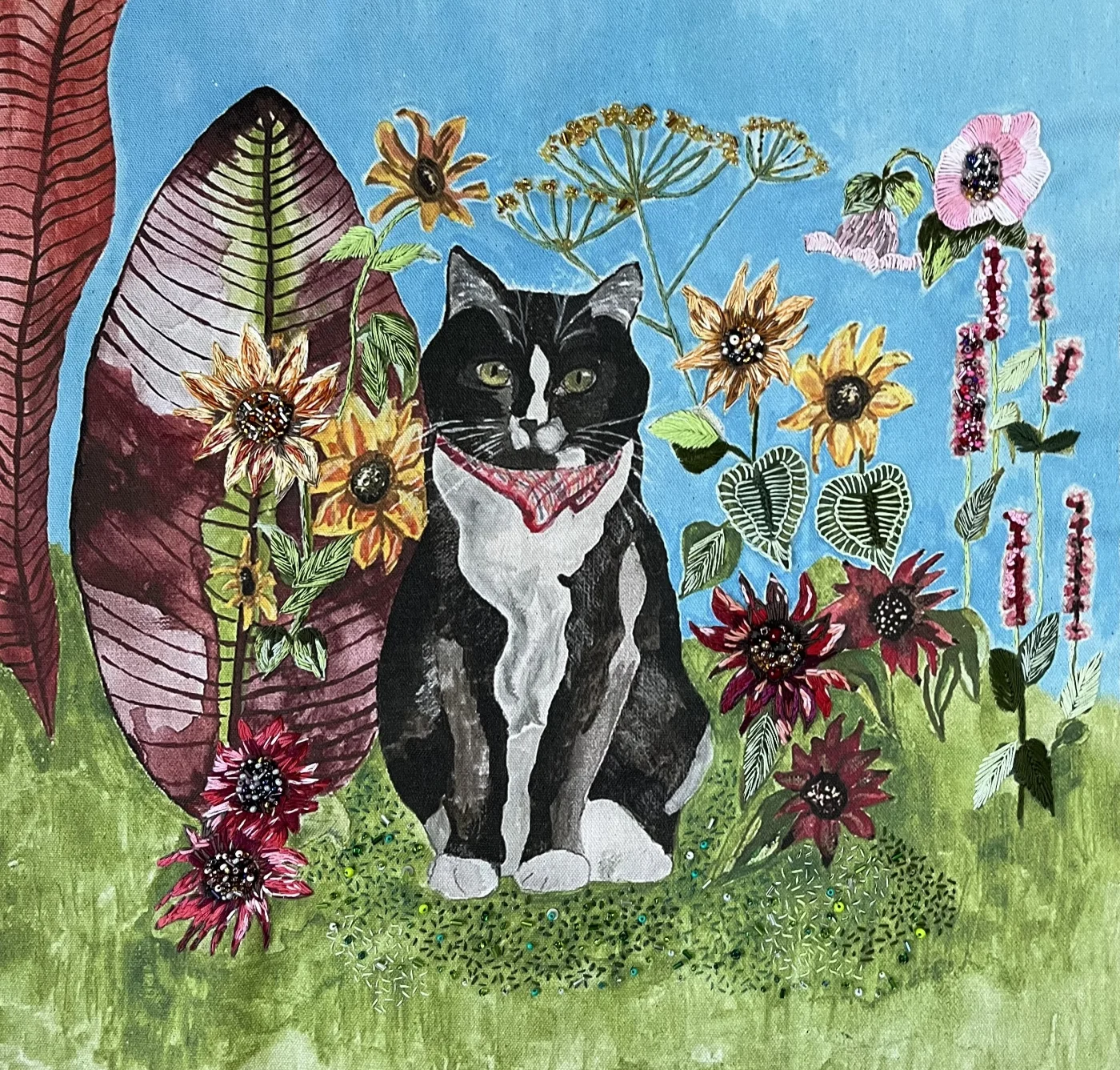
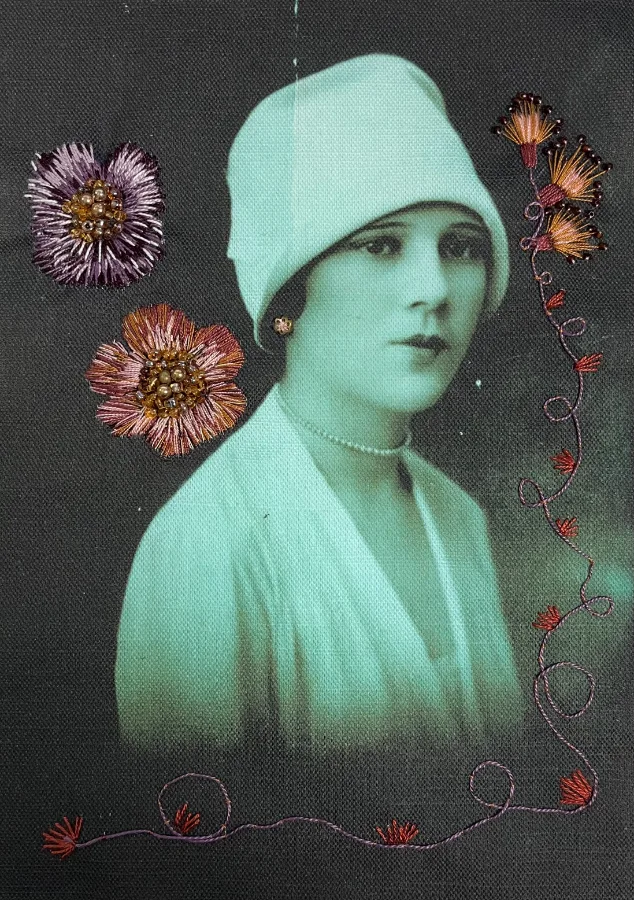
Victoria Merness’s photographic embroidery began with an ultimatum, not a plan. Partway through her master’s degree at the University of Salford, a tutor told her to choose, paint or stitch, never both on the same piece. She chose stitch, and has not looked back since.
By the time that decision arrived, Victoria had already lived several working lives. She had bought furniture for retail groups, run an interior design business with her parents, and somewhat unexpectedly, fallen into accountancy. None of it felt particularly creative at the time, yet all of it shaped the resourceful, business minded artist who would go on to found Little House of Victoria during lockdown, working from a historic cotton mill in the Saddleworth Hills near Manchester.
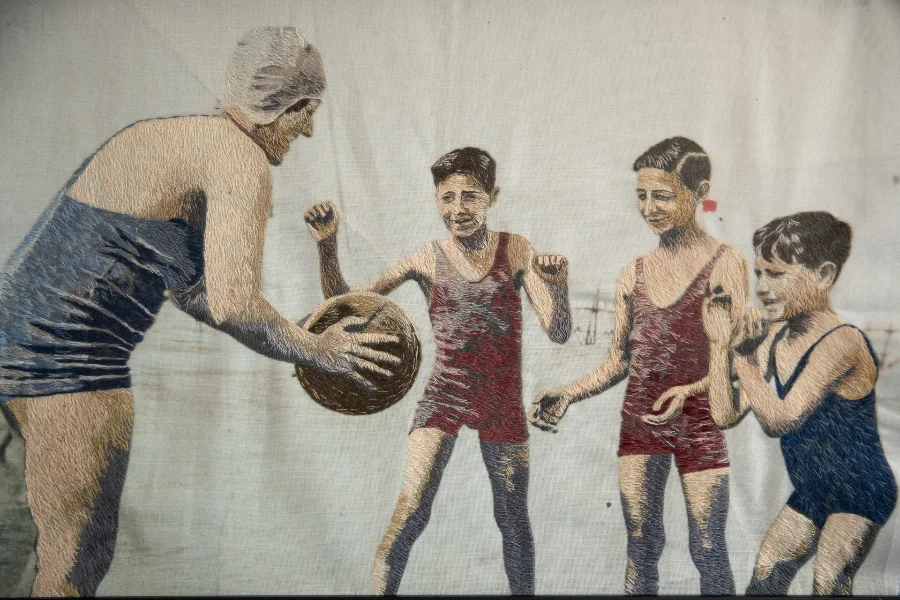
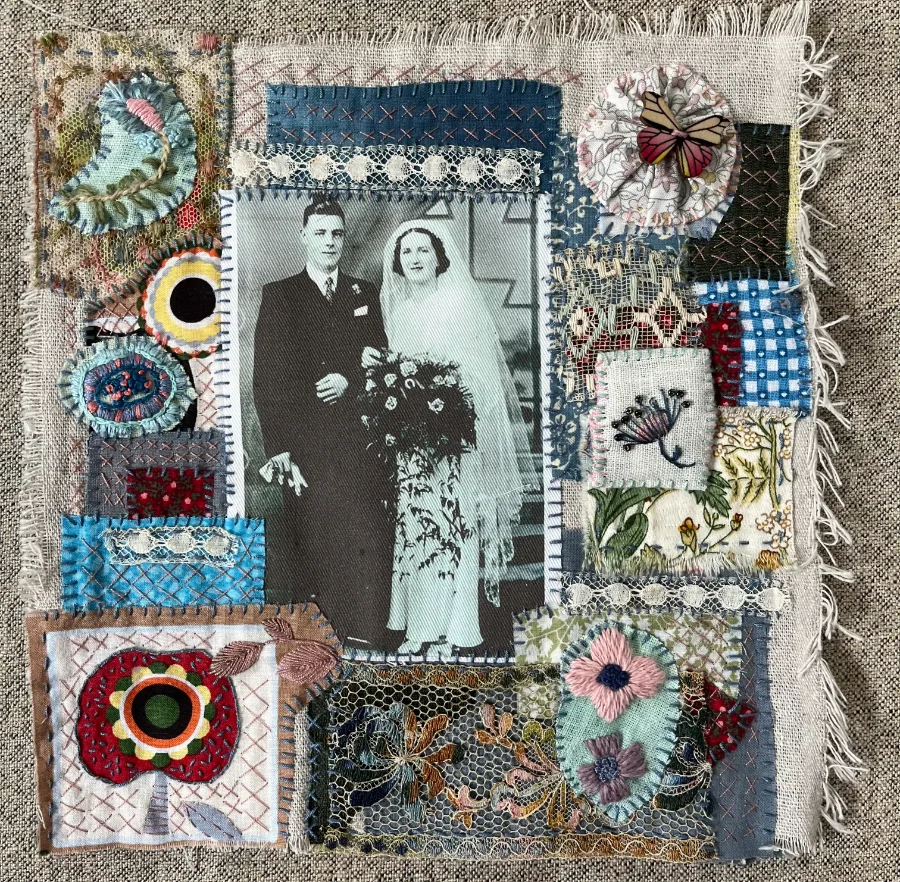
Embroidery alone felt too slow for the pace her master’s degree demanded, so Victoria began printing photographs onto fabric and stitching on top, fusing family history, vintage imagery and folk art into a richly layered style entirely her own. This episode traces how a childhood stamp collection, a newly discovered family photograph album and a great deal of determination became a thriving creative business.
We’re especially pleased to welcome Victoria to the tutoring team this year, where she will be teaching and assessing our embroidery courses. For students drawn to her own richly layered, photography led style, that combination of qualified educator and exhibiting textile artist is a rare and valuable one.
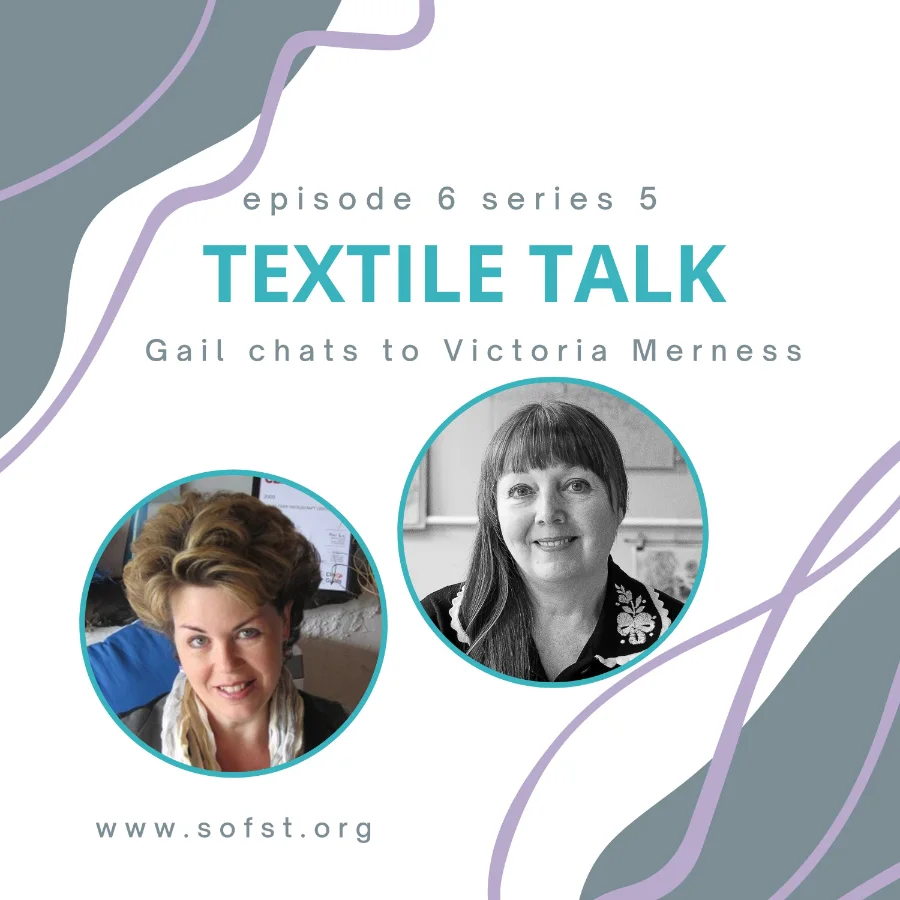
Textile Talk with Victoria Merness
Listen to the episode on your favourite podcast platform or click the link below to listen now.
From Accounts to Art: A Career That Took the Long Way Round
Victoria left school at sixteen and spent decades moving between careers that, on the surface, had nothing to do with textile art. She graduated in marketing, then worked as a buyer for several large retail groups, sourcing furniture, sofas and homewares. For eight years she ran an interior design business with her mum and dad, before what she describes as accidentally falling into accountancy.
None of it was especially creative, yet Victoria insists that every role left its mark. The business skills she picked up along the way later proved invaluable when she came to set up her own studio. A love of making had been there since childhood, she can still recall, at around the age of three, being told by her grandmother that she was going to be an artist, but it stayed dormant for years, surfacing briefly in a ceramics O level before going quiet again until her forties, when a foundation degree and then a full degree finally gave it room to grow.
The Tutor’s Ultimatum Behind Victoria’s Photographic Embroidery
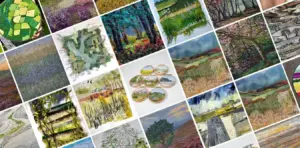
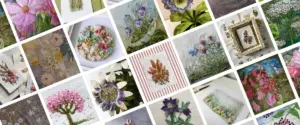
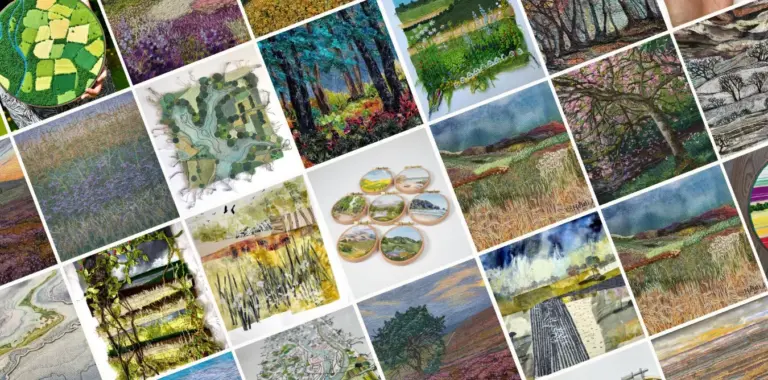
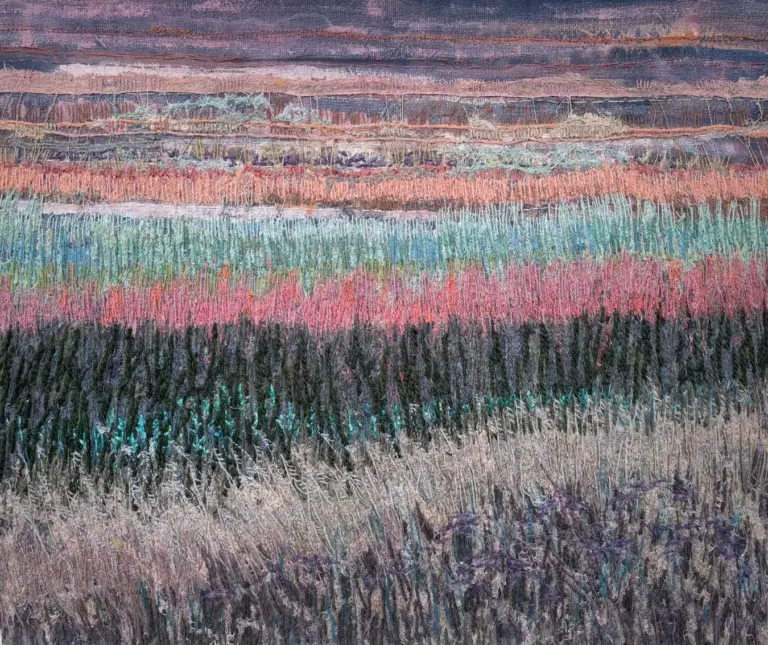
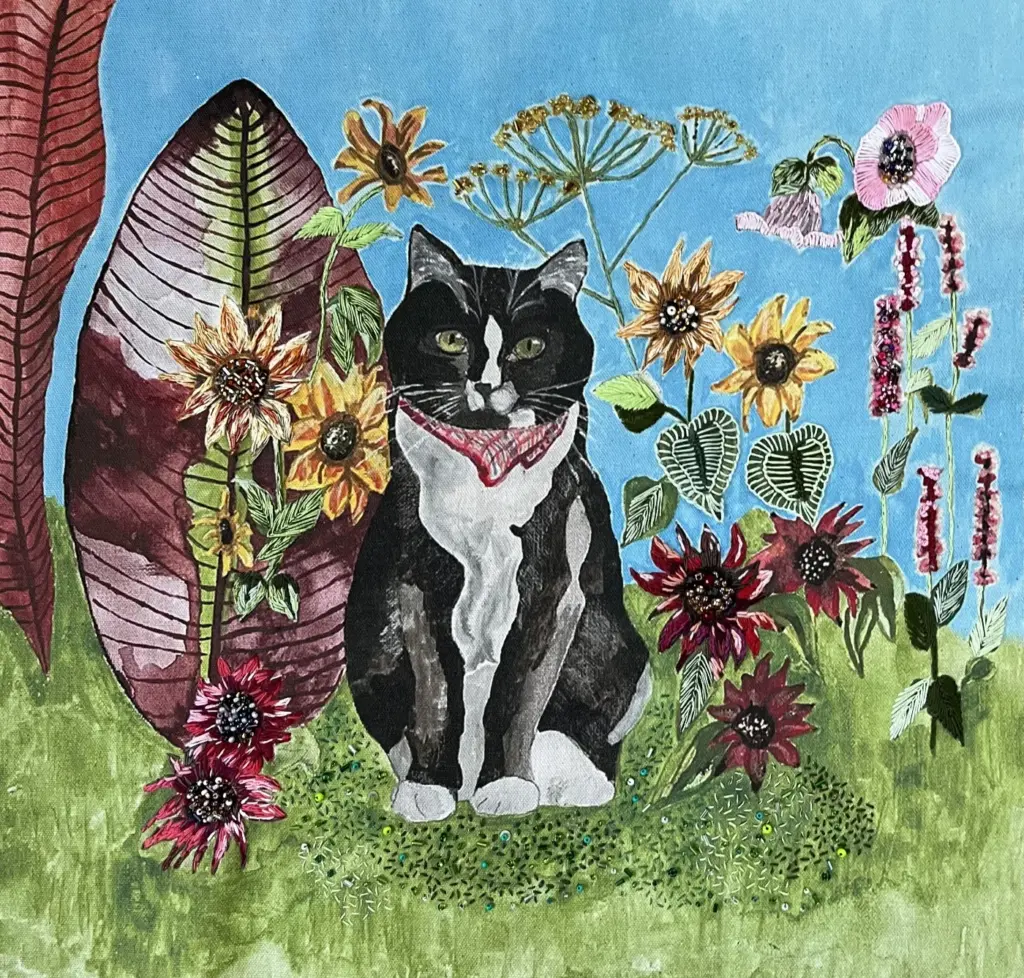
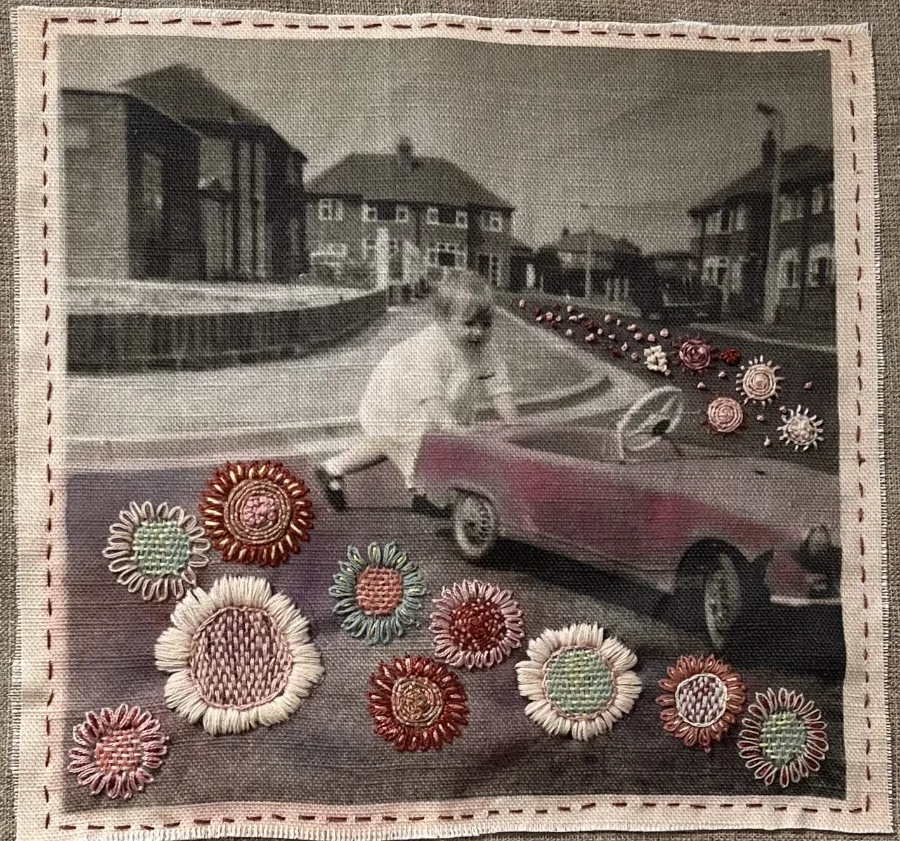
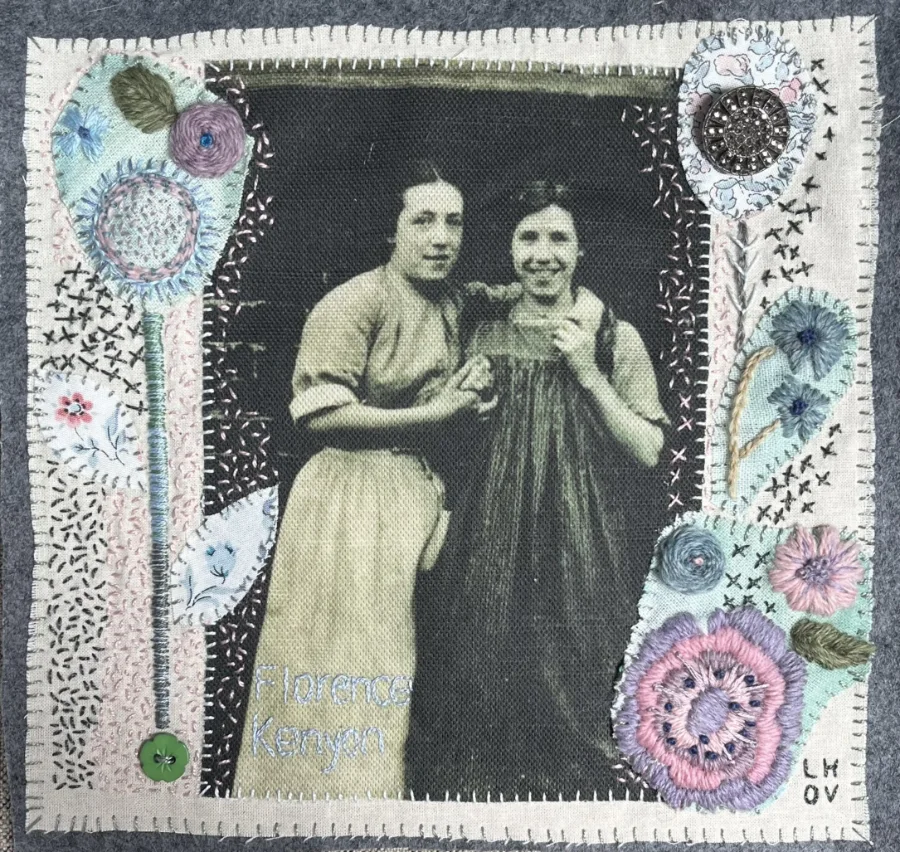
It was during her master’s degree at the University of Salford, taken in her early fifties and largely through lockdown, that Victoria’s photographic embroidery technique properly took shape. Faced with a tutor’s instruction to choose paint or stitch and never combine them, she picked stitch but needed a way to work faster than traditional embroidery allows. The solution was to print photographs onto fabric and stitch directly on top, building layered pieces that combine her own photography, family archive images and hand stitched detail.
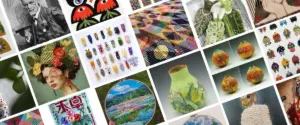
The same instinct led to one of her best loved product ranges. As a child Victoria collected postage stamps, and the album she kept has since been scanned and printed onto fabric for appliqué into embroidery kits, much to the delight of customers who recognise stamps from their own childhood collections. Victoria is candid about the trial and error involved in getting prints onto fabric reliably, admitting that home iron on transfer paper ruined two printers before she found more dependable methods, including dedicated fabric printers and professional digital printing services.
Determination and Desperation: Building a Business in Lockdown
Victoria describes the launch of Little House of Victoria, in the middle of the pandemic, as driven by determination and desperation in equal measure. As one of millions of newly self employed people who fell outside the furlough scheme, she had no safety net, but she did have a place on the University of Salford’s Launch programme, which helps students start their own enterprises. A grant from the scheme, along with a free website and branding won in a competition run by fellow graduates Daria and Alexandra of Dar Studio, gave the new business its first real foundation.
What followed still surprises her. While flicking through television channels during lockdown, Victoria spotted a craft demonstrator on Hochanda and, on a whim, emailed the channel about her own kits. Within days she was filming her first two episodes from a room in her own house, dressed to look like a studio because Hochanda’s real one was closed. Live television presenting then led to Sewing Street, where she credits broadcaster John Scott with teaching her a great deal about performing live. As a result, what began as a leap of desperation became one of her most effective, and entirely unpaid for, marketing tools.
Barry the Barista and a Cotton Mill Full of Community
Victoria’s studio sits on the third floor of Woodend Mill, a historic cotton mill in the Saddleworth Hills overlooking a canal, about a twenty five mile round trip from home. Her father, affectionately nicknamed Barry the barista, helps carry kit up the stairs and keeps everyone supplied with coffee, tea and biscuits, at the age of eighty two.
The studio has built a loyal, regular community of students who return again and again, and Victoria is candid that workshops are as much about connection as they are about stitching. She often comes home feeling, in her words, as though she has had a free therapy session, despite being the one teaching it.
That sense of community sits alongside some hard won business lessons. After her Facebook account was hacked and wiped of every photograph, Victoria became a passionate advocate for email newsletters, a contact list a business genuinely owns, rather than one that can disappear overnight on a platform beyond its control.
The Family Album That Rewrote a Personal History
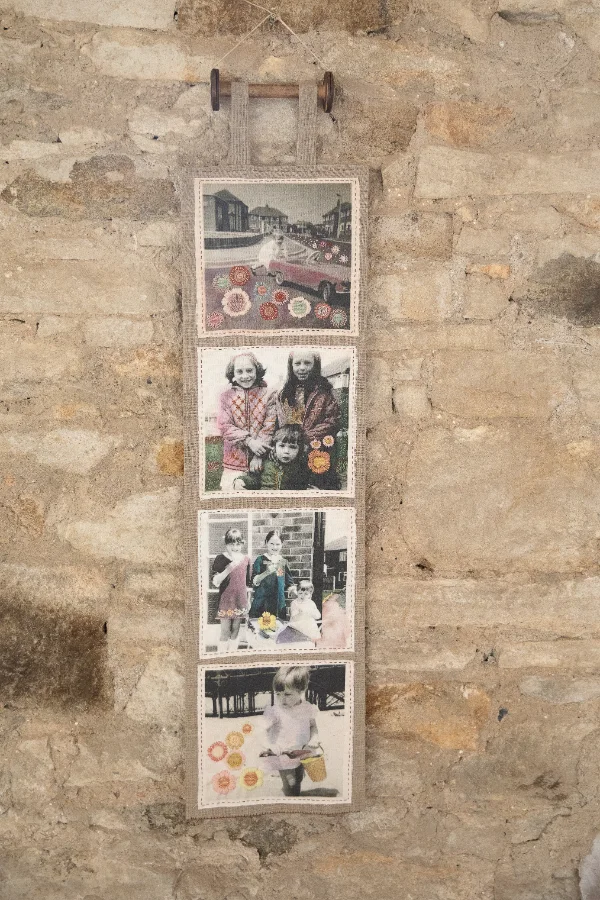
Much of the nostalgic, folk art feel in Victoria’s work traces back to two photographic archives. The first is her own childhood, captured in black and white by her father on a simple Kodak Brownie camera. The second, more unexpected, is a family photo album that arrived only after her grandfather’s death, sent by a previously unknown great uncle living in Canada.
That album revealed a family history Victoria had never known. She had always believed her father’s family was French, because the surname Merness sounded as though it might be, but the photographs and accompanying press cuttings traced the family back to Spain, with relatives in Argentina and, coincidentally, a farm in Uppermill, close to her own studio. One great uncle ran what was known as the Merness Egg Fund, shipping vast quantities of eggs from Argentina to wartime Britain. Victoria is now working on a personal project inspired by Dolefield Farm, the family’s Uppermill home, with the Egg Fund story earmarked for a future body of work.
Why Confidence, Not Talent, Is the Real Barrier to Creativity
Victoria is firm that creativity can be taught, and that lack of confidence, not lack of talent, is what stops most people in their tracks. A good teacher, she says, needs two things: an understanding of where a student is on their own creative journey, and the ability to spot what will genuinely inspire them. She is equally firm that embroidery deserves to be taken as seriously as fine art, pushing back against the idea that it is a lesser, gendered craft rather than a legitimate creative discipline in its own right.
Her own academic path, from a foundation degree taken in her forties to a master’s in Contemporary Fine Art completed during lockdown, backs up everything she teaches about starting later and improving with practice. It is a philosophy she brings to her own role as a tutor with SST, where City & Guilds accredited Skill Stages give stitchers of any age and background a structured, supported route into textile art. Find out more about studying an accredited Textile Art Course at the SST.
Listen to the full conversation
Ready to hear the full conversation? Listen to this episode of Textile Talk on Spotify, Apple Podcasts, or your favourite podcast platform, or listen directly via the link below. From a tutor’s ultimatum to a newly discovered family history, it is a story with more twists than most.
Victoria Merness: Discover More
Website: www.littlehouseofvictoria.com
Instagram: instagram.com/littlehouseofvictoria/
Facebook: www.facebook.com/littlehouseofvictoria
Little House of Victoria studio: Woodend Mill, Mossley