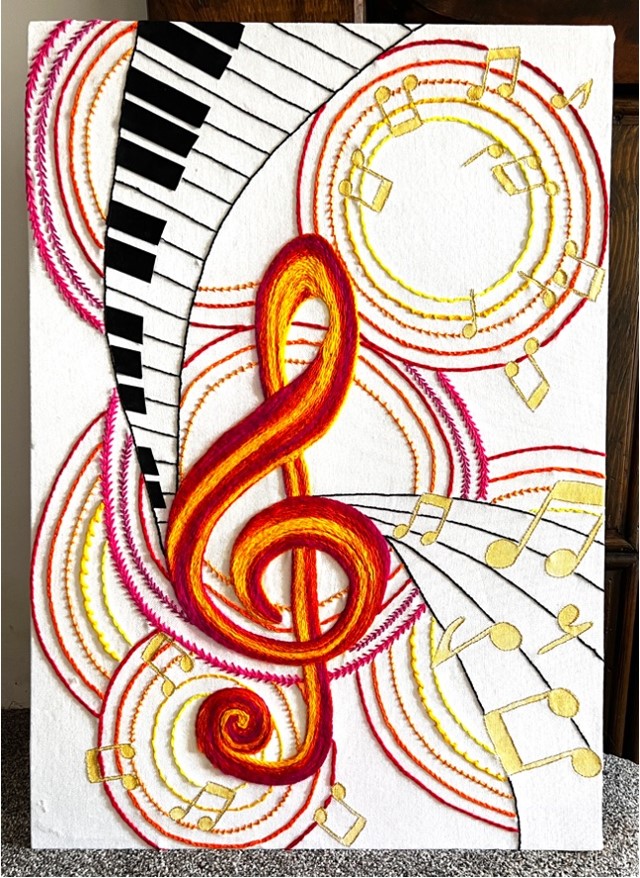
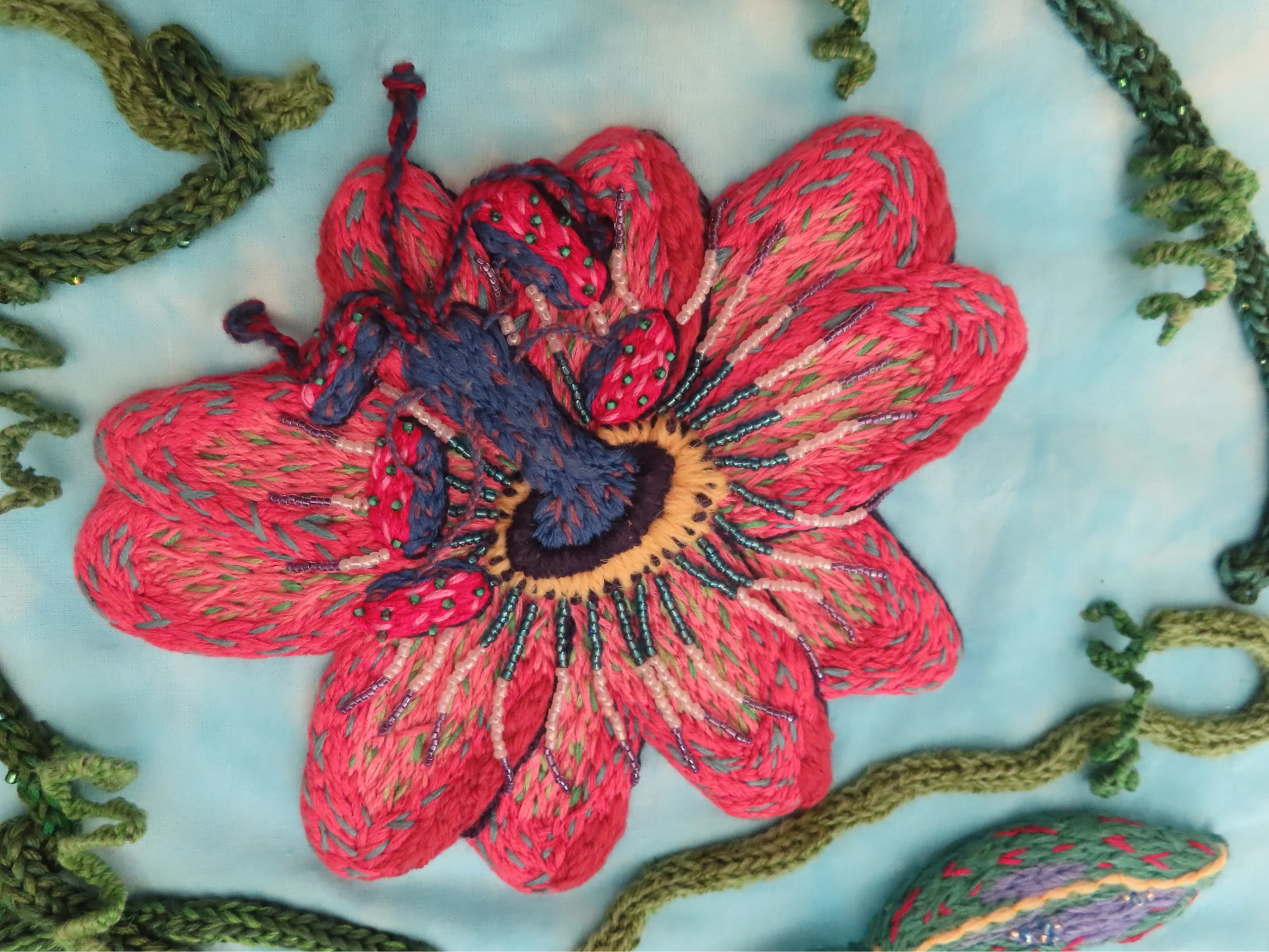
As part of our ongoing series exploring traditional and contemporary hand embroidery techniques, we’ve created this guide to thread painting. Traditionally known as silk shading, we’re here to explore one of the most refined and painterly forms of stitch.
Across this series, we examine not only how techniques are worked, but why they developed, where they sit historically, and when you might choose to use them in your own practice. Silk shading occupies a unique place within embroidery. It moves beyond decorative pattern and into tonal realism, allowing stitch to behave almost like paint.
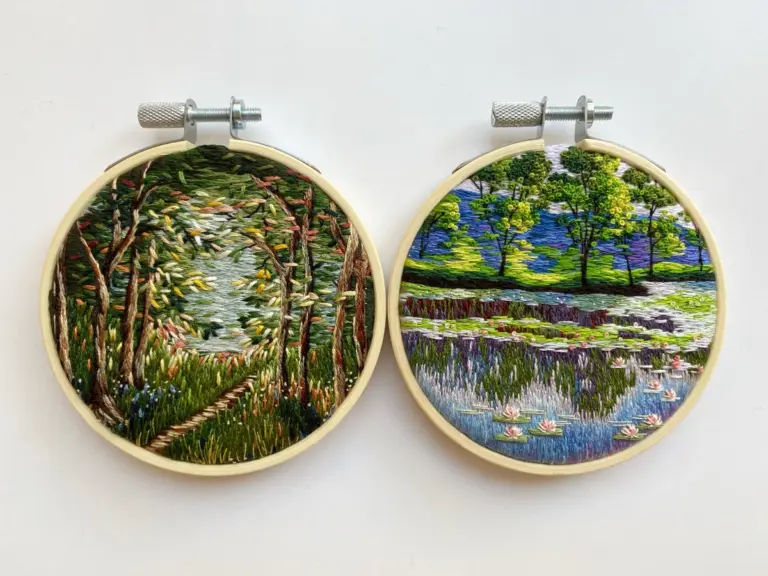
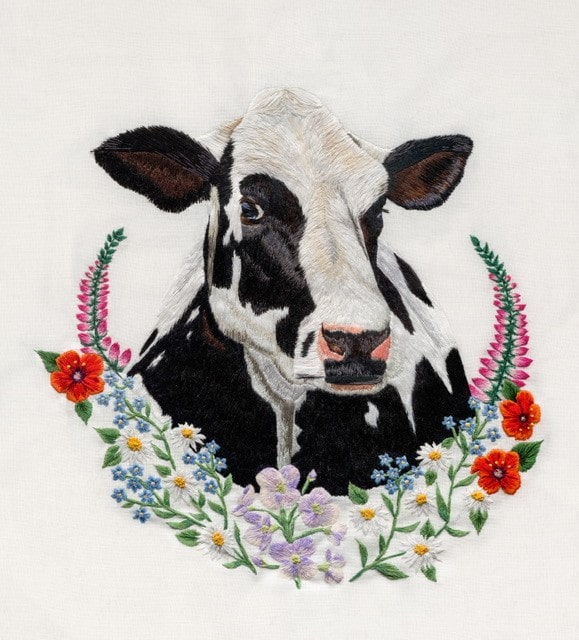
Often referred to today as thread painting, silk shading uses carefully blended long and short stitches to create soft gradations of light and shadow. The result can be astonishingly lifelike and very much like a painting.
In this guide, you’ll discover:
If you’re drawn to botanical realism, expressive wildlife studies or painterly textile art, silk shading offers extraordinary creative possibilities.
What Is Silk Shading (Thread Painting)?
Silk shading uses layers of long and short stitches, worked in closely blended colours, to build soft gradations of tone. Instead of bold outlines or graphic pattern (like Blackwork embroidery), the technique focuses on subtle, blended transitions. For example, light dissolving into shadow, petal edges fading into mid-tones, feathers merging into background.
Traditionally, embroiderers worked with silk thread for its natural sheen and luminosity. The reflective quality of silk enhances the illusion of depth, allowing stitches to catch the light just as oil paint would on a canvas.
The result? Embroidery that feels alive, like it’s been painted – hence the term, ‘thread painting’.
The Historical Development of Silk Shading
Chinese Origins
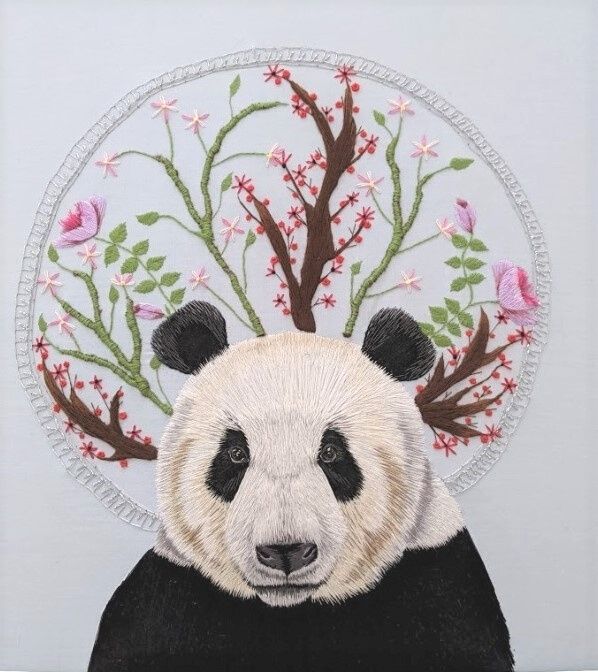
The roots of silk shading reach back to ancient Chinese embroidery, particularly during the Tang (618–907) and Song (960–1279) dynasties. Su embroidery became especially renowned for its intricate, lifelike depictions of flowers, birds and animals. Using fine silk threads, embroiderers achieved extraordinary tonal control and detail.
These techniques travelled across Asia and into Europe, influencing decorative needlework traditions for centuries.
Silk Shading in Europe
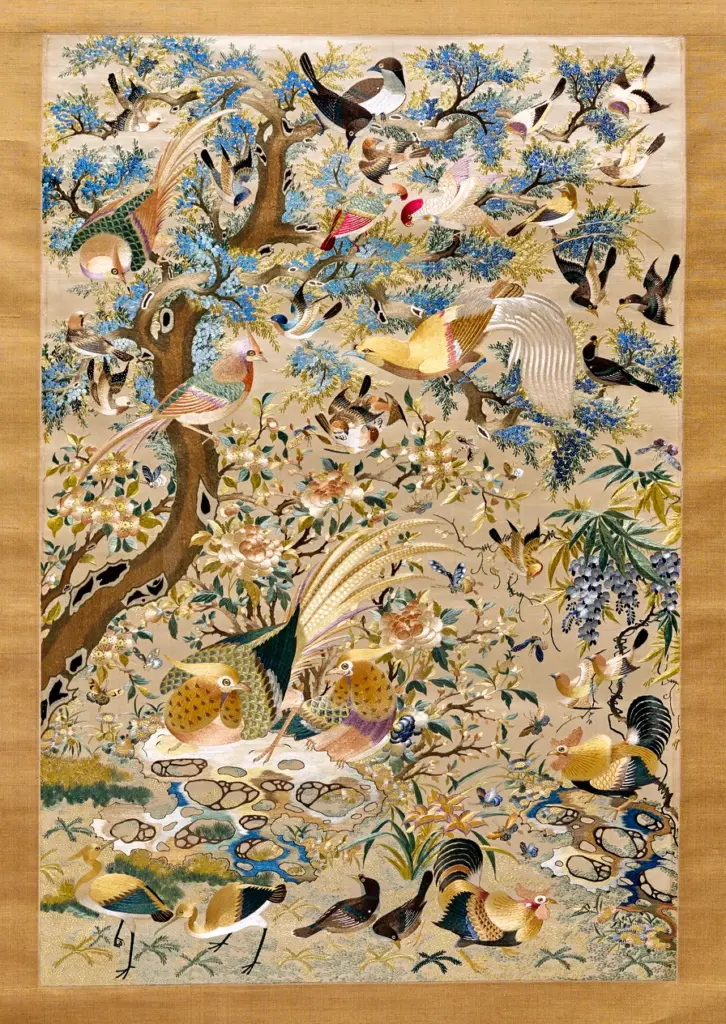
By the medieval period, silk shading appeared in ecclesiastical embroidery across Europe. Religious vestments, altar frontals and banners often featured softly shaded silk figures and floral motifs.
In Britain, the technique flourished during the Jacobean period. Embroiderers combined silk shading with wool threads in crewelwork to create rich, flowing designs of exotic plants, birds and mythical creatures.
During the 18th and 19th centuries, silk shading became widely popular in domestic embroidery. Floral sprays decorated gowns, waistcoats and household linens. Printed patterns made the technique accessible, and Victorian needlework manuals encouraged women to master tonal shading.
The founding of the Royal School of Needlework in 1872 marked a significant moment in preserving traditional techniques. The RSN formalised training in silk shading while encouraging artistic innovation. Today, it remains one of the most respected institutions teaching the discipline.
Key Techniques in Silk Shading
Silk shading demands patience, observation and control. Here are the essential elements:
1. Long and Short Stitch
The foundation of silk shading.
By alternating long and short stitches, you break up harsh lines and blend colours seamlessly. Each new row overlaps the previous one slightly, creating smooth tonal transitions.
Mastery lies in:
- Choosing subtle shade variations
- Avoiding visible “steps” between colours
- Controlling stitch length and tension
Without careful blending, the work loses its painterly quality.
2. Directional Stitching
Silk shading is not simply about colour — it’s about movement.
Stitches must follow the natural form of the subject. Petals curve outward. Leaves taper towards a tip. Animal fur flows in defined directions.
When stitches follow structure, the design gains depth and realism.
3. Colour Blending
Unlike bold graphic techniques such as Blackwork, silk shading relies on nuanced tonal families.
You typically work from dark to light (or light to dark), gradually merging shades to create dimension. Some embroiderers introduce a mid-tone “bridge” colour to soften transitions further.
Modern practitioners may experiment with variegated threads, though traditional silk remains the gold standard for luminosity.
4. Padding for Dimension
If you want petals to lift or fruit to appear rounded, subtle padding beneath the stitching enhances three-dimensional form.
This technique proves especially effective in botanical studies and wildlife portraiture.
5. Thread, Needle and Fabric Choices
Fine silk thread remains the preferred medium for its sheen and smooth texture. However, cotton and other fibres can also achieve beautiful effects.
Choose:
- Tightly woven linen or silk ground
- Fine embroidery needles
- A well-tensioned hoop or frame
Silk shading exposes inconsistencies so consistent tension must remain even throughout.
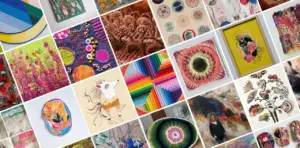
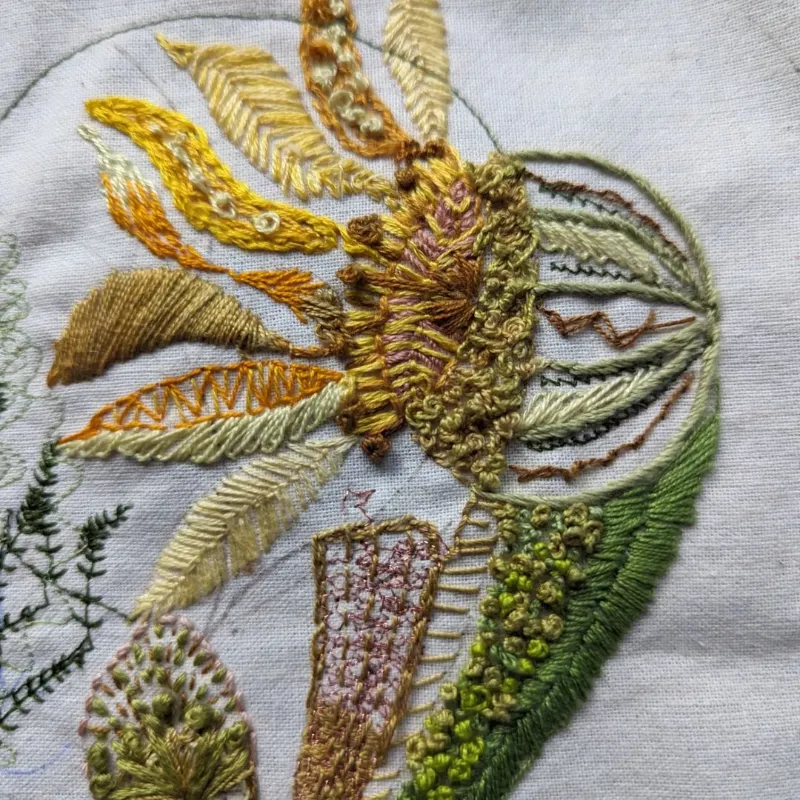
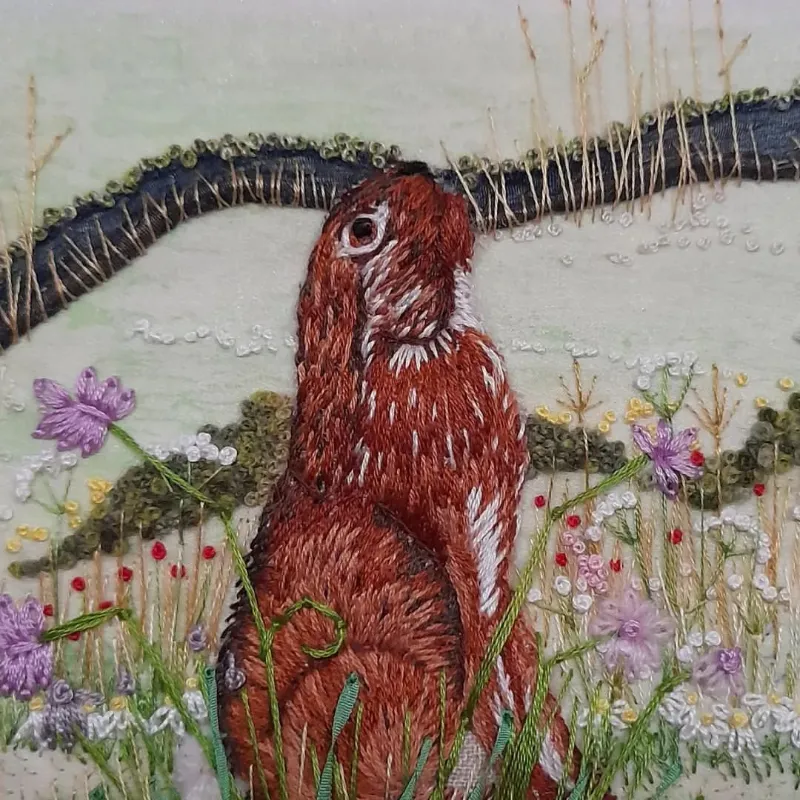
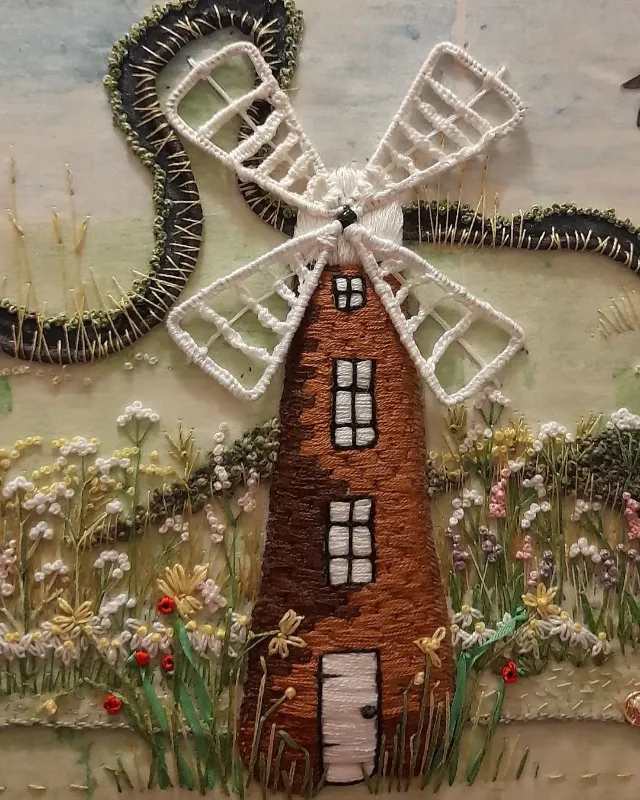
Different example of thread painting: A collection of student work from our City & Guilds accredited courses
When and Why Use Thread Painting
Thread painting (silk shading) excels when you want:
- Realistic botanical studies
- Lifelike animals or birds
- Portrait elements
- Painterly fine art pieces
- Subtle tonal transitions rather than bold graphic impact
If your design relies on dramatic line work, techniques like Goldwork or Crewelwork may serve you better. But if your aim is softness, light, depth and realism, silk shading is unmatched.
It teaches colour observation, stitch control and compositional discipline. These skills elevate all areas of hand embroidery.
Thread painting in Contemporary Embroidery
Far from being a historical technique, silk shading continues to evolve.
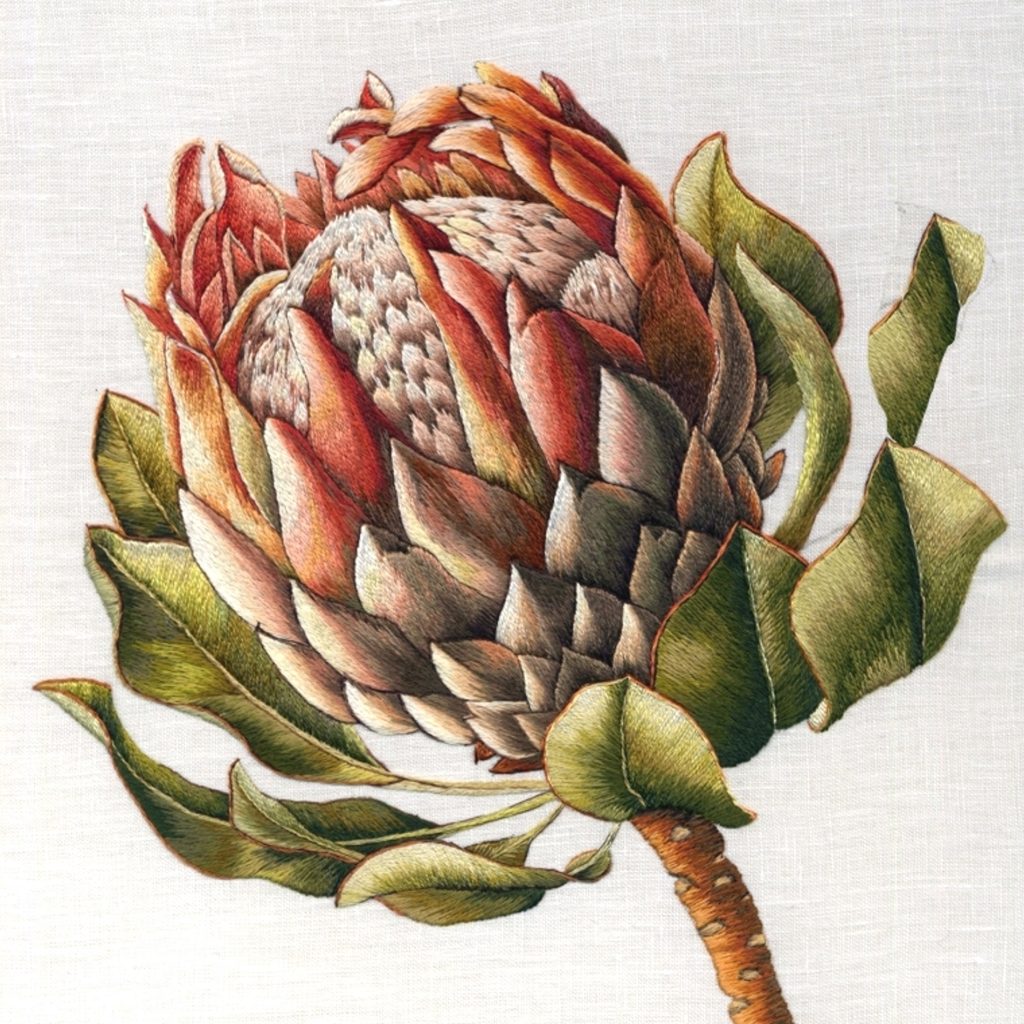
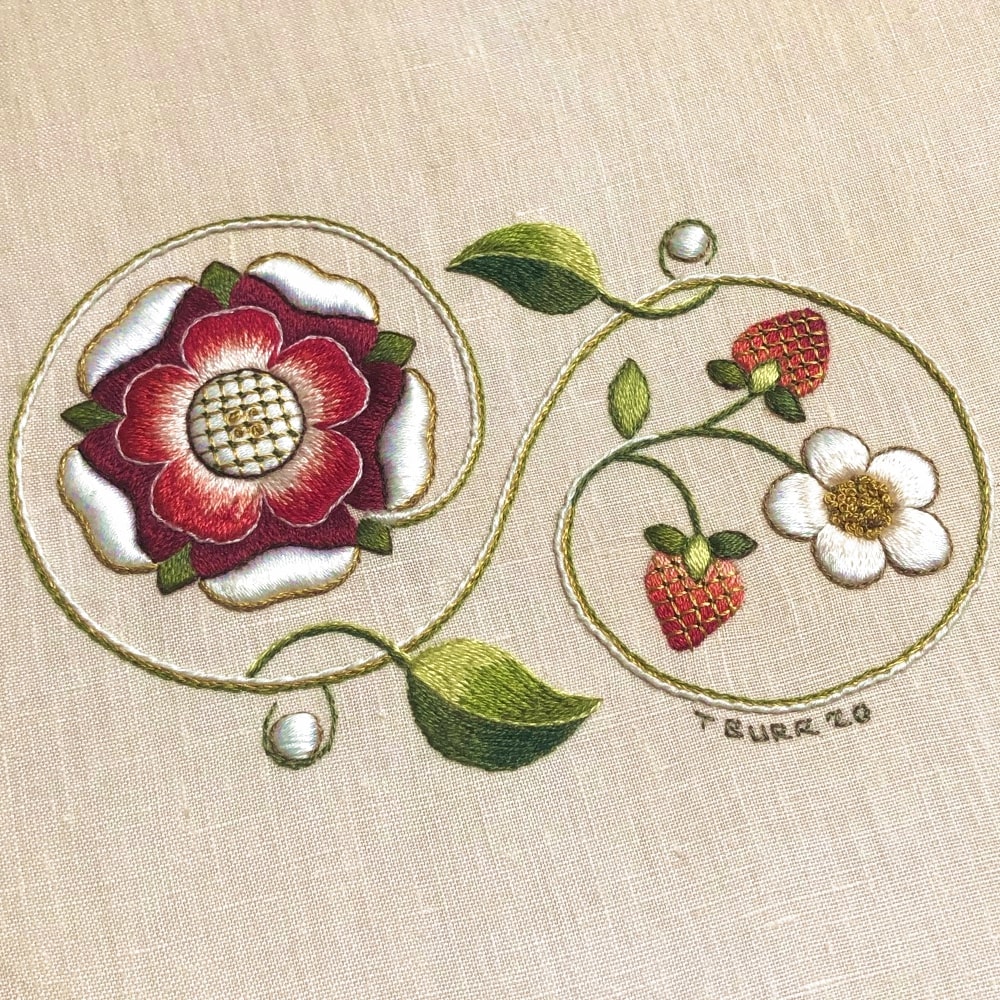
Trish Burr is one of the most respected names in contemporary silk shading and needle painting. With a career spanning decades, she has helped countless embroiderers develop confidence in long and short stitch and master the subtle tonal transitions that define this painterly technique. Trish’s approach combines meticulous technical skill with a deep appreciation for natural forms. She is particularly inspired by traditional themes of birds and botanicals resulting in pieces that feel alive with light and texture.
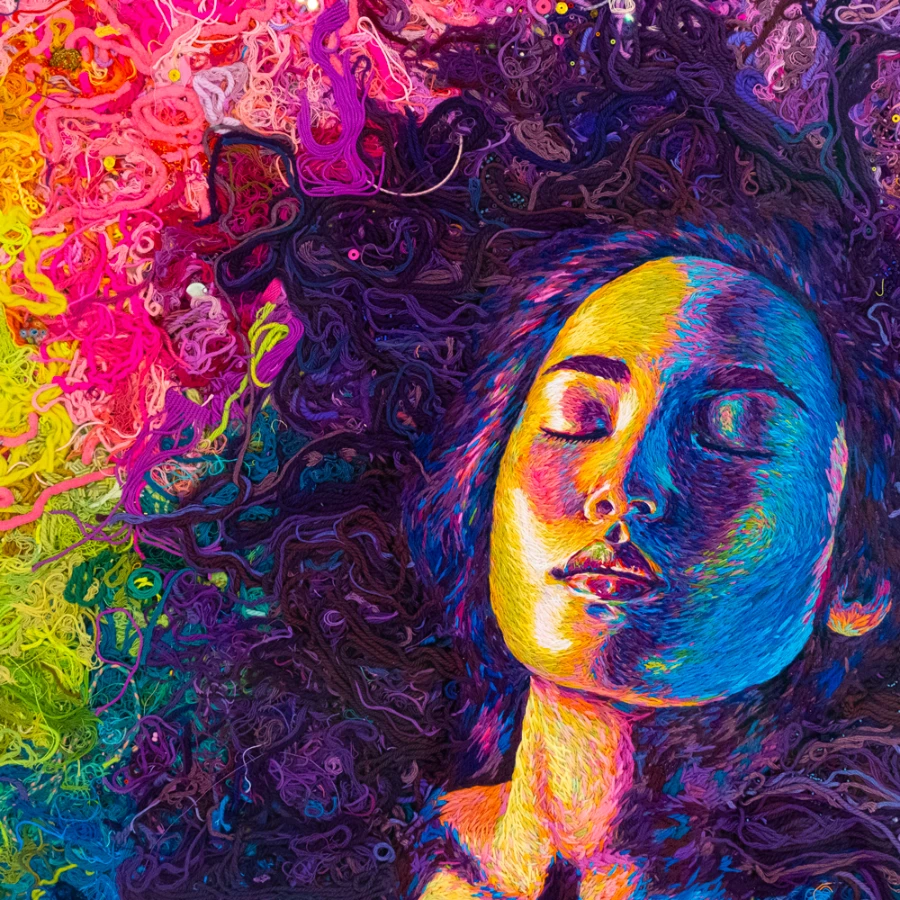
While Trish Burr’s work is grounded in traditional realism and meticulous observation, Danielle Clough brings a bold and expressive energy to thread painting that feels distinctly contemporary. Danielle’s use of colour and unexpected stitch direction pushes beyond classical botanical and ornithological subjects, embracing vibrant contrasts and painterly abstraction that draws the eye in new ways. Where Trish’s pieces often celebrate subtle tonal harmony, Danielle’s work experiments with vivid palettes and texture to evoke emotion as much as form. Together, they showcase the breadth of what thread painting can achieve.
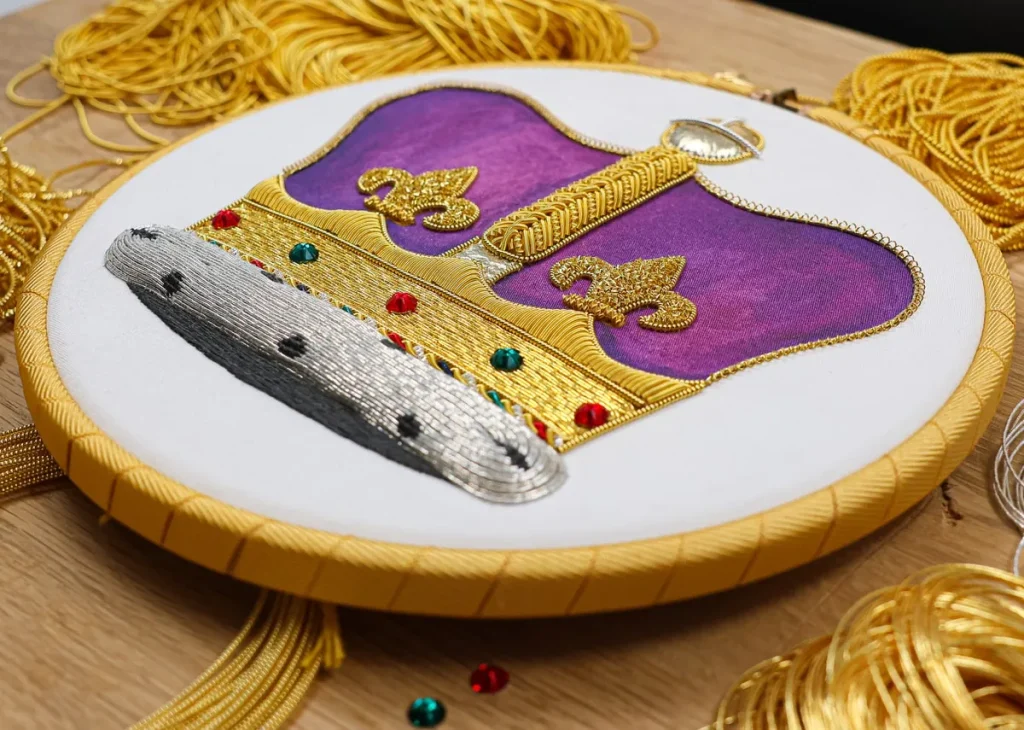
Sarah de Rousset-Hall is a tutor at the Royal School of Needlework and a regular contributor to high-profile commissions. She brings both technical rigour and artistic curiosity to her practice. She has a particular affinity for long and short stitch and thread painting, using subtle shifts in colour and stitch direction to build depth and dimensionality in her work. Her embroidery invites close looking, rewarding viewers with intricacy and delicacy that speaks to both heritage craft and contemporary art.
We were delighted to feature Sarah on our Textile Talk podcast, where she shared insights into her stylistic influences, her creative process and her approach to developing confidence and expression through stitch.
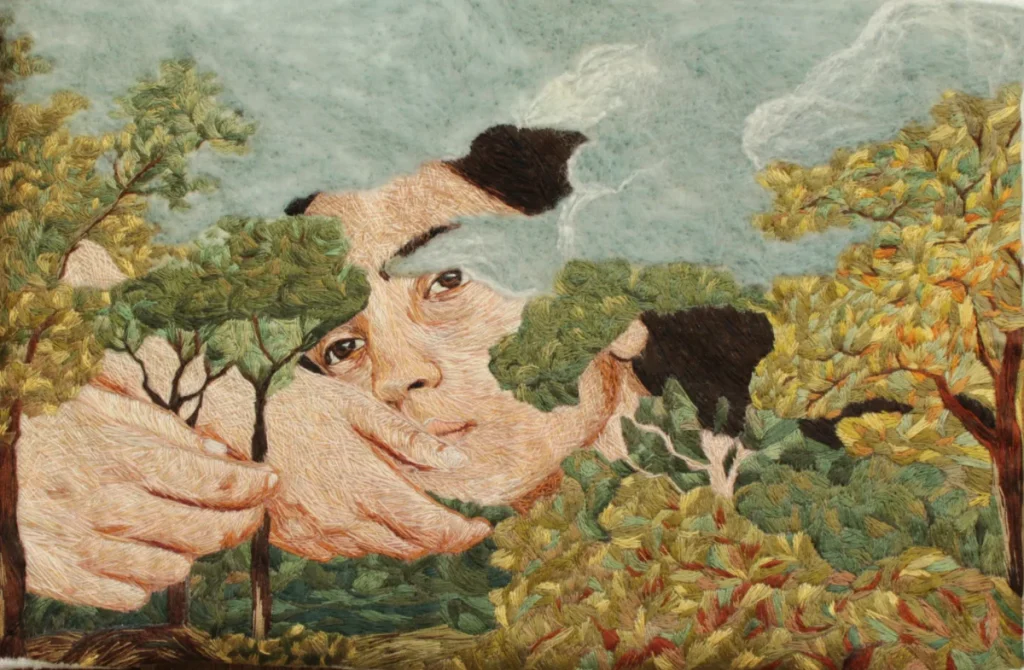
Cécile Davidovici uses thread painting not simply to replicate form, but to evoke atmosphere and emotion. While grounded in strong technical control, her long and short stitch work often feels fluid and intuitive, allowing colour to shift and merge in expressive rather than strictly literal ways. Instead of aiming for photographic realism, she uses tonal layering and directional stitch to suggest movement, light and depth, treating thread much like a painter handles pigment. In her hands, thread painting becomes less about perfect representation and more about capturing the essence and energy of a subject.
Learning Silk Shading at the School of Stitched Textiles
At the School of Stitched Textiles, we introduce silk shading within our Hand Embroidery courses, building strong foundations in long and short stitch, colour blending and stitch direction.
For beginners, we focus on:
- Controlled stitch placement
- Understanding tonal progression
- Developing observational drawing skills
- Building confidence in thread handling
As you progress through Hand Embroidery Skill Stage 3 and beyond, silk shading becomes a powerful tool for expressive, personal work. Many of our Master Practitioner students integrate needle painting into their independent textile practice.
Silk shading doesn’t just teach a technique, it broadens your ability in embroidery and allows you to expand your creative choices.
Stitching it up
Thread painting (or silk shading) embroidery combines technical discipline with artistic sensitivity. It demands patience and precision, but rewards you with extraordinary depth and realism.
From its origins in ancient China to contemporary textile art studios, silk shading remains one of the most refined forms of hand embroidery. If you want to move beyond pattern and into painterly storytelling, silk shading may well be the technique that transforms your practice.