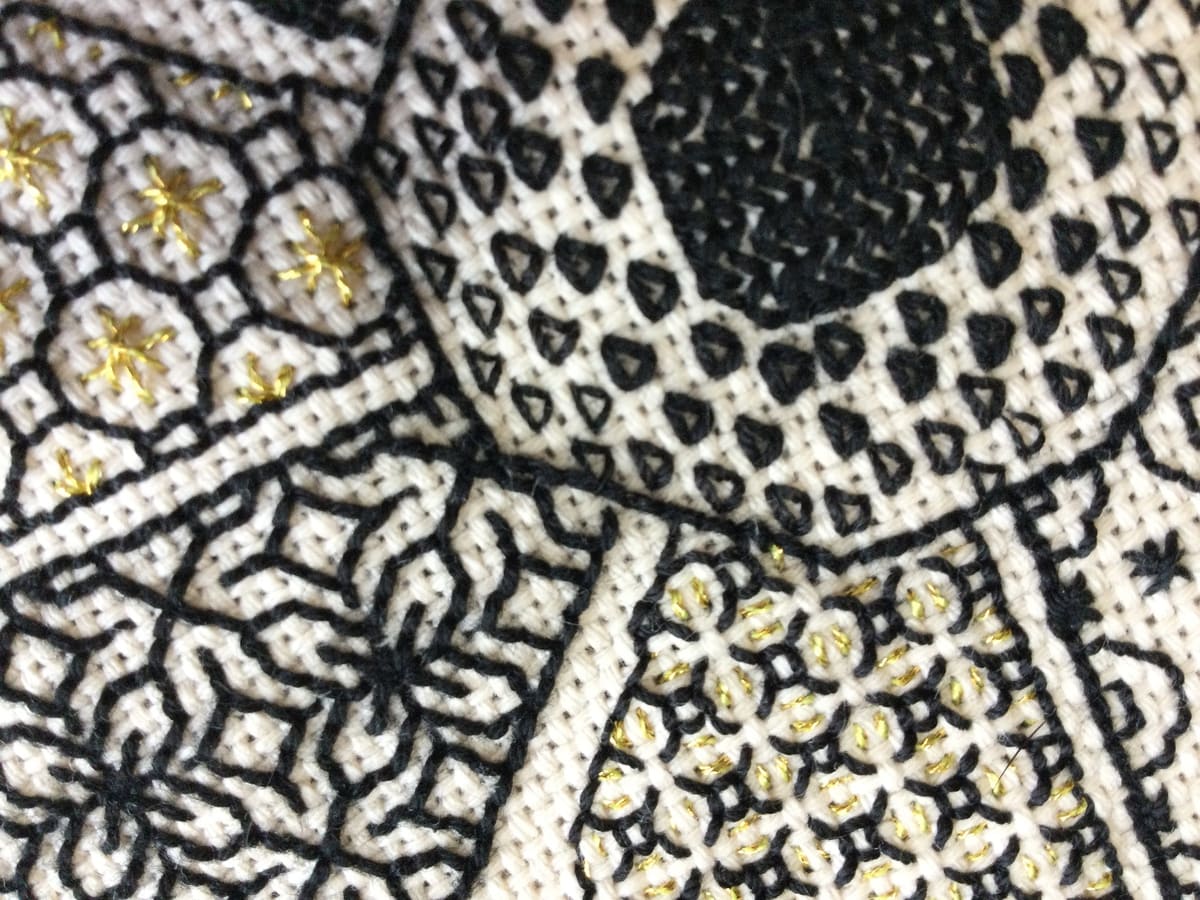
Blackwork embroidery is one of the most elegant and mesmerising forms of stitched textiles. With its bold monochrome palette, geometric precision and rich cultural history, it has captivated makers for centuries. Unlike thread painting, which builds depth through long and short stitch blending, blackwork achieves visual interest through pattern density and line variation. Closely related is redwork embroidery, a charming and accessible technique that has inspired countless quilts, linens and decorative pieces since the 19th century.
Both techniques may look simple at first glance, but they offer endless creative potential. Here, we explore the history, stitches, motifs and modern makers keeping blackwork embroidery and redwork embroidery alive today.
You can explore the full history of Hand Embroidery, Goldwork Embroidery and Crewelwork Embroidery in our other blogs.
History of Blackwork Embroidery
Blackwork embroidery — sometimes referred to as Spanish work — is believed to have reached England in the 16th century. Many historians credit Catherine of Aragon, Henry VIII’s Spanish queen, with introducing the style to the Tudor court. Whether or not she brought it directly, blackwork quickly became the needlework of choice during the Tudor and Elizabethan eras.
Blackwork embroidery was used extensively on clothing. Think elaborate cuffs, collars and sleeves decorated with delicate black silk patterns that echoed fine lace. The stark contrast of black on white linen created an understated yet luxurious effect, and the designs were as practical as they were beautiful — monochrome threads were far easier to wash and maintain than coloured silk.
Early Tudor blackwork was heavily influenced by Moorish and Islamic art. Repeating geometric motifs, floral patterns and interlacing designs became staples of the technique, often used to fill large areas or frame a garment with intricate borders.
Although blackwork declined in popularity during the 17th century, it never disappeared entirely. It made a romantic comeback in the Victorian era, when needleworkers fell in love again with its historical charm and refined simplicity.
Today, blackwork embroidery is once again on the rise, celebrated for its mix of structure, texture, tradition and modern minimalism.
History of Redwork Embroidery
Redwork embroidery is a joyful, nostalgic technique that emerged in the 19th century — especially in the United States — but has roots in European folk embroidery. Its rise in popularity is largely thanks to Turkey red, a colourfast dye that resisted fading long before synthetic dyes became available.
Because red thread could survive repeated washing, redwork became perfect for household textiles. Makers used it to decorate quilts, pillowcases, tea towels and clothing. Designs were simple, charming and easy to stitch, making redwork one of the most accessible embroidery techniques of its time.
By the early 20th century, redwork was everywhere. “Penny squares” — small pre-printed fabric squares sold for a penny — allowed beginners to embroider ready-made motifs and sew them together into quilts or samplers. These penny squares helped make redwork an important part of early American craft culture.
Study A City & Guilds Accredited Course
Our unique City & Guilds accredited courses allow you to explore and experiment with historic techniques like Blackwork and Redwork embroidery.
Courses last between 1-2 years and are studied via distance learning, with full tutor support.
Blackwork Stitches & Techniques
Blackwork embroidery is built on a foundation of clean, precise lines. Two stitches define the technique:
Backstitch
One of the simplest stitches in embroidery. Backstitch creates a strong, continuous line and is ideal for outlining, structural elements and crisp details.
Holbein Stitch (Double-Running Stitch)
The signature stitch of blackwork embroidery.
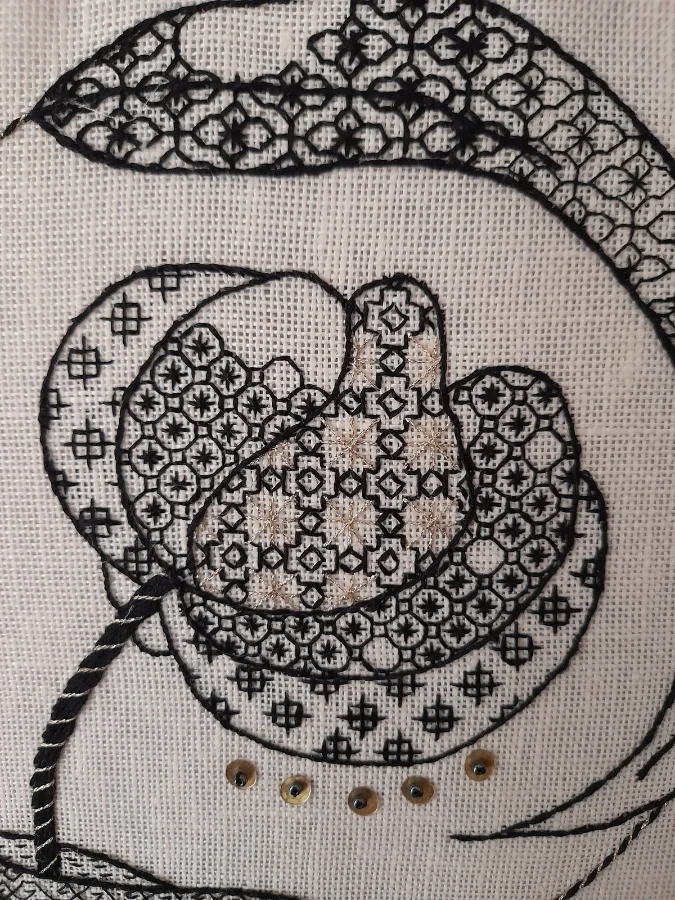
It’s worked in two passes — a running stitch in one direction, then a second pass that fills in the gaps on the return. The result? A completely reversible line that looks identical on both sides of the fabric. This was essential for Tudor clothing where the reverse of a cuff or collar might be visible.
Traditional blackwork designs often combine outlines with “fill patterns” — tiny geometric repeats that bring depth and texture. More complex stitches like cross stitch or stem stitch can also be layered in, especially in contemporary pieces.
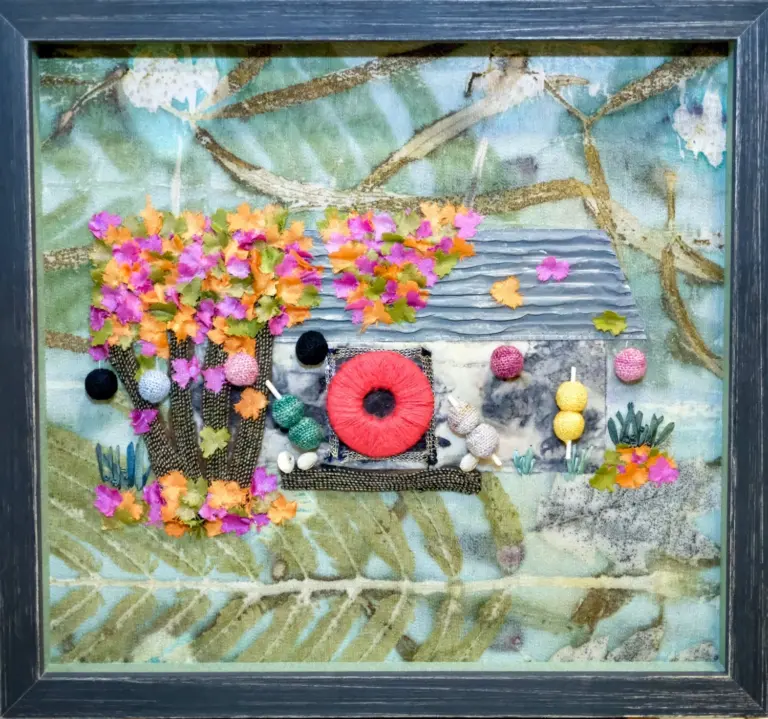
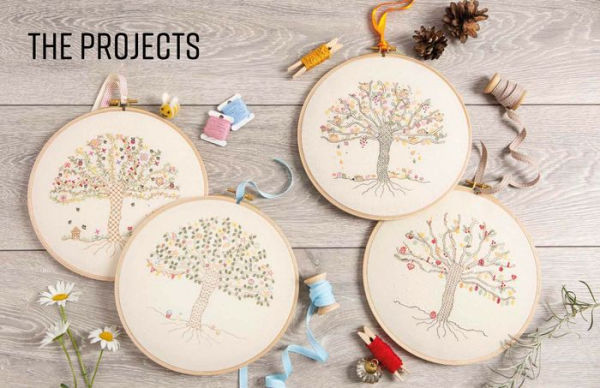
A collection of blackwork embroidery and redwork embroidery by our students.
Modern Examples
Modern artists have reimagined blackwork embroidery in exciting new ways, experimenting with colour, scale and mixed techniques.
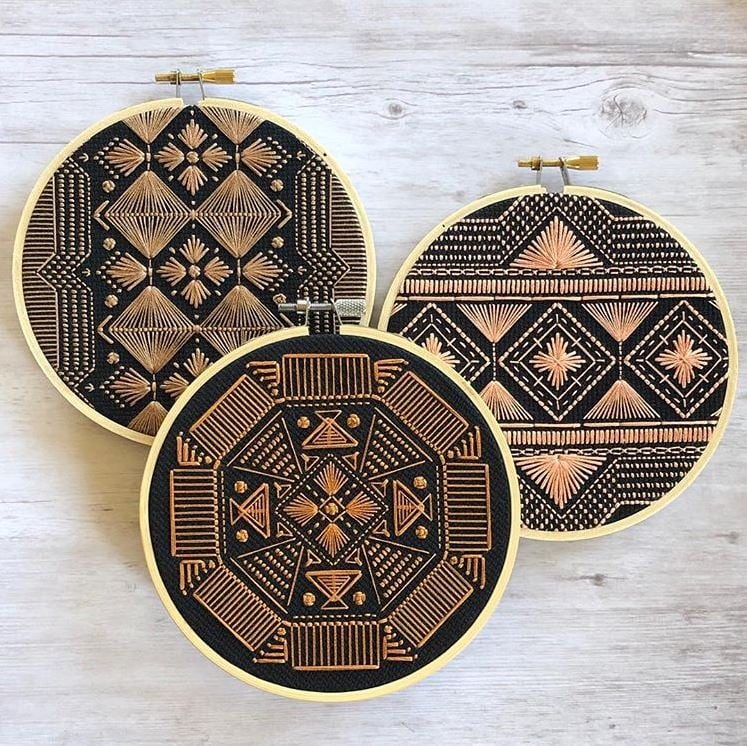
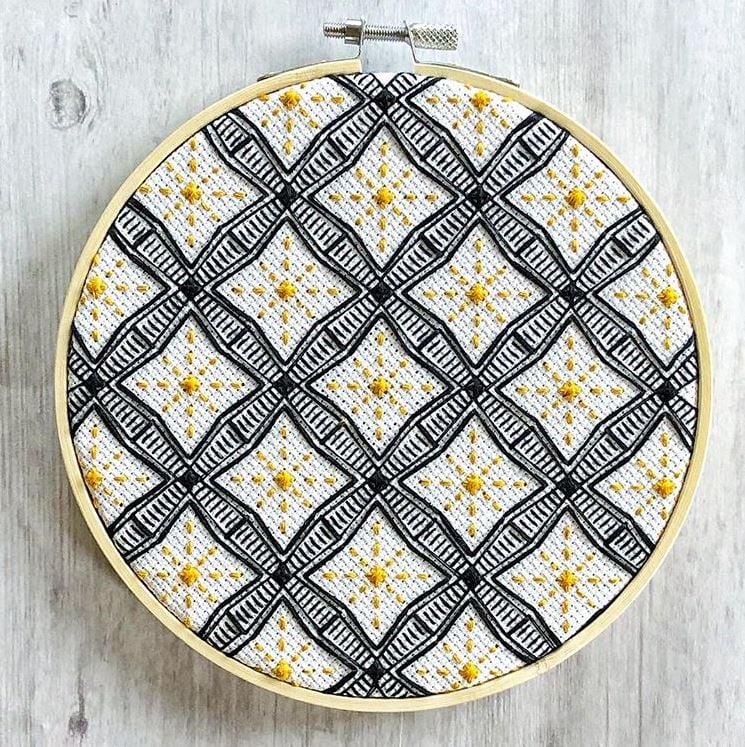
Jennifer Plott
Known as a modern ambassador of blackwork embroidery, Plott uses simple symmetrical shapes and patterns to create stunning results. Her designs are popular online.
Catherine Redford
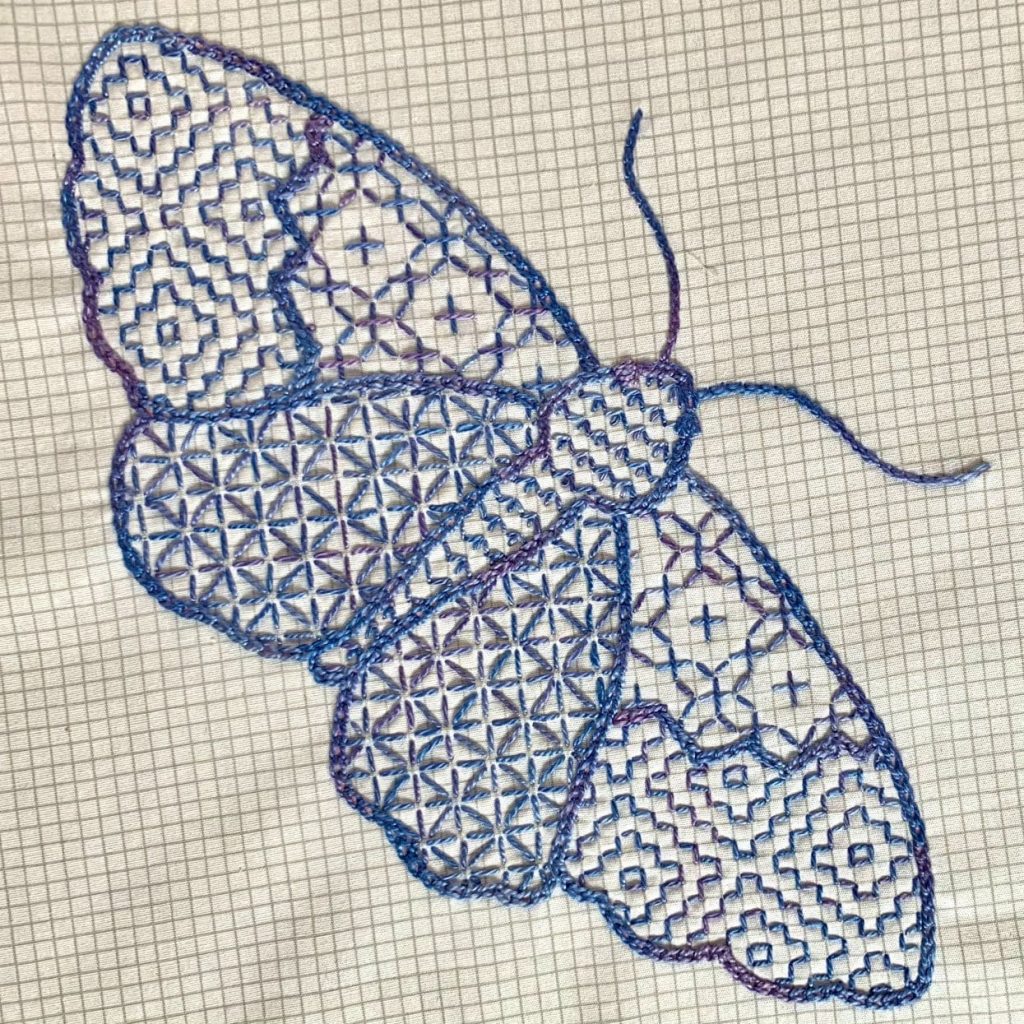
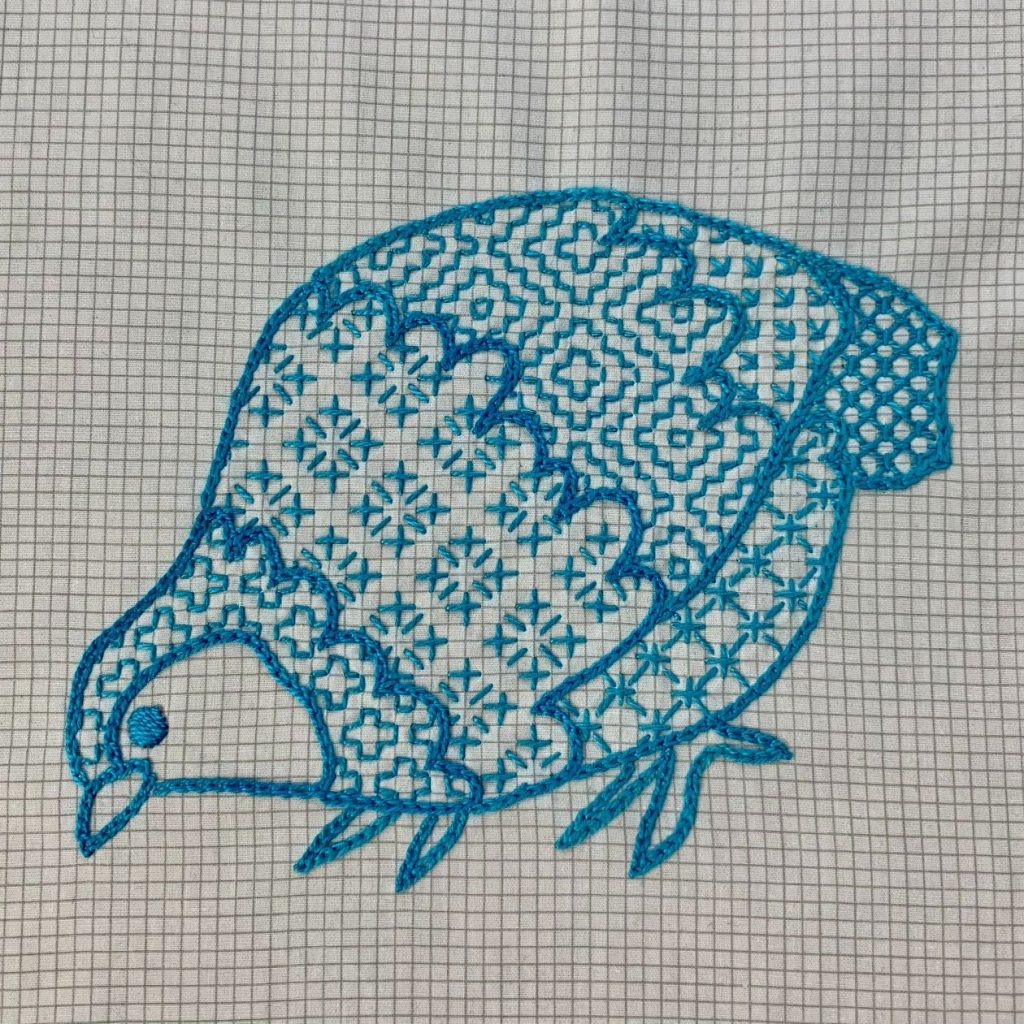
Catherine Redford is an award-winning fibre artist, teacher, designer and published author. Although she is probably best known as a quilter, she is a multi faceted fibre artist who is constantly evolving traditional techniques.
Melanie Couffe
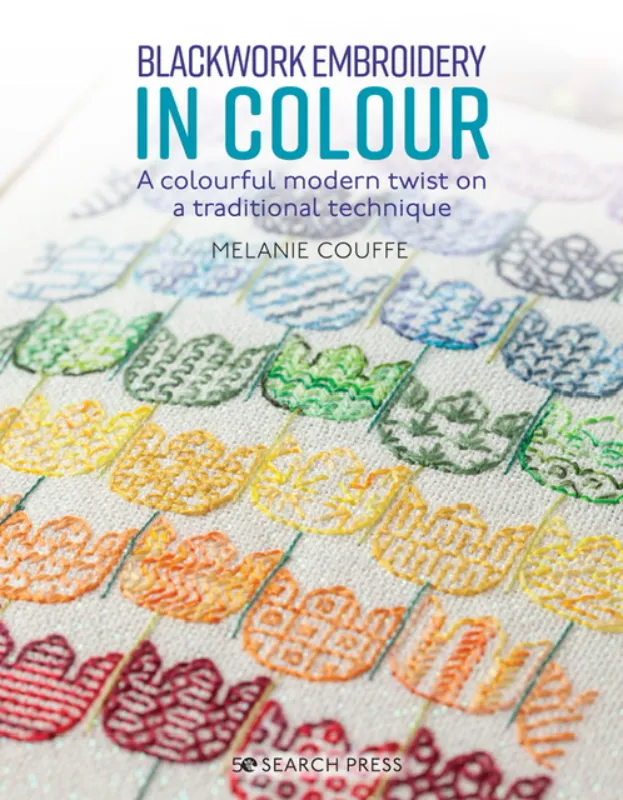
Melanie Couffe is an independent Cross Stitch and Blackwork designer, published author, and a self-proclaimed lover of colour! Her ‘Colour is Life’ motto is an integral part of her style and designs, through which she hopes to spread joy and love!
Recommended Resources
Wrapping Up
Blackwork embroidery and redwork embroidery may stem from different periods and cultures, but they share a powerful appeal: a limited colour palette, simple stitches, and endless possibilities.
Blackwork offers structure, precision and dramatic monochrome beauty.
Redwork brings warmth, simplicity and a playful, folk-art quality.
Both techniques remain hugely relevant today. Modern stitchers continue to reinvent them by mixing old with new, exploring creative boundaries, and proving that traditional embroidery styles can evolve while still honouring their roots.
Whether you’re drawn to the clean geometry of blackwork embroidery or the charming simplicity of redwork, these historical techniques offer a perfect blend of mindfulness, creativity and artistic expression.