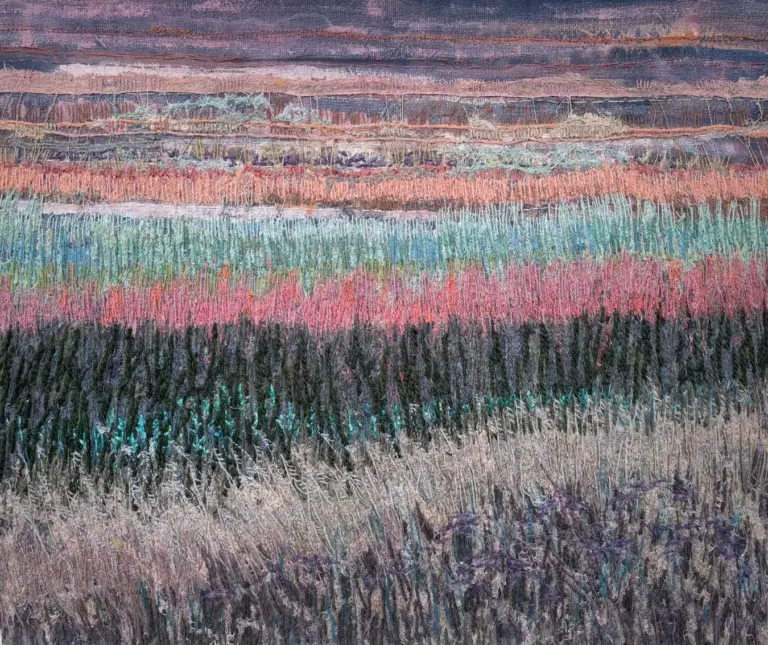
What does it mean to use a sewing machine as a paintbrush? For Murron Fraser, a contemporary textile artist whose practice weaves together machine embroidery, printmaking, and hand-applied processes, the answer lies somewhere between nature, folklore, and the kind of uninhibited creative play that most adults forget they are allowed.
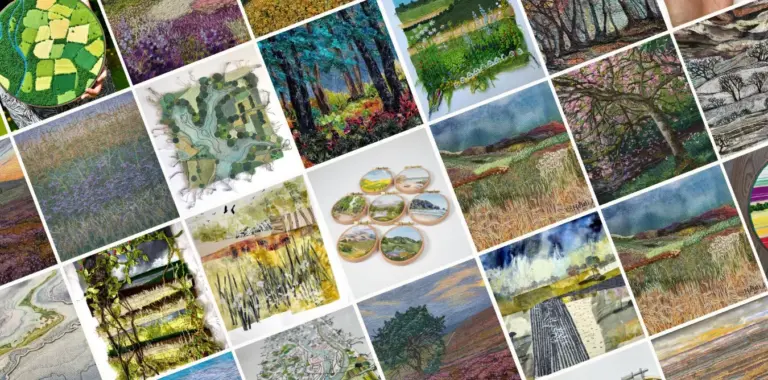
Murron’s work is not easy to categorise, and that is precisely the point. Her layered, multi-textural pieces draw from Celtic folklore, the hidden worlds of biofluorescence, and her own quietly obsessive sketchbook practice. Each finished piece is, in her own words, a pause point rather than an ending, a full stop in an ongoing story.
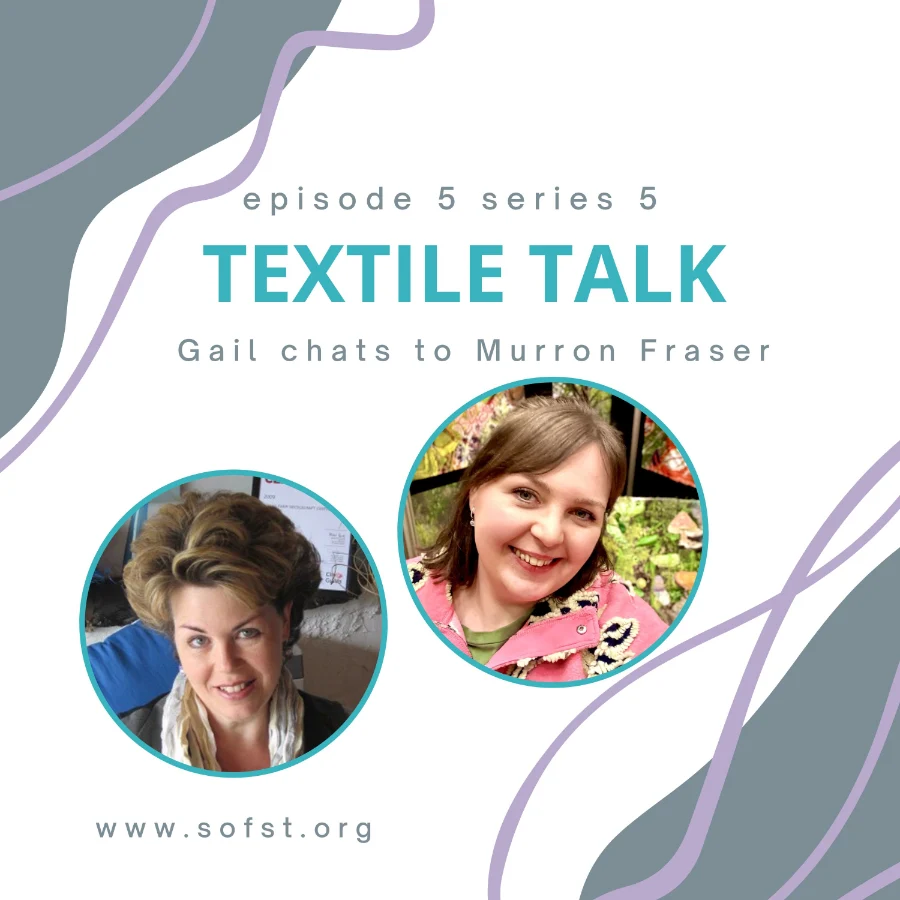
In this episode of Textile Talk, Murron talks to host Gail Cowley about her long and winding path into textile art, why she describes her practice as rhizomatic, and what happens when you shine a UV torch on her work. She also speaks honestly about the realities of a portfolio career, the myth of the artist sitting serenely by the fire, and why creative block is something even she has to navigate. It is a rich, generous conversation that will resonate deeply with anyone who makes things.
Textile Talk with Murron Fraser
Listen to the episode on your favourite podcast platform or click the link below to listen now.
The Moment a Tutor Said: What About Textiles?
Murron did not arrive at textile art in a straight line. At college, a foundation course gave her what she still describes as one of the most formative experiences of her creative life: pure permission to play. It was during this time that she began to notice the consistent threads running through everything she made, the layering, the texture, the collage quality, the way she was naturally building up surfaces rather than working flat.
When it came to choosing a specialism, her tutor asked a simple question: what about textiles? Until that moment, Murron had seen textiles through the lens of dressmaking. The idea of using a sewing machine, print, and stitch to make art rather than garments had simply never occurred to her. That conversation changed everything.
What followed was a degree course, and then the pivotal moment of a live brief: a collaboration with a museum, an invitation to explore archives, and the chance to design a product range for the museum shop. Her designs were selected. Her work was exhibited at a national level. It was the first time she felt that her practice had a real-world purpose, and the moment she began to genuinely believe in it as a career.
Nature, Folklore and the Hidden Worlds Inside Her Work
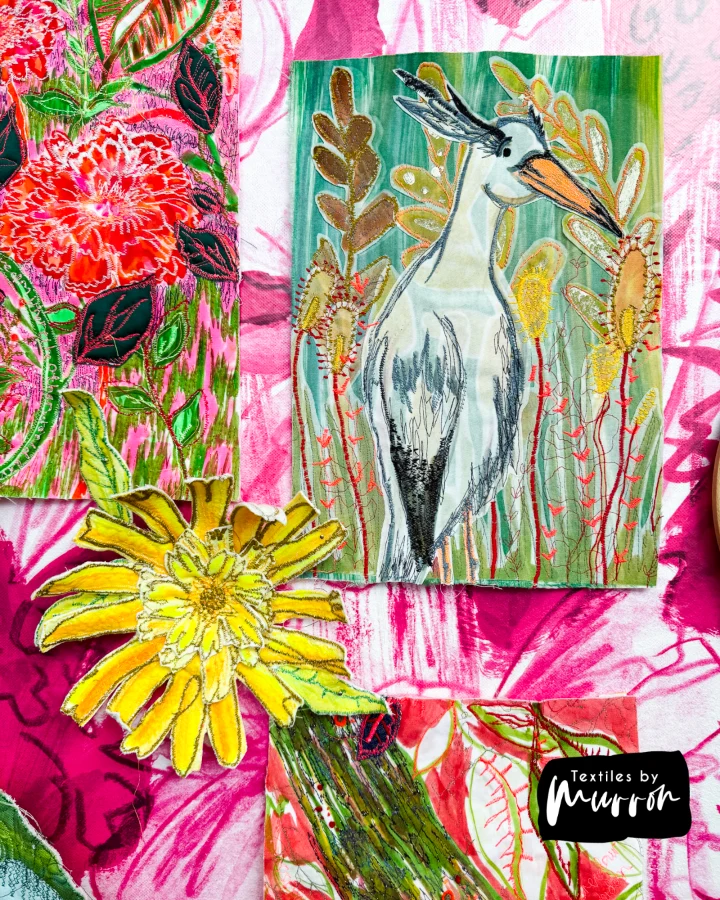
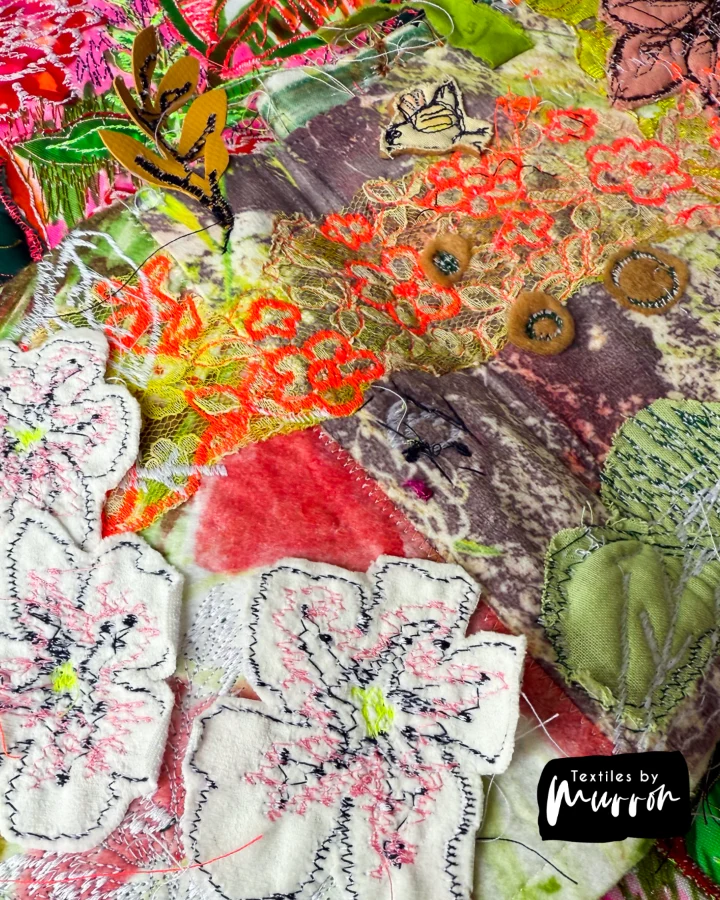
It was not until Murron completed her MA that she was able to articulate what had always been at the heart of her practice. Looking back across everything she had made, right back to college, three themes kept surfacing: nature, storytelling, and heritage. Her MA gave her the space to bring these together into something coherent and entirely her own.
The spark came partly from her own family history. Researching her Celtic roots in Scotland and Ireland, she discovered a world of folklore deeply intertwined with the natural world. These were stories that, long before scientific explanation existed, taught people to notice, respect, and wonder at the landscape around them. The connection to nature in folklore is not decorative. It is fundamental.
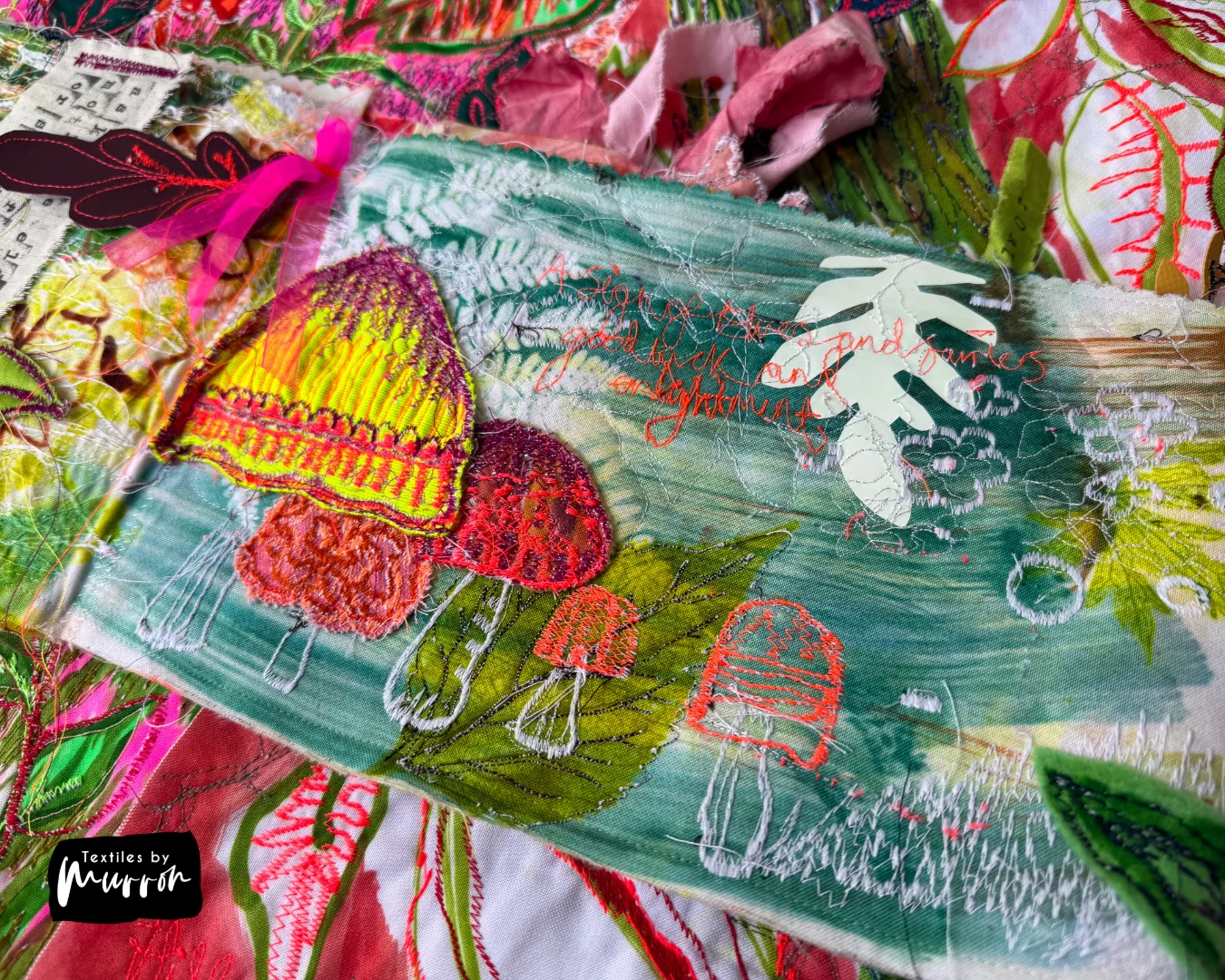
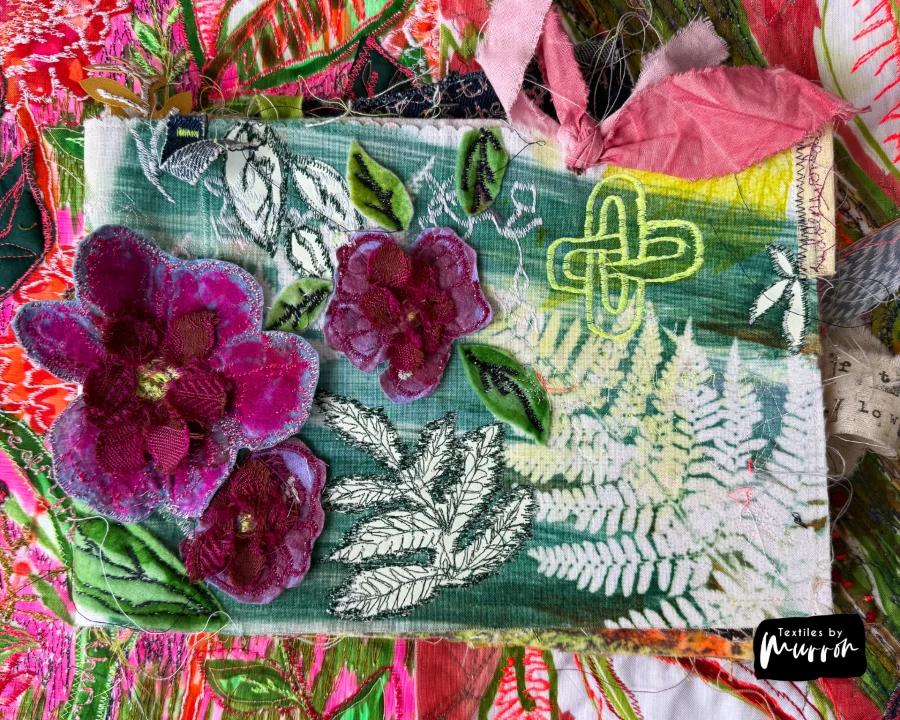
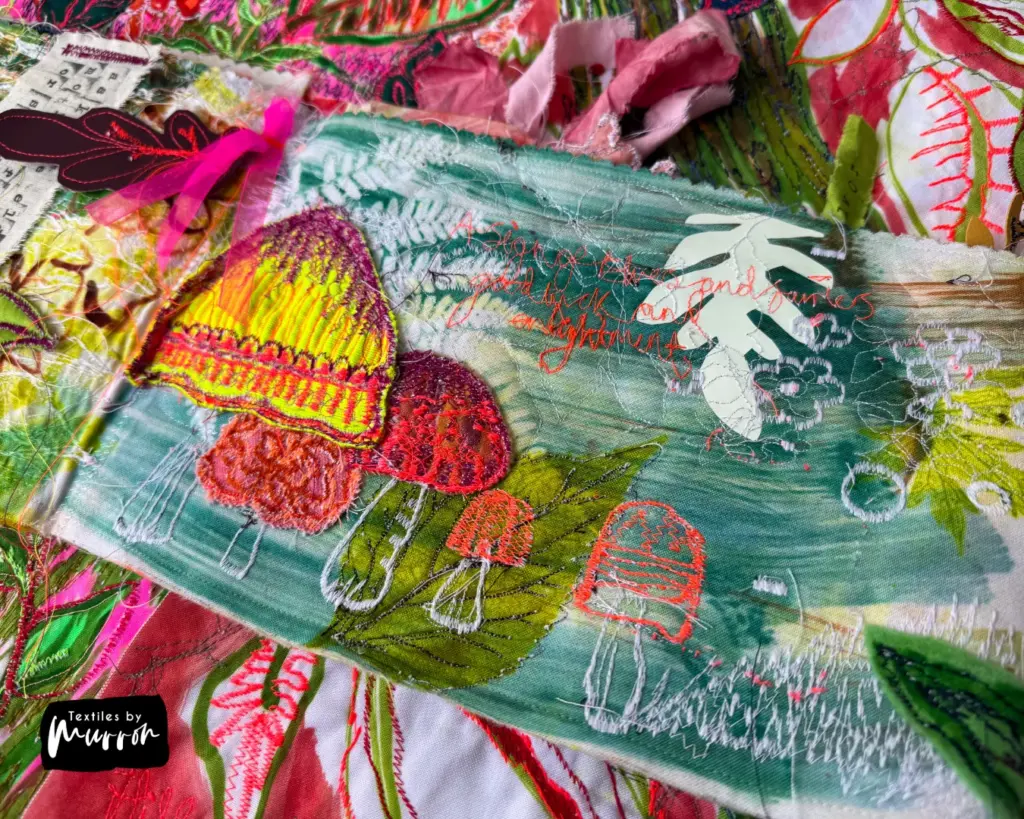
This insight has shaped not only the imagery in Murron’s work but also the way she thinks about what art can do. Her pieces are, as she describes them, portals: doorways between our everyday world and the other world of myth, creature, and hidden life. One of the most striking examples of this in her recent Hidden Worlds body of work involves UV-reactive pigments and threads. The pieces look like beautifully layered textile artwork until you shine a UV torch on them. Then the hidden element reveals itself, glowing and reactive, like the biofluorescence that birds and insects can see and humans cannot. It is a genuinely extraordinary idea, and in the episode she explains exactly how and why she developed it.
A Sewing Machine, Two Stitches, and the Freedom That Follows
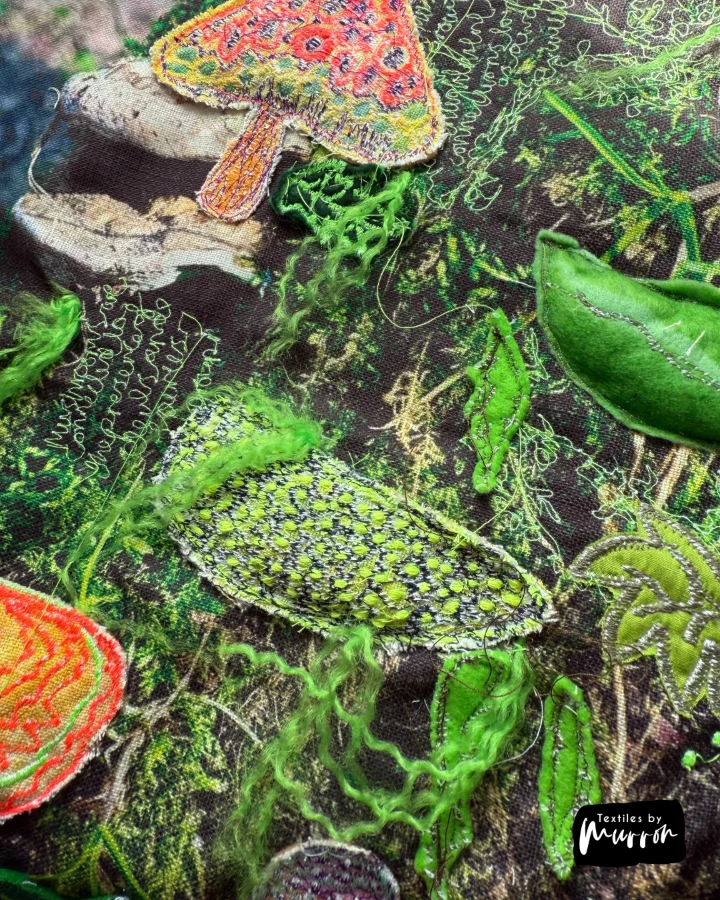
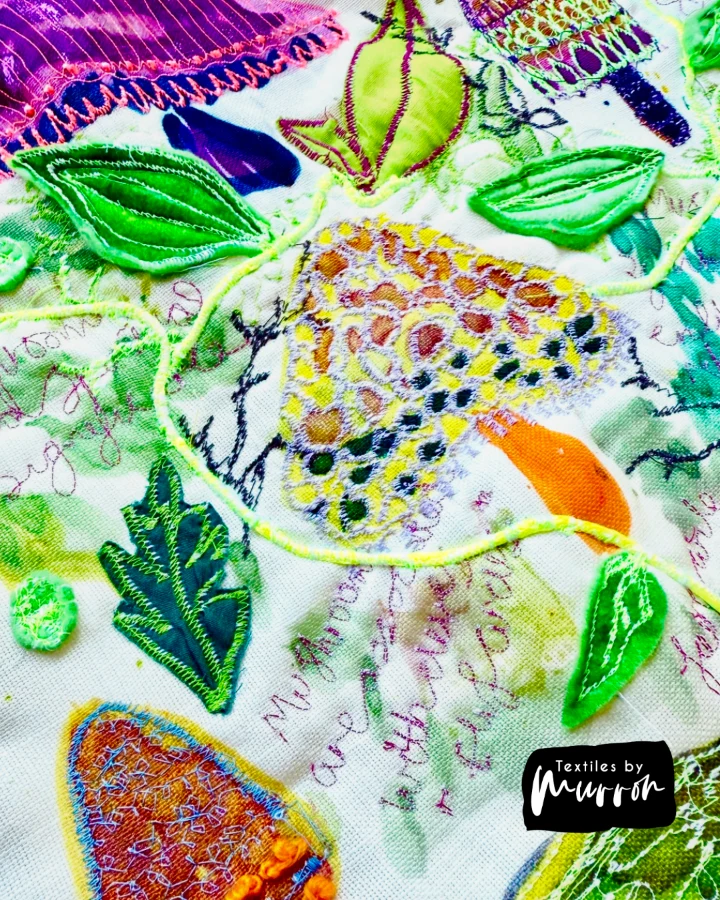
Murron’s chosen medium is machine embroidery, but she approaches it in a way that might surprise you. She owns a Bernina sewing machine, uses only two stitches, a straight stitch and a zigzag, and deliberately limits her technical options to force her imagination to work harder. Less, in her practice, consistently produces more.
The machine becomes a drawing tool: intuitive, continuous, reactive. She describes working in a state of flow, letting the movement of the machine guide the mark rather than controlling every line. Layered on top of this are hand-applied processes, beading, hand embroidery, applique, and printmaking techniques including monoprinting and screen printing. Photographs from her walks are transferred onto fabric. Collaged elements are assembled. Embellishments are handmade. The result is work that is, as she puts it, very multi-textural.
Murron also shares a wonderfully honest account of the practicalities: the interfacing that holds heavy, densely stitched work together; the loose threads she deliberately keeps; the pieces that warp slightly and how she has made peace with that. She describes her process as rhizomatic, with no fixed start or end point, always expanding, always interconnecting. She also tells a story about stitching a large coral piece to her own trousers and not noticing for two hours, which is genuinely one of the best creative mishap stories you will hear.
The Reality of a Portfolio Career (and the 100 Bags in the Boot)
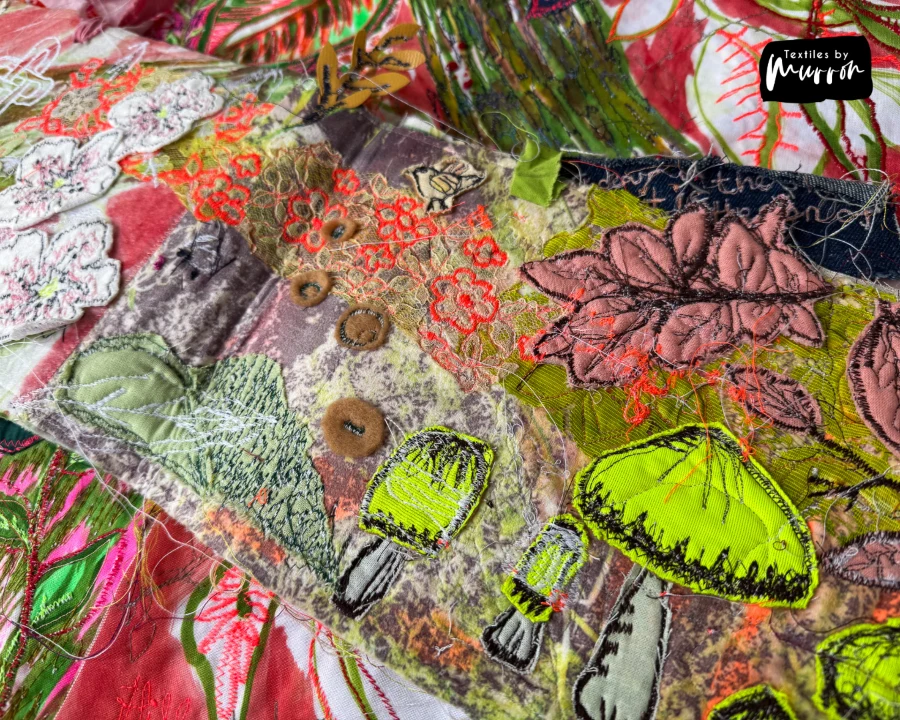
One of the most refreshing parts of this conversation is how openly Murron talks about the business of being an artist. The romantic vision, she acknowledges with warmth, does not really exist. There is no daily scene of peaceful stitching by a fireside. There is a garden studio, yes, but there is also marketing, planning, accounts, commissions, kit preparation for workshops, and the eternal reorganisation of the cupboard after coming home from a session.
Her career has always been a portfolio one: making and selling original work, creating product ranges, working on museum commissions, teaching in formal education, and running community arts projects. Each strand feeds the others. She describes her practice as something that has naturally cohered over time, not something she planned, and her advice to other makers is to trust that process.
In the episode she also reflects on what she learnt from her museum commission work as an independent artist compared to the live briefs she tackled as a student, the difference between working to someone else’s vision and putting your own stamp on a collaborative project. It is a distinction that will resonate with anyone navigating the space between creative freedom and professional work.
What’s Next for Murron Fraser
Murron is building several things at once, which will come as no surprise given everything she has shared in this episode. More courses and workshops, both in person and online, are in development. She has recently exhibited at the Textile Festival in Manchester and is looking forward to more opportunities to show her work and connect with audiences directly.
Community arts projects remain central to her plans, as does the continued development of her Hidden Worlds series and the exploration of UV-reactive materials and interactive elements in her work. If you want to stay close to what she is doing, her newsletter is where she shares the most, from insights into her practice to upcoming events and workshop dates.
There is a sense, listening to Murron, that she is exactly where she is supposed to be: still asking what if, still not quite sure what the next piece will look like, and still finding that the most exciting place to be.
Ready to Listen?
This is one of those episodes that stays with you. Whether you are a maker yourself, someone thinking about finding your own creative path, or simply curious about the world of contemporary textile art, Murron’s conversation with Gail is warm, honest, and full of ideas worth sitting with.
Listen to Murron Fraser on Textile Talk. Find the episode on Spotify, Apple Podcasts, or your favourite platform, or listen directly via the link. Listen Now>>
Murron Fraser: Discover More
Website: textilesbymurron.com
Instagram: @textiles_by_murron