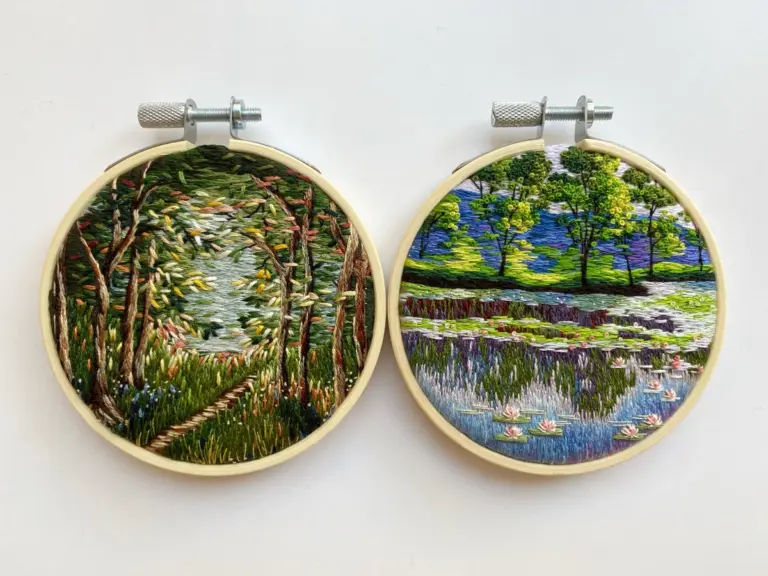
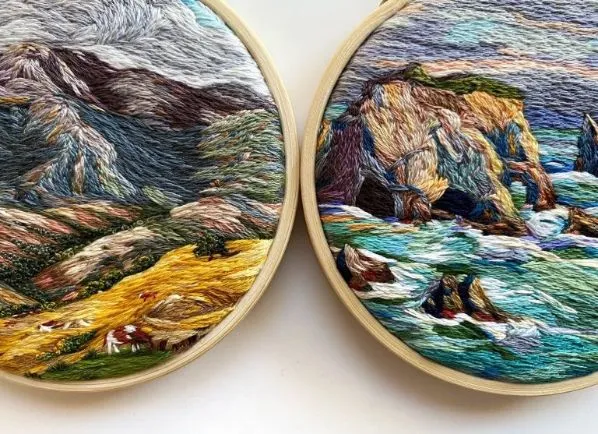
Crewelwork embroidery – or simply crewelwork or crewel embroidery – is one of the most characterful and expressive techniques in the world of stitched textiles. Loved for its bold texture, flowing lines and gorgeous wool threads, it has been delighting makers for centuries. Crewelwork embroidery feels both historic and wonderfully contemporary. It’s a technique that invites creativity, embraces colour, and encourages stitchers to take risks. Modern embroiderers continue to explore and evolve this fascinating technique, combining traditional stitches with contemporary themes.
If you’re curious about where crewel embroidery came from, what makes it so distinctive, and how to try it yourself, this guide will walk you through everything you need to know. Don’t forget to checkout our complete history of embroidery.Â
Historical Development of Crewel Embroidery
Crewel embroidery has been around for far longer than most people realise. Although its exact origins are difficult to pinpoint, the technique dates back to the medieval times, when wool threads were commonly used to decorate clothing, hangings and ceremonial textiles. The name “crewel” refers to the soft, fine, two-ply wool thread that gives this embroidery its unique texture.
By the early medieval period, crewelwork embroidery had begun to establish a clear identity. Wool was plentiful, warm, and easy to dye, making it ideal for large-scale decorative textiles. Much of the early work was produced for churches and wealthy households, and some of the world’s most iconic historical textiles, like the Bayeux Tapestry, showcase the stylistic roots of crewel embroidery.
But it was during the Jacobean era (early 17th century) that crewelwork embroidery truly flourished. This period is often considered the golden age of crewelwork. Exotic plants brought back from global trade routes inspired embroiderers to create swirling, fantastical designs bursting with oversized flowers, twisting vines, birds, and mythical creatures. Jacobean crewelwork wasn’t concerned with realism. Instead, it celebrated imagination. Bed hangings, curtains, wall hangings and upholstered furniture often featured entire landscapes of stitched wonder.
Crewel embroidery continued to thrive throughout the 18th century in both Britain and Colonial America. It remained a favourite pastime of skilled needlewomen right up until the 19th century, when industrial textiles became widely available. The technique experienced a welcome revival during the Arts and Crafts Movement. During this time, makers once again embraced natural materials, traditional craftsmanship, and slow, mindful creativity.
Today, crewelwork embroidery is experiencing another resurgence as stitchers rediscover the joy of working with wool and the expressive potential of historical techniques.

Learn Jacobean Crewelwork
Learn how to recreate this beautiful design with our instant access, online beginner’s course in Jacobean Crewelwork.Â
Follow along with RSN embroidery tutor Sara Denis (expert from The Repair Shop). Learn new techniques, track your progress and explore lots of delicate stitches and techniques.Â
Key Techniques in Crewelwork Embroidery
The heart of crewelwork embroidery lies in its wool threads, typically stitched onto strong, tightly woven fabrics such as linen, twill or cotton-linen blends. The threads create depth and warmth that simply can’t be replicated with cotton or silk. What makes crewel embroidery particularly exciting is its huge range of stitches. Allowing you to mix texture, line, colour and pattern in endlessly creative ways.
Here are some of the key stitches used in traditional and contemporary crewelwork embroidery:
1. Outline Stitch (Stem Stitch)
This smooth, gently twisted line is perfect for stems, vines and outlines. It behaves beautifully around curves and is one of the foundation stitches of crewelwork embroidery.
2. Satin Stitch
Used to fill shapes with solid, glossy colour. In crewelwork, satin stitch feels especially lush thanks to the natural loft of the wool threads. It’s perfect for filling large areas of colour, such as leaves or petals.
3. Long and Short Stitch
The go-to stitch for shading. By alternating long and short stitches, embroiderers can create gentle gradients in leaves, petals and abstract shapes, particularly striking in Jacobean floral motifs.
4. French Knots
Tiny, delicious pops of texture. Perfect for berries, flower centres or anywhere you want a tactile little accent.
5. Seed Stitch
A simple scattering of tiny stitches. Great for adding texture to backgrounds or creating natural details such as grass or foliage.
6. Chain Stitch
Bold, expressive and slightly raised, chain stitch is ideal for strong outlines or decorative fillers. It’s a core staple in Jacobean crewelwork.
7. Couching
One of the most visually dramatic stitches. Couching involves laying thick wool threads across the surface and securing them with finer stitches — ideal for bold outlines or stylised stems.
8. Buttonhole Stitch
Often used for edging or scalloped borders, buttonhole stitch adds a decorative finish to motifs and shapes.
Together, these stitches allow crewelwork embroidery to achieve its signature mix of line, movement and texture. These are key stitch techniques that can be used in other embroidery designs and ones we teach on our City & Guilds accredited Hand Embroidery Courses.Â
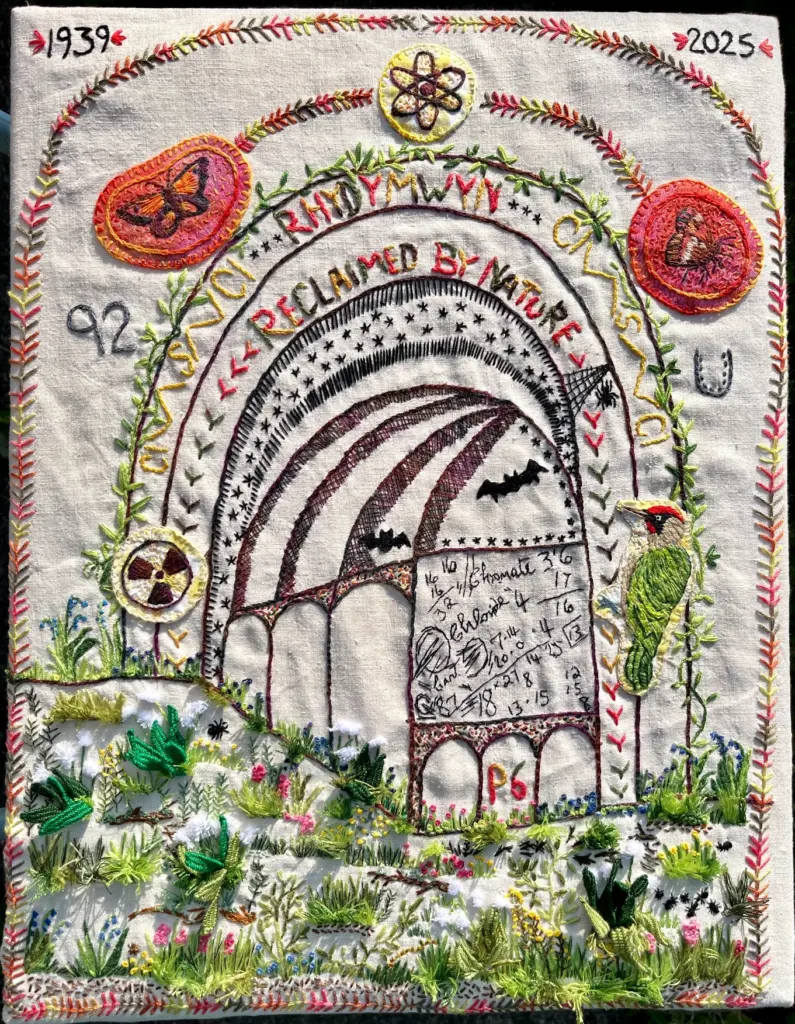
A collection of crewelwork by our students.
Design Elements in Crewel Embroidery
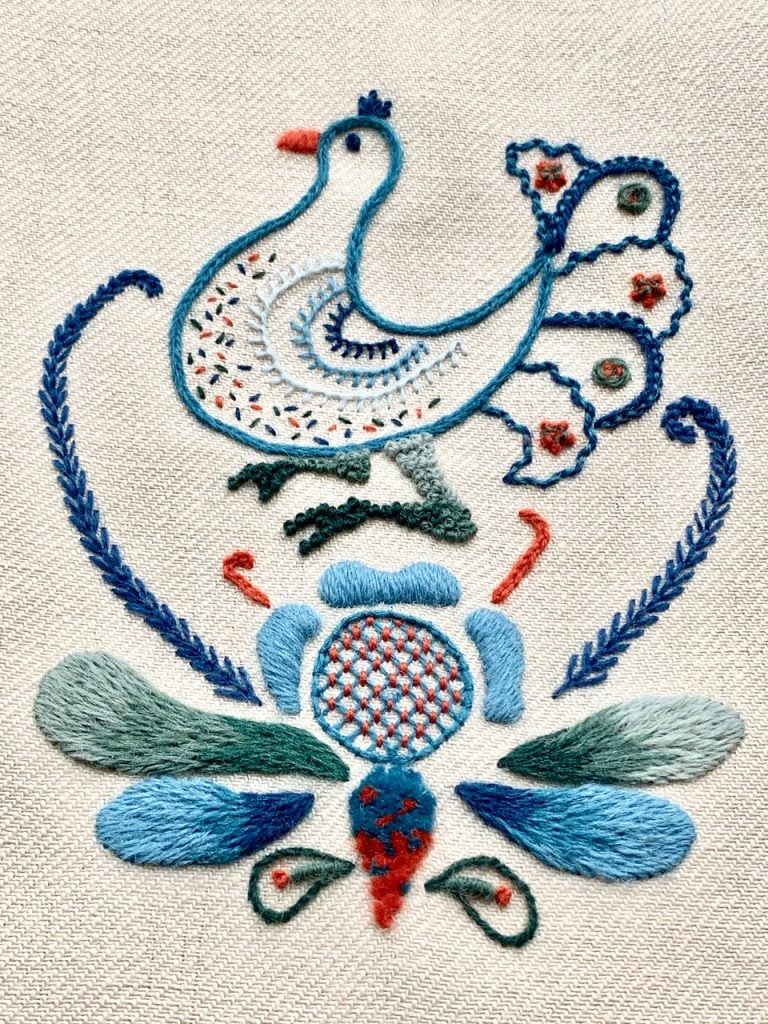
Crewelwork embroidery is instantly recognisable thanks to its playful, imaginative motifs — especially those developed during the Jacobean era. While designs vary widely, certain themes appear again and again:
- Twisting vines and flowing branches that create a sense of movement
- Stylised flowers — sometimes enormous, often wildly imaginative
- Fantasy foliage with dramatic shapes and exaggerated details
- Birds and animals, both real and mythical
- Whimsical creatures like unicorns, serpents and dragons
Â
One of the joys of crewel embroidery is how free it feels. You don’t have to be realistic. You don’t have to follow nature. You can scale up, simplify, exaggerate or completely re-invent a motif — and it still feels true to the tradition of crewelwork.
Modern Crewel Embroidery
Today’s textile artists are breathing new life into crewel embroidery. Many are blending old techniques with new ideas, exploring bold colour palettes, unexpected motifs and exciting combinations of stitches.
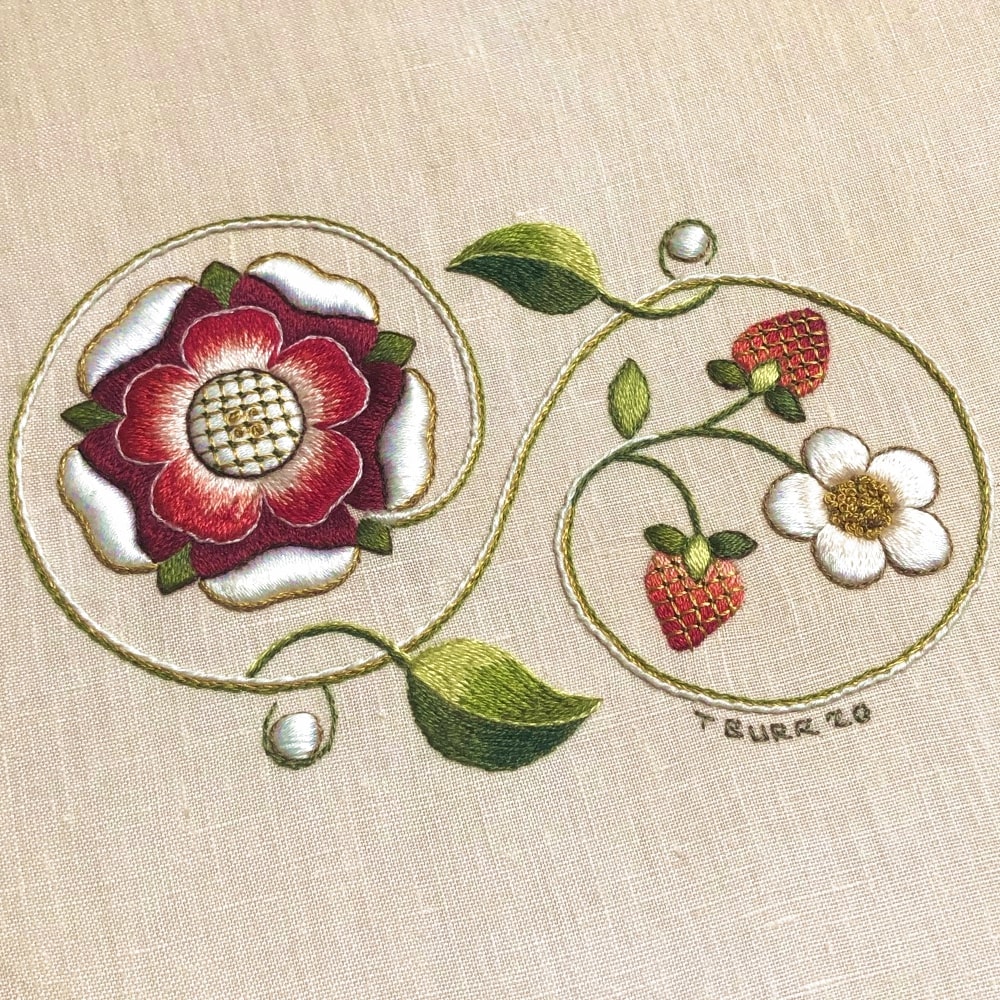
Trish Burr
Famous for her exquisite shading and lifelike detail, Trish Burr often incorporates crewel-style techniques into her contemporary work. Her florals and birds show just how delicate and painterly crewel embroidery can be.
Â
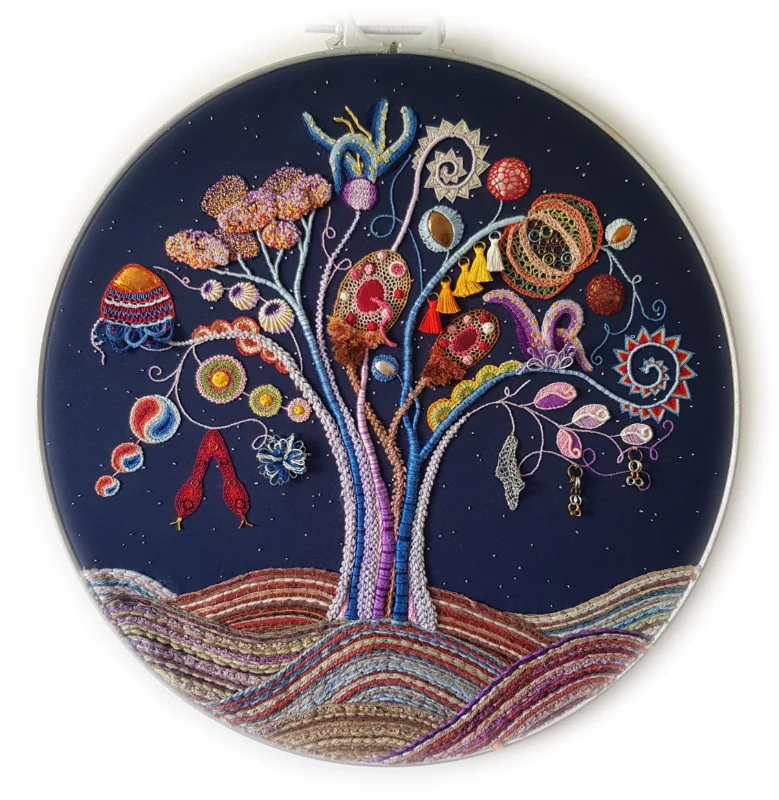
Hazel Blomkamp
Hazel is known for pushing the boundaries of crewelwork by adding beads, metallics and highly textured stitch combinations. Her work is intricate, innovative and wonderfully modern. She has lots of resources over on her website.
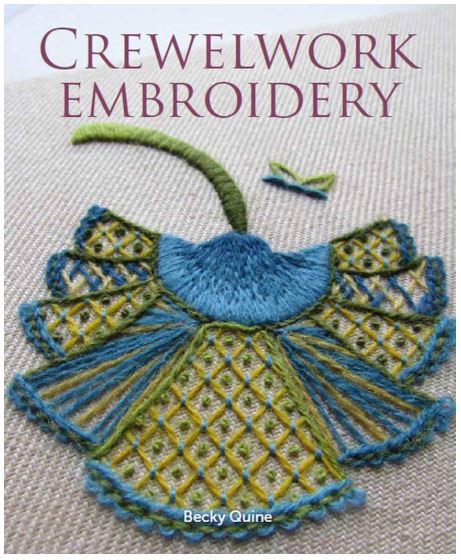
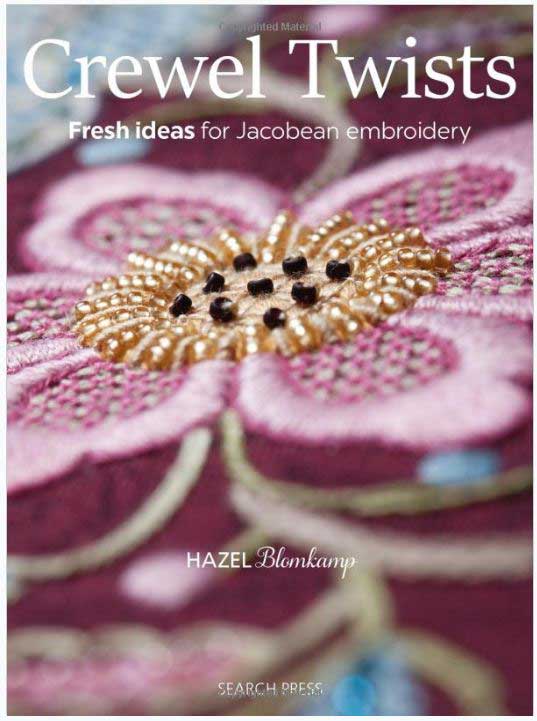
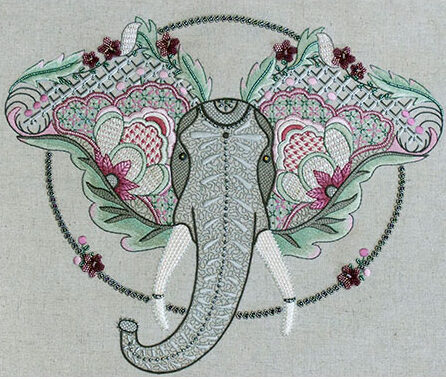
The Crewel Work Company
Run by Phillipa Turnbull, Crewel Work Company celebrates authentic, historically inspired crewelwork. Their kits are meticulously researched and deeply rooted in traditional Jacobean designs. It’s perfect for stitchers who love heritage techniques.
Crewelwork in Fashion and Interiors
Crewelwork embroidery continues to inspire contemporary designers. Luxury brands such as Gucci and Alexander McQueen have incorporated crewel-style stitching into their collections. In interiors, artisans create bespoke crewel textiles for cushions, curtains and upholstery, blending centuries-old motifs with modern colour palettes and patterns.
Â
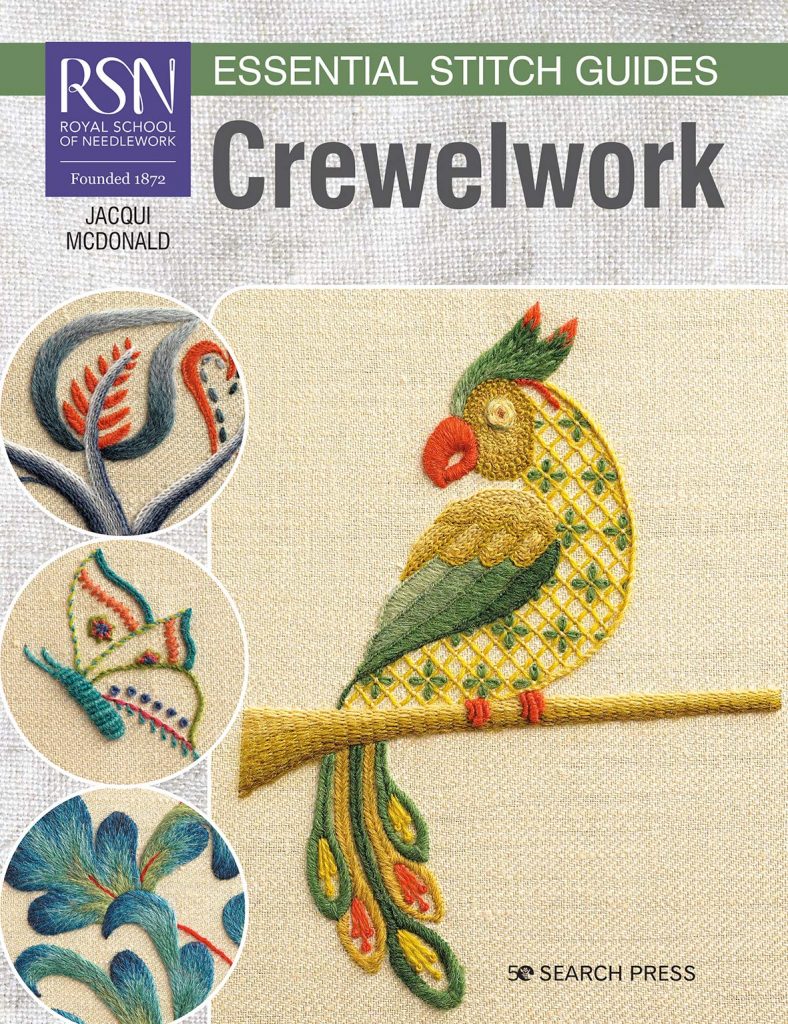
Recommended Resources
Wrapping Up
Crewel embroidery is a technique with incredible history, texture and expressive power. Whether you’re captivated by Jacobean fantasy florals or drawn to the modern, playful interpretations seen today, crewelwork offers endless opportunities for creativity.
Working with wool threads creates a wonderfully tactile, meditative stitching experience — one that connects you with centuries of tradition while giving you complete freedom to experiment. From bold outlines and rich textures to imaginative motifs and vibrant colour, crewel embroidery continues to inspire and delight makers around the world.
If you’re ready to explore crewelwork embroidery for yourself, it’s the perfect technique to begin — accessible for beginners, rewarding for experienced stitchers, and endlessly inspiring for anyone who loves expressive textile art.