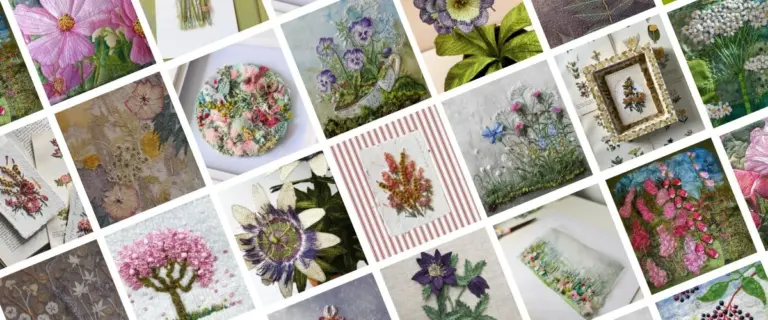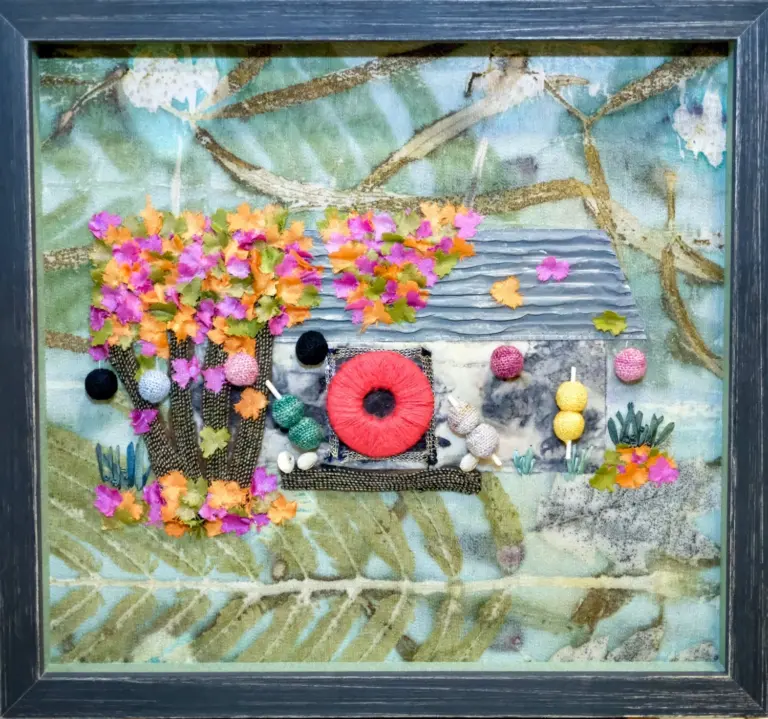
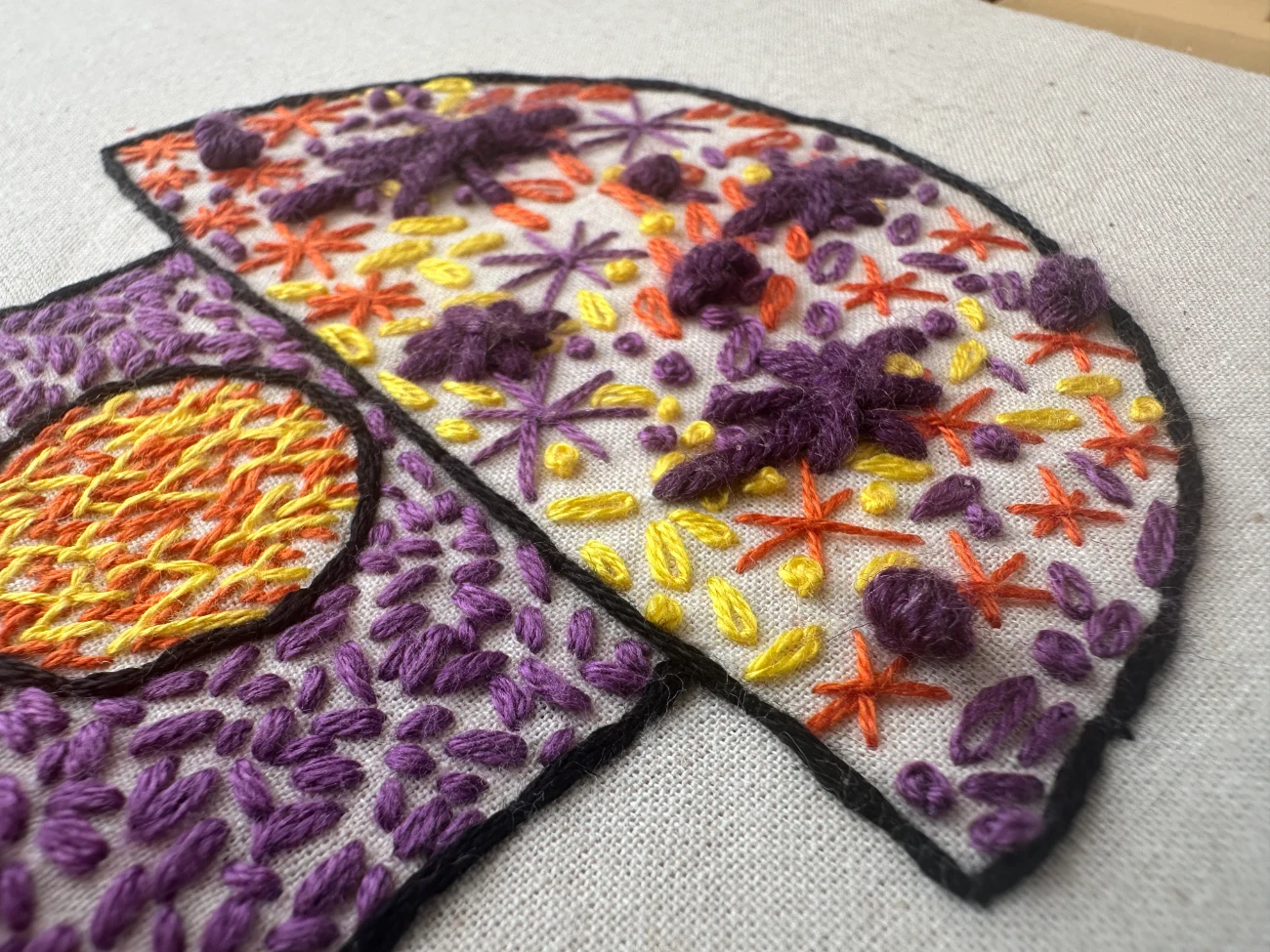
Gillian Richardson’s journey into hand embroidery is one shaped by persistence, curiosity, and a lifelong pull towards creativity. Largely self-taught, and having faced early challenges in learning traditional sewing techniques, Gillian spent years exploring different artistic disciplines before textiles truly took hold. What began as an interest in felting gradually evolved into a deeper fascination with embroidery, where she found a way to express her instinctive understanding of texture, colour, and design.
Enrolling on the Hand Embroidery Skill Stage 3 course marked a significant turning point. Gillian was not just looking to refine her technical ability, but to bring structure to her practice and push her work in new directions. In particular, she wanted to move beyond figurative pieces and explore a more abstract, expressive approach. Through in-depth research, thoughtful design processes, and tutor support, she developed a more considered and confident way of working, producing pieces with greater meaning and intention.
Her story is a powerful example of how structured learning, at the right time, can unlock new creative possibilities and transform both technique and artistic identity.
Gillian Richardson
“I started to feel I needed some form of structured learning to consolidate and develop my skills and to challenge me to produce more complex pieces. I was particularly keen to explore an abstract approach to textiles as opposed to the largely figurative work I tended to do. “
I see myself as a largely self taught textile artist. I had no formal qualifications until doing the Hand Embroidery course with the School of Stitched Textiles (SST).
At school in the 1960s, being left handed created problems with teachers saying it was impossible to teach me sewing. My family also found left handedness a bit of an oddity and they found it difficult to know how to help me.
However, I have always looked for creative outlets. Over many years, I tried several evening classes such as pottery, painting and drawing and found I had a flair for design, texture and colour. I tried cross stitch kits but quickly moved on to making my own designs. My first encounter with textiles was completing a Level 1 City and Guilds in Felting in 2014. I found this process fascinating, and sparked my interest in embroidery to decorate the felt. I was a member of Textile Artists online Stitch Club for 2 years and discovered a community of textile artists using a wide variety of techniques to adapt to my own style.
Motivation for studying
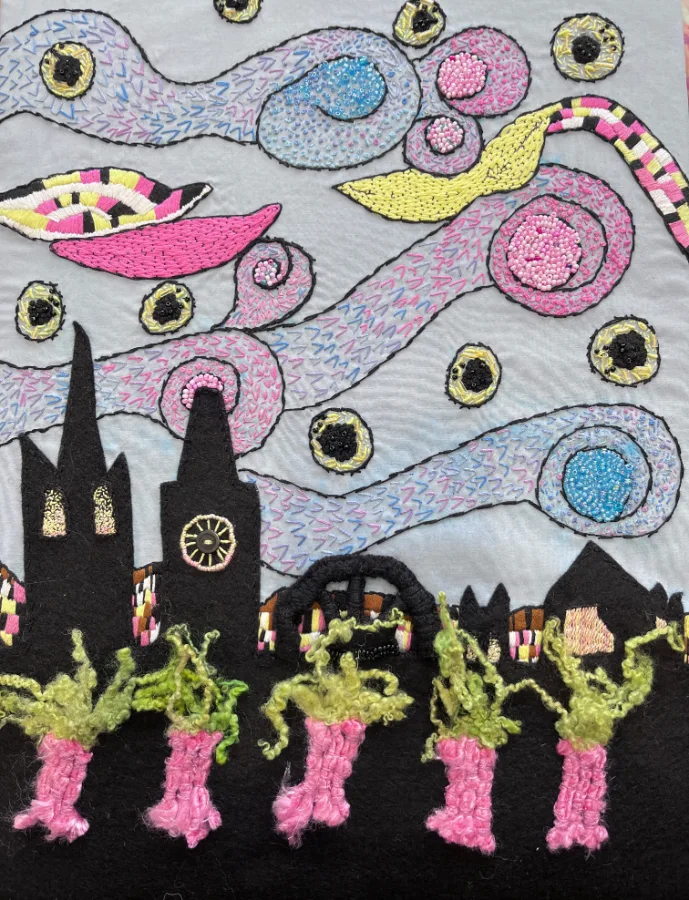
I started to feel I needed some form of structured learning to consolidate and develop my skills and to challenge me to produce more complex pieces. I was particularly keen to explore an abstract approach to textiles as opposed to the largely figurative work I tended to do.
I had done so many non-accredited workshops. So, I thought my next step was to work towards an accreditation to prove to myself that my work was of a sufficient standard, as judged by professionals. I retired in 2022 and became able to devote more time to studying. I liked the SST format – online, in your own time and space, self motivated but with the support of the tutors when needed.
Biggest takeaways
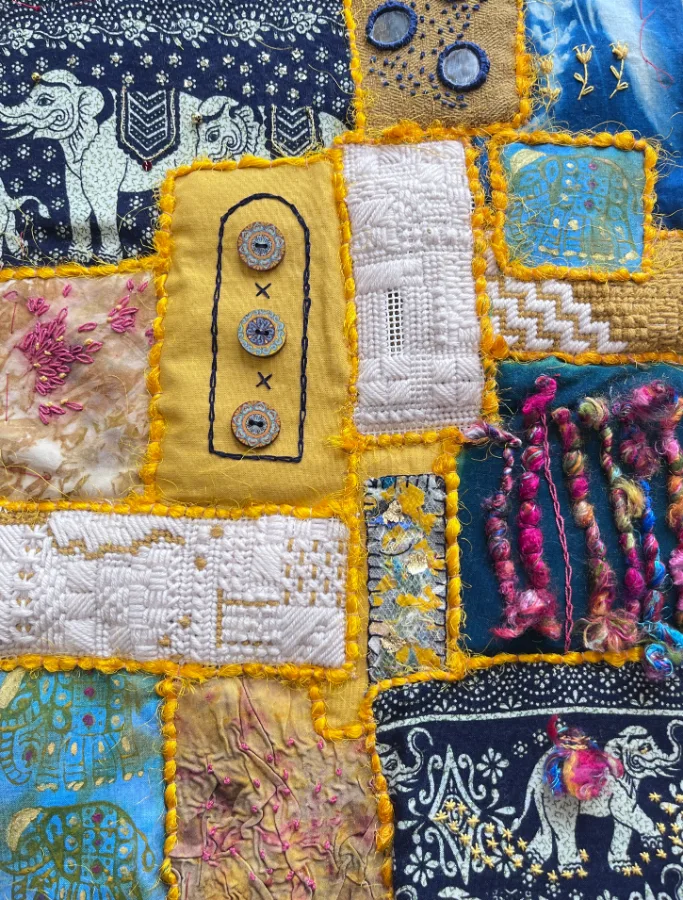
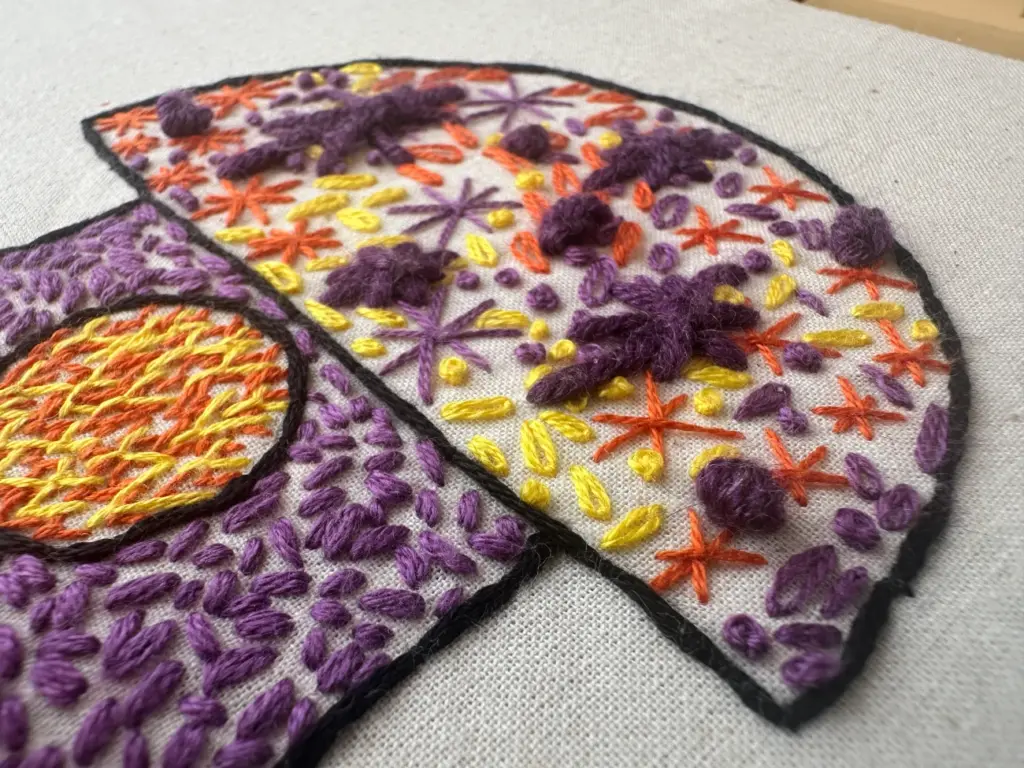
Two aspects stand out for me. The research element of each module really makes you look in more depth at the skills you are learning. It gives you a firm basis for your design, by making you slow down and think about what you are doing rather than rushing in. I believe that the outcome then has more substance and meaning.
I also loved the design module. I had never done anything like that before, and it helped answer my burning question as to how to be more abstract in my textile pieces.
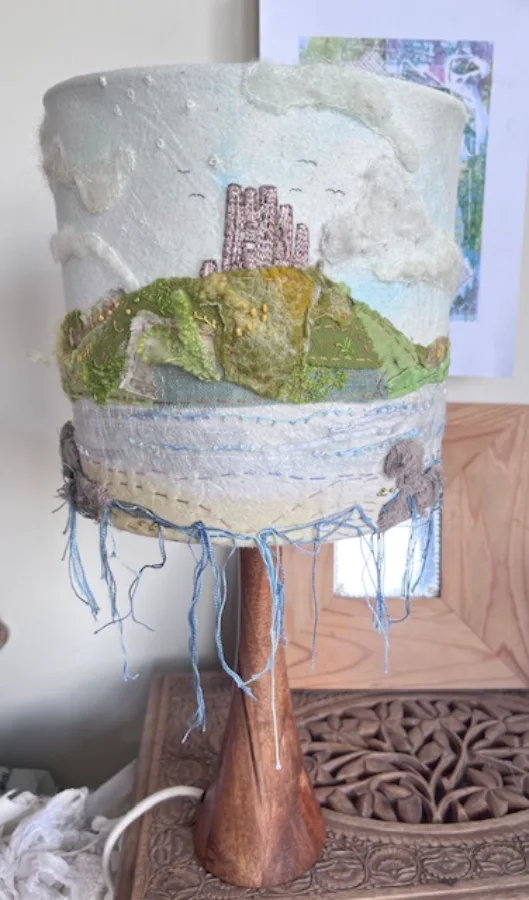
At the moment I am just keen to put everything I have learned into practice, with my own designs. I have so many ideas, but am also open to taking on a few commissions. For example, I have just completed a set of 12 embroidered hand felted table mats and drinks coasters for a friend.
Advice for new students
Firstly, I would wholeheartedly recommend this course. There is a huge sense of achievement as a result.
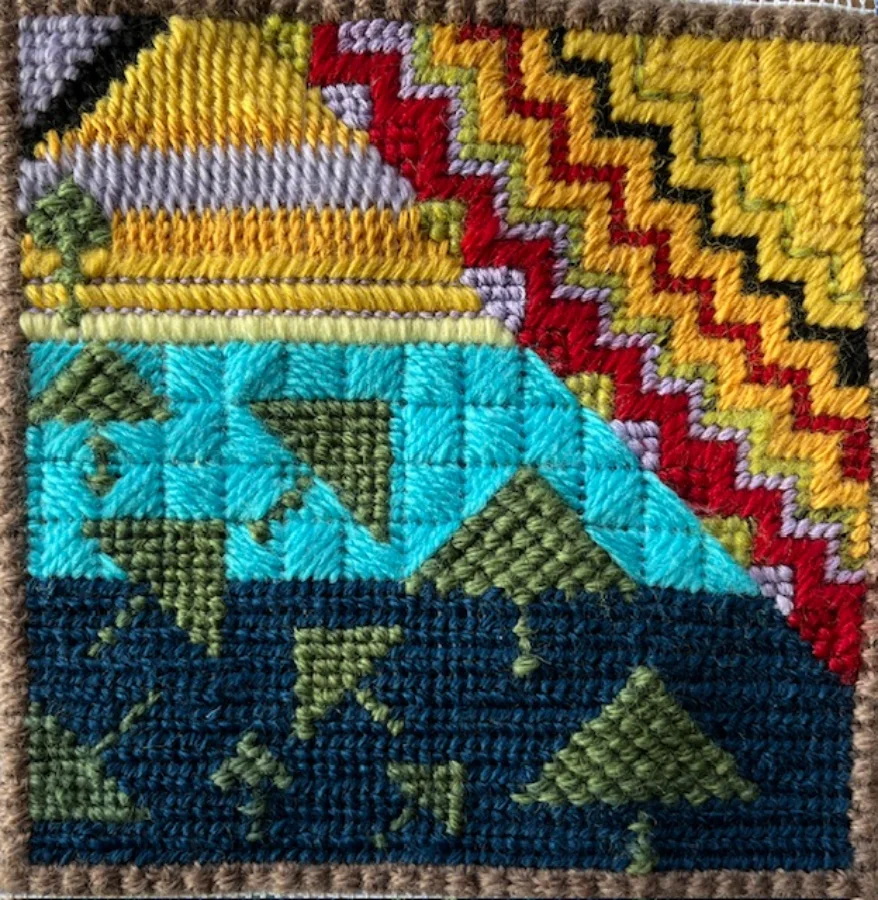
I did the course at a time that was right for me, i.e. retired and able to be flexible around my other commitments. Each module does require a lot of time to do them justice, so you need to take this into consideration before embarking. Although two years seems a long time to complete, it does go quickly. It is very useful to be given notional times to complete each module (but not actual submission dates) to keep you on track. The suggested times given to complete some of the module tasks can be an underestimate. Always keep in touch with your tutor and let her know if you are struggling. It is not a failure to need support and a few words of advice can set you on the right path again.