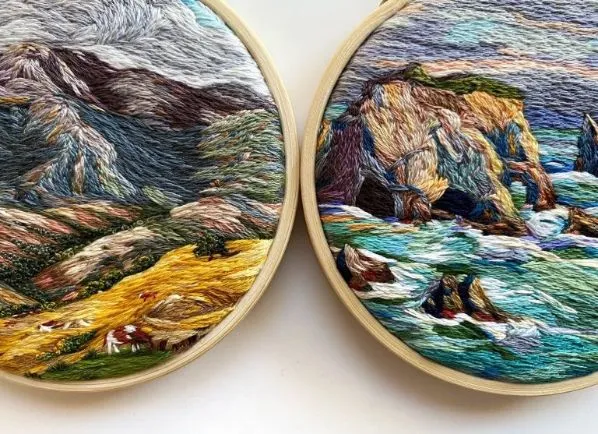
In this episode of Textile Talk, we are joined by internationally respected textile and mixed media artist Wen Redmond, whose work sits at the intersection of photography, fibre, and digital experimentation.
Based in New England in the United States, Wen has spent decades exploring how photography can be transformed through textile processes. Her practice brings together manipulated photographic imagery, printed fabrics, collage, and experimental substrates to create richly layered works that challenge how we think about both photography and textile art.
Wen reflects on the journey that led her to this distinctive practice. From early beginnings in fibre art to pioneering new techniques for printing on fabric and mixed media surfaces, she shares the curiosity and persistence that have shaped her work for over fifty years.
What emerges is not simply a discussion about technique. It is a thoughtful exploration of creativity, experimentation, and the evolving voice of an artist.
Textile Talk with Wen Redmond
Listen to the episode on your favourite podcast platform or click the link below to listen now.
Finding an Artistic Path Without Drawing
One of the most striking parts of Wen’s story is how she arrived at art without following the traditional route many expect.
Like many people drawn to textile practice, Wen once believed that artistic ability meant being able to draw. As a teenager she enjoyed making clothing and working with fabric, but she never considered herself an artist because drawing did not come naturally to her.
Over time she discovered that creativity is far broader than that narrow definition. Fibre became her chosen medium and the place where her artistic voice began to emerge. Beginning in the 1970s, she moved through the evolving world of fibre art, experimenting with quilting, surface design, and textile construction as the field itself transformed.
Her story will resonate with many textile artists who have discovered that fabric, thread, and texture offer powerful ways to express ideas visually without relying on traditional drawing skills. As Wen explains during the conversation, art making is a journey rather than a destination, and one that continually evolves over time.
When Photography and Textile Collide
A major turning point came in the early 2000s when Wen began working with digital photography and computer technology.
Learning to use a computer, digital camera, and printer opened up entirely new possibilities. She began experimenting with printing her own photographs directly onto fabric, combining her long-standing love of fibre with the visual richness of photographic imagery. This fusion transformed her practice.
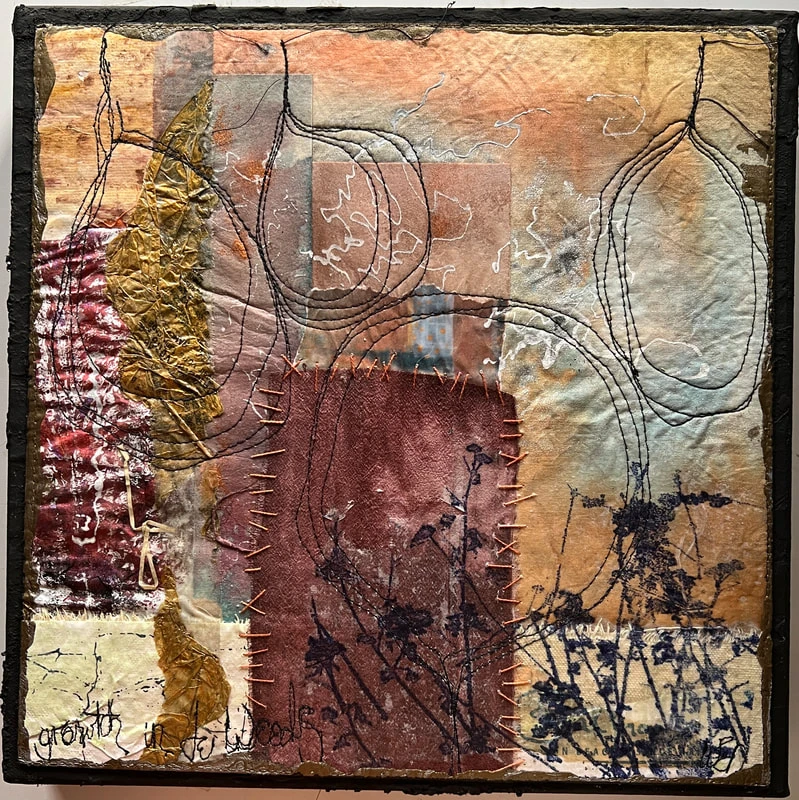
What began as simple photographic prints on fabric quickly developed into far more complex constructions. By manipulating photographs digitally and printing them onto materials such as silk organza, Wen discovered that layered imagery could create remarkable depth and movement.
One of her most celebrated innovations emerged from this experimentation. While peeling printed organza from its backing sheet, she noticed the faint echo of the image left behind on the carrier paper. The interaction between the two images created a sense of depth that changed as the viewer moved.
From this observation she developed what she calls “holographic imagery”, a textile presentation technique where layered photographic prints interact visually to create the illusion of movement and dimensionality.
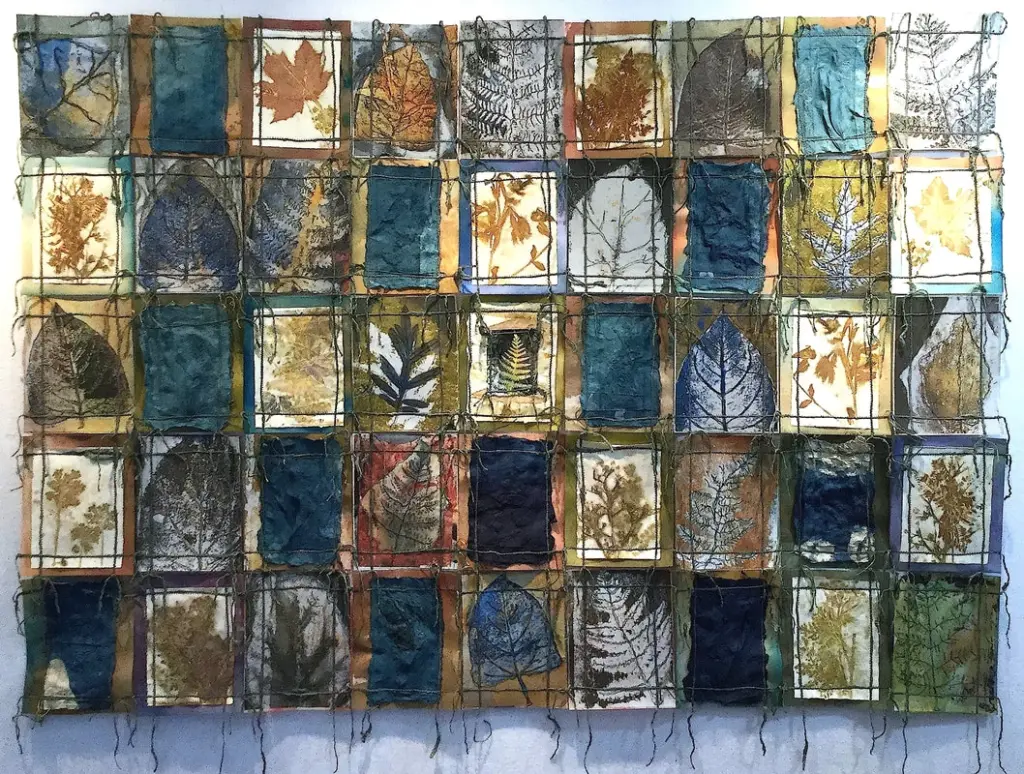
The Joy of Experimentation in the Studio
Throughout the interview, Wen returns repeatedly to one theme that underpins her entire practice: experimentation. Rather than repeating the same technique indefinitely, she prefers to explore new possibilities. A discovery in the studio often leads to another question, which leads to another experiment.
What happens if the photograph is blended digitally with painted fabric? What happens if the image is printed on paper instead of fabric? What happens if the surface itself becomes a collage of materials before printing?
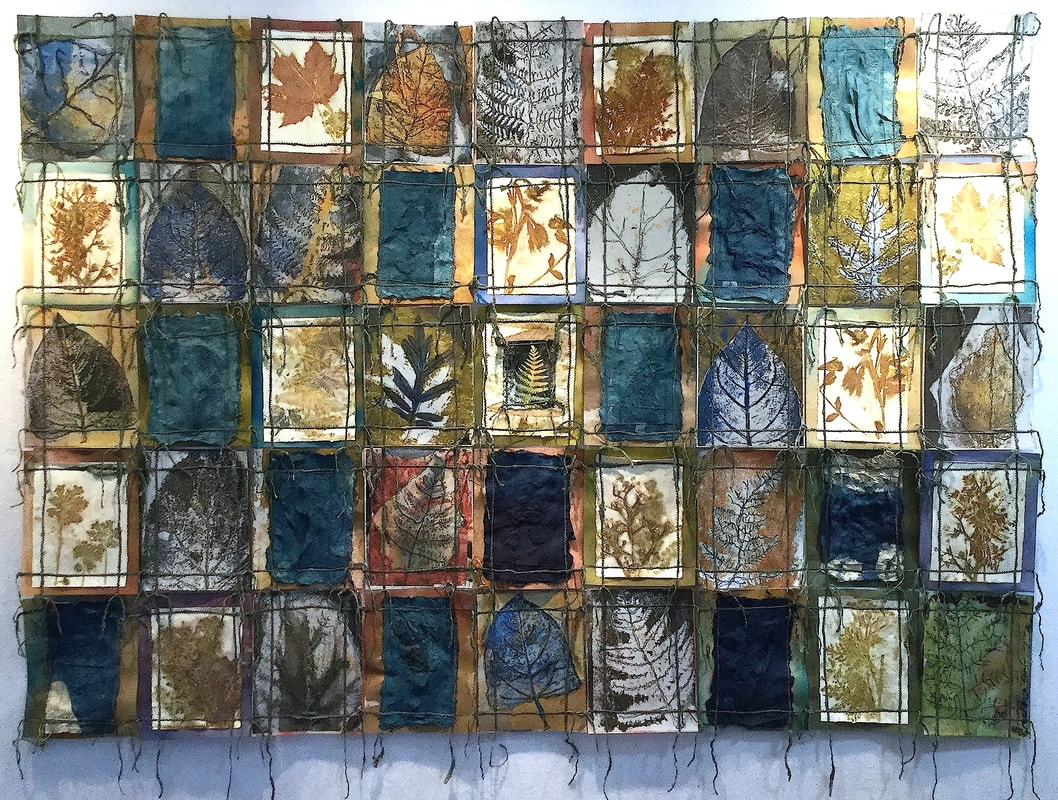
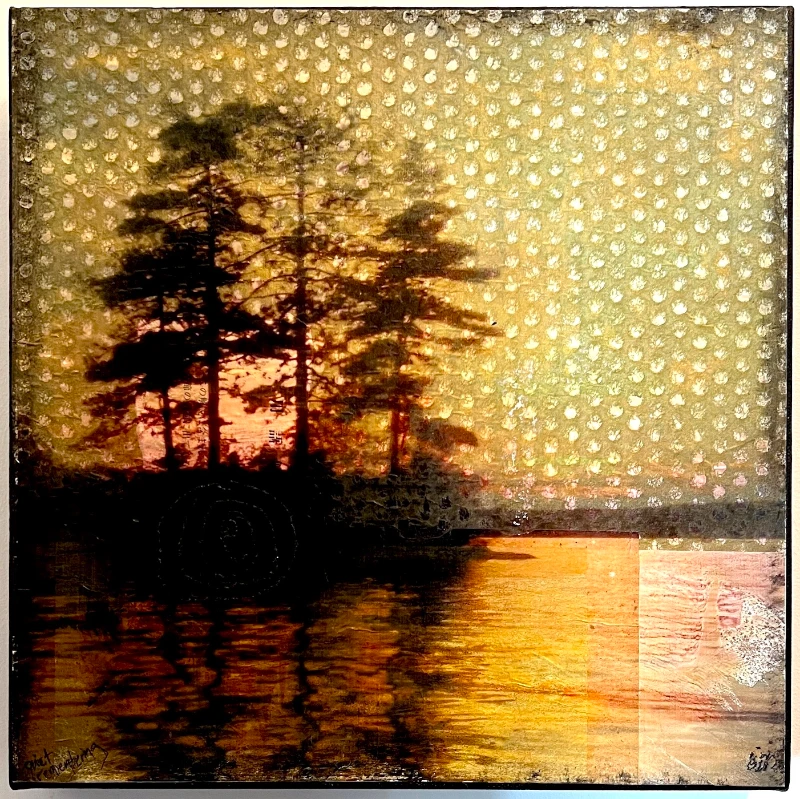
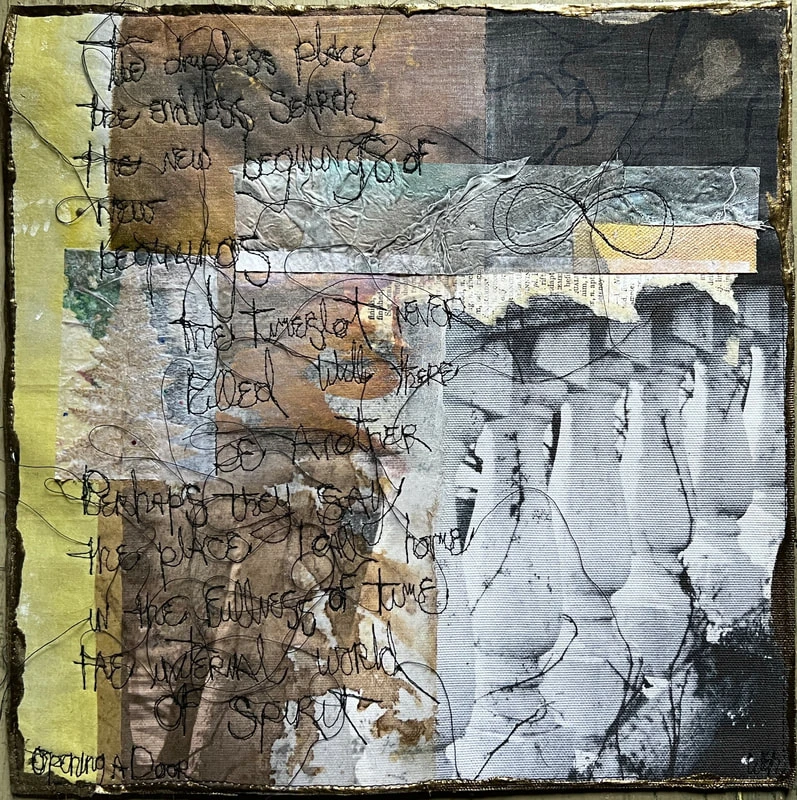
This curiosity has led Wen to print photographs onto an extraordinary variety of substrates including tissue papers, interfacing, collage surfaces, and even unexpected materials incorporated into layered compositions.
Many of these discoveries arise from simple studio play. As she explains, being physically present in the studio often generates the next idea. Inspiration frequently comes not before working, but during the act of making.
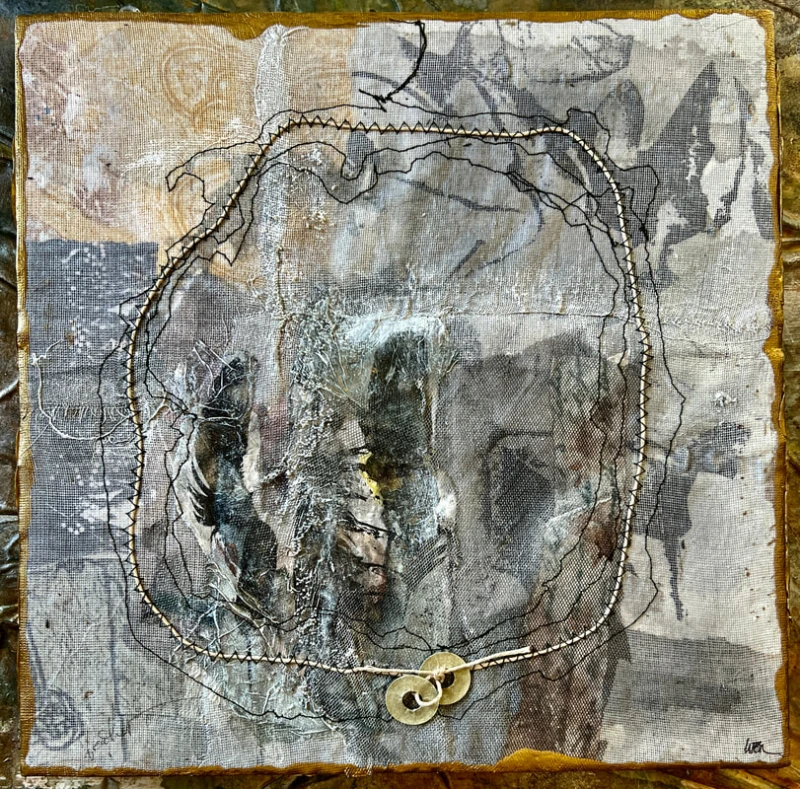
Sampling, Testing and the Value of Small Experiments
One of the most practical insights Wen shares is the importance of sampling.
When working with complex combinations of digital images and physical surfaces, the relationship between photograph and substrate can be unpredictable. A photograph that looks beautiful on one material may lose its impact on another.
To avoid committing to large pieces too soon, Wen creates small test samples before printing a full work. These smaller experiments allow her to understand how the image interacts with the material before investing significant time in a larger piece.
It is advice that echoes a principle we emphasise regularly in textile education. Small samples are not wasted effort. They are an essential part of the creative process and often save considerable time in the long run.
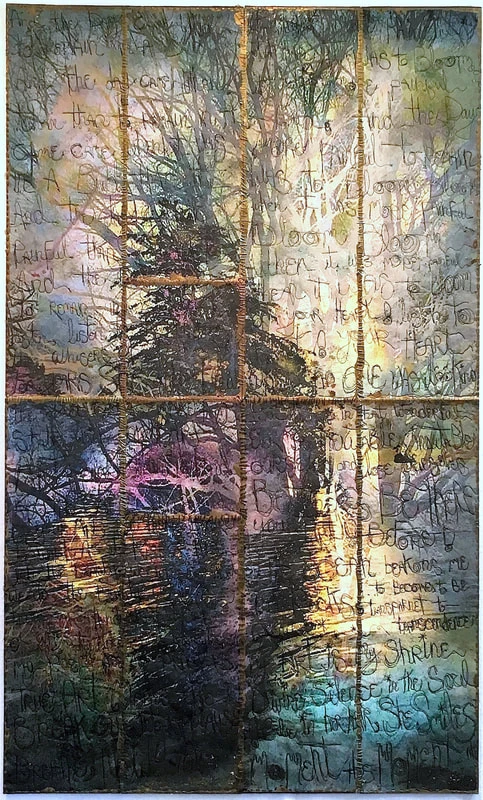
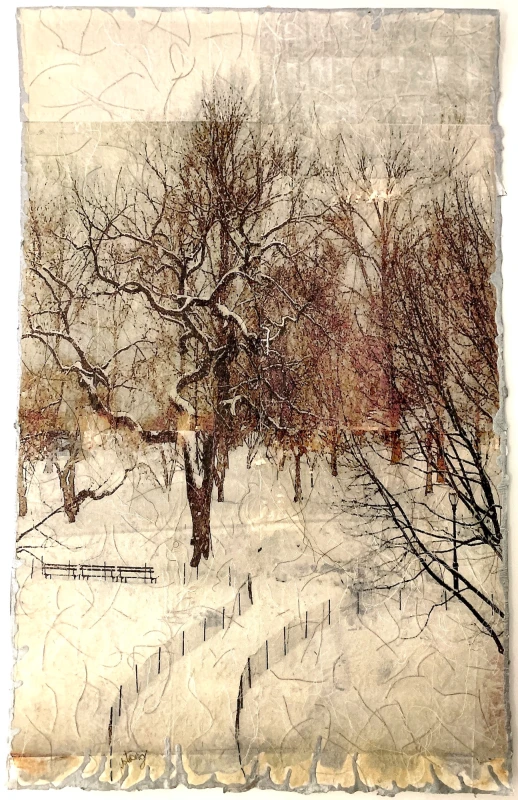
Inspiration from Nature and Memory
Many of Wen’s pieces draw inspiration from the natural world.
Her colour palette often leans towards muted, earthy tones that reflect landscapes, textures, and natural materials. Photographs of trees, rocks, or small objects collected over time often become the starting point for new work. Sometimes the source imagery is deeply personal.
In the interview, Wen describes revisiting an old photograph taken in the 1970s inside an abandoned house. The image had aged and begun to deteriorate, creating visual textures that added emotional depth to the finished piece. For Wen, these layered images carry memories as well as visual information. The photograph becomes not only a visual element but also a record of time and experience.
Books, Techniques and Continuing Exploration
Wen’s willingness to share her discoveries has led to two widely respected books.
Her first, Digital Fiber, introduced artists to the possibilities of combining photography with textile surfaces. Her more recent publication, Explorations with Collage: Merging Photographs, Paper and Fiber, expands on those ideas and introduces a wide range of experimental substrates and collage methods.
The second book reflects how far her work has evolved. It explores techniques such as printing onto tissue-based substrates, embedding natural materials into paper surfaces, and layering photographic imagery with collage structures.
Each method opens new creative pathways for artists interested in blending digital and tactile processes.
A Lifetime of Creative Curiosity
At 75, Wen Redmond continues to approach her practice with remarkable energy and curiosity.
Her studio remains a place of ongoing discovery where photography, fabric, paper, and mixed media continue to interact in unexpected ways. New ideas often emerge from the materials already surrounding her or from fragments of past experiments waiting to be revisited.
Perhaps the most inspiring message from this conversation is her reminder that artistic growth never really stops. Each artwork contributes to the next. Each experiment becomes part of a larger journey.
As Wen beautifully puts it during the interview, she makes the art and then the art makes her.
Wen Redmond: Discover more
Listen to this fascinating podcast episode with Wen Redmond now. Ways to follow Wen:
Website: www.wenredmond.com
Instagram: www.instagram.com/wenredmond
Facebook: www.facebook.com/greymooncove
Youtube: www.youtube.com/user/wenredmond/videos