
Some conversations stay with you because they articulate things you already feel but have never quite put into words. This episode is one of those.
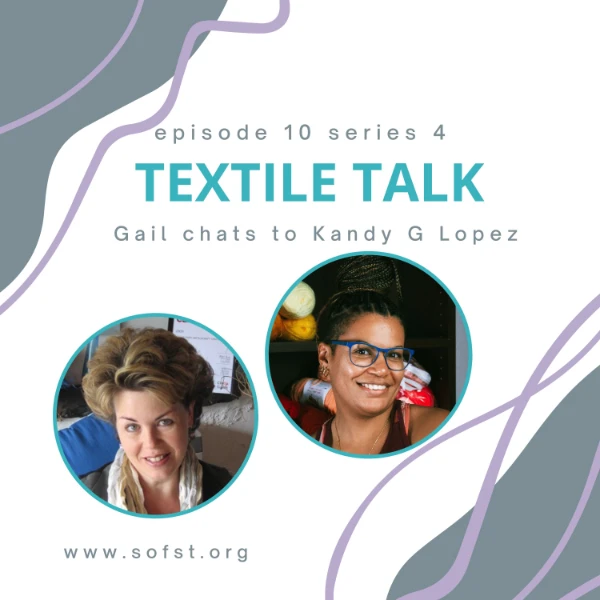
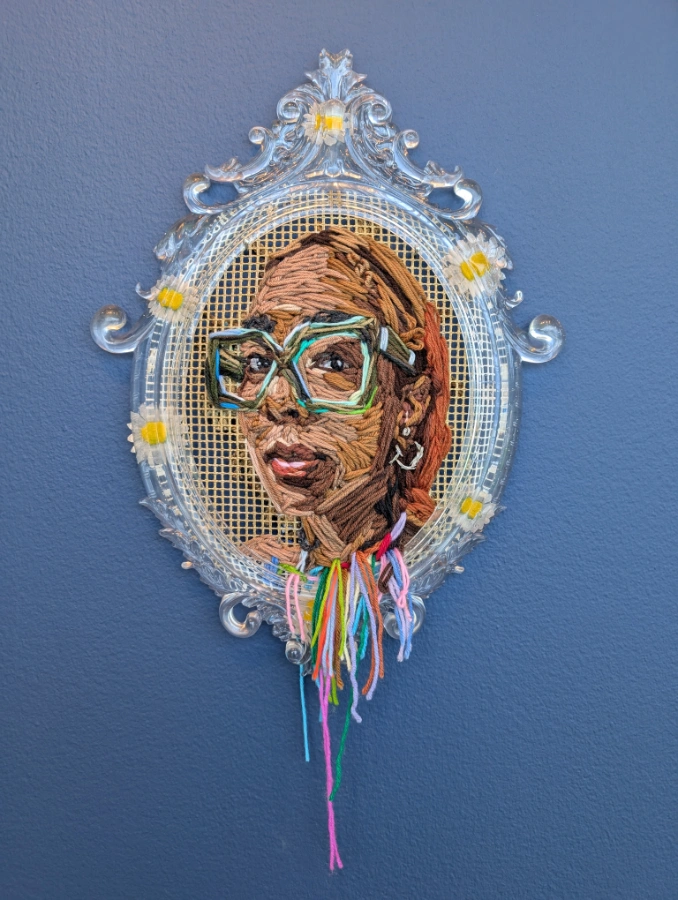
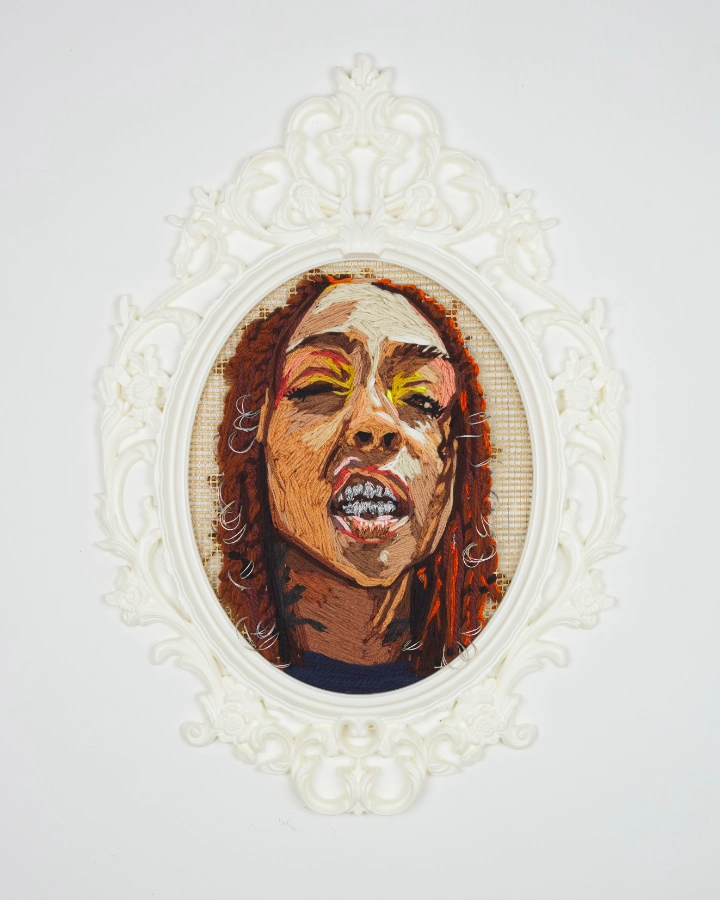
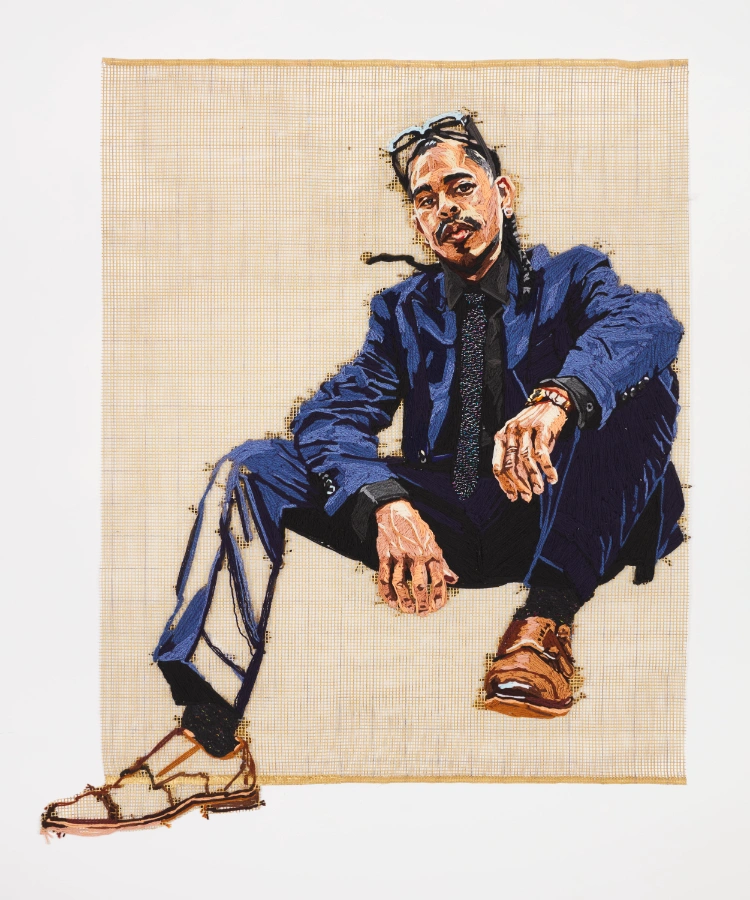
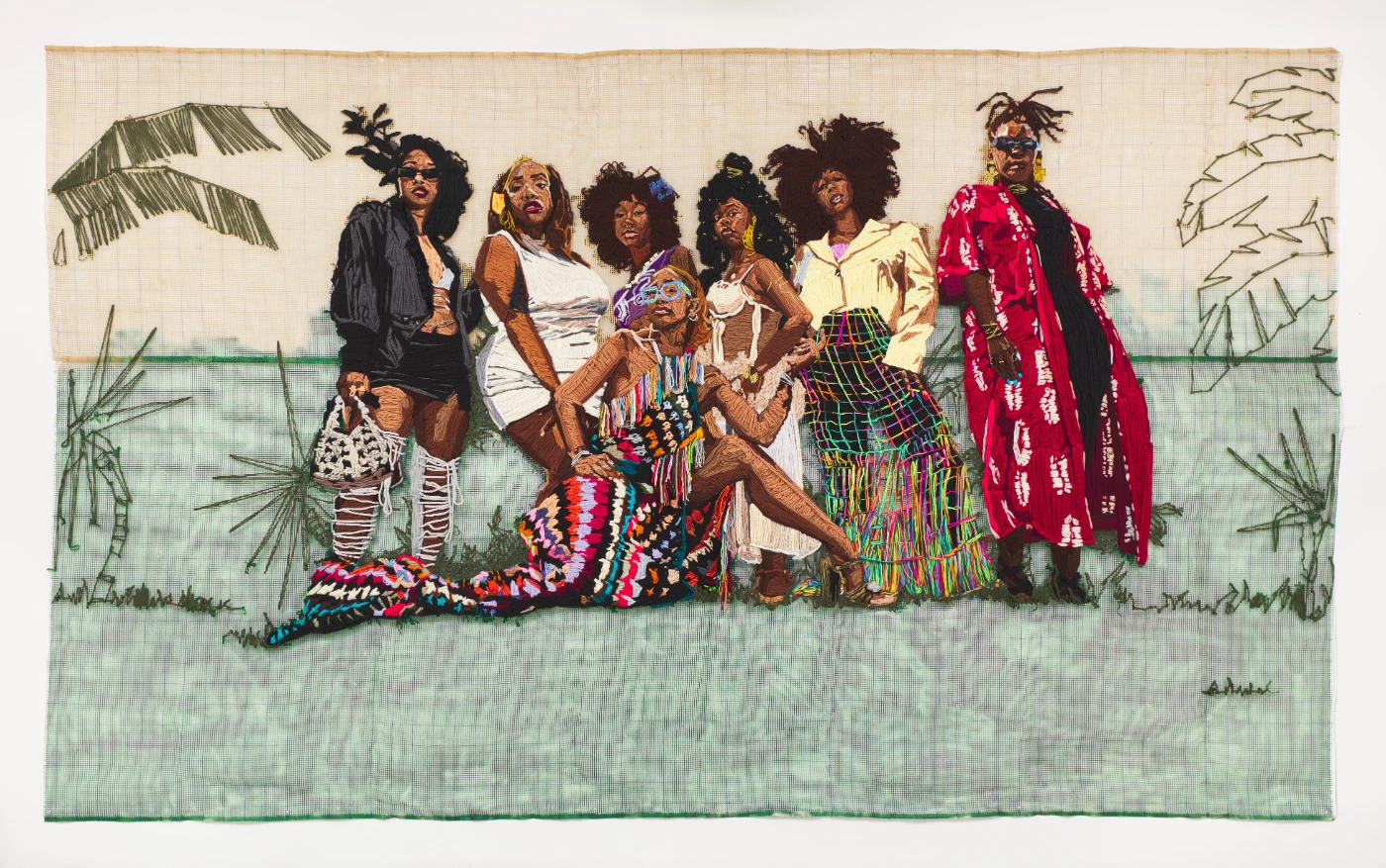
In this edition of Textile Talk, we are joined by textile artist and educator Kandy G Lopez, whose monumental stitched portraits are as emotionally charged as they are physically commanding. Born in New Jersey and raised in South Florida by Dominican parents, Kandy’s work is shaped by layered identities, lived experience and a deep sensitivity to how people are seen, or overlooked, in the world.
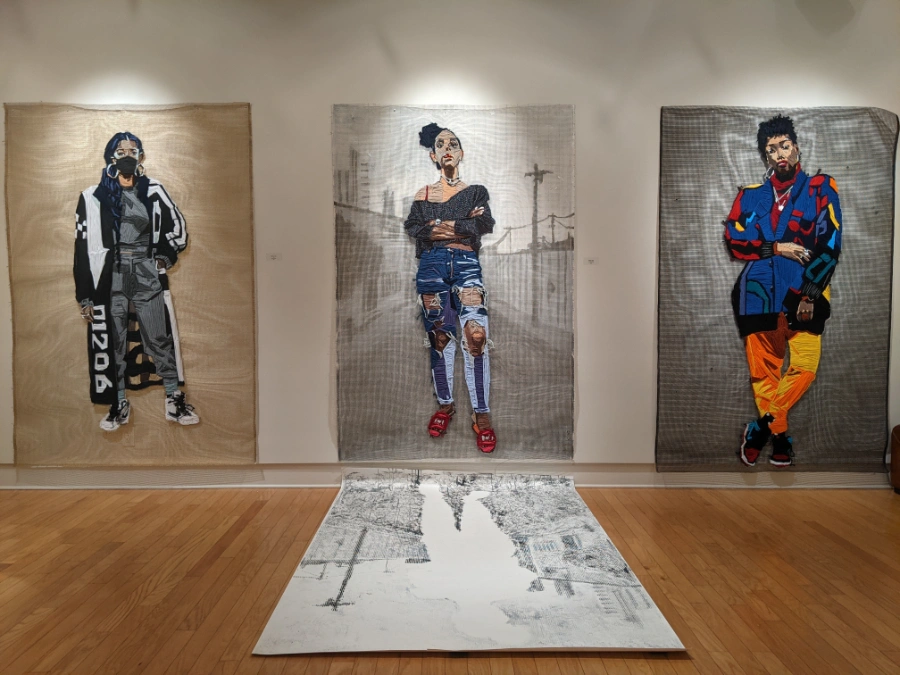
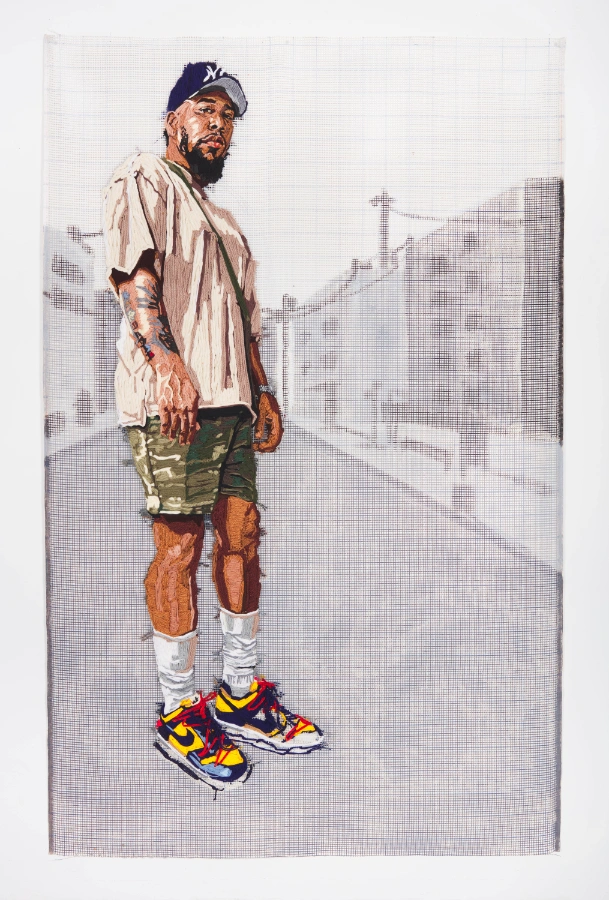
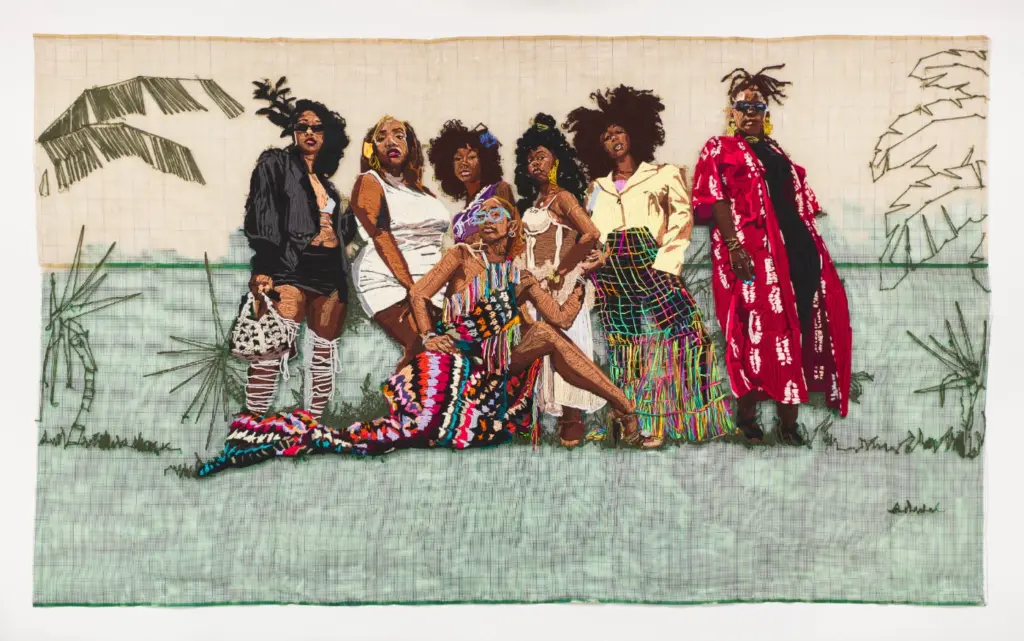
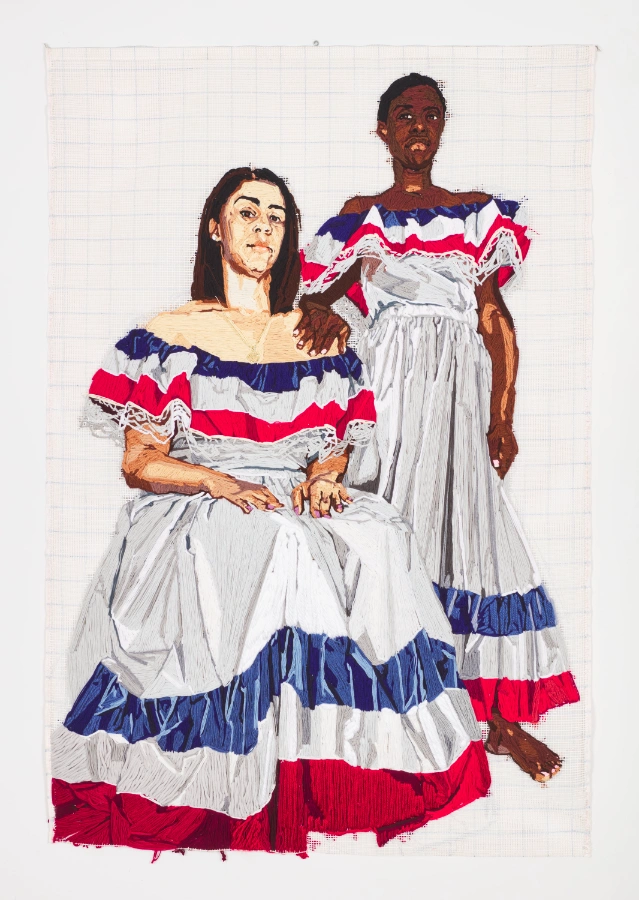
Trained initially as a painter and later drawn into fibre through experimentation rather than intention, Kandy approaches stitch with the eye of a painter and the instincts of a problem-solver. Her portraits, often several metres tall, are built slowly through yarn, labour and decision-making. They are direct, unapologetic and quietly radical. These are not passive figures. They meet your gaze. They take up space.
In this conversation, Kandy speaks openly about learning through discomfort, resisting repetition, teaching as a form of shared inquiry, and why materials are never neutral. It is a generous, thoughtful episode that moves easily between the studio, the classroom and the street, and one that will resonate with anyone interested in making work that feels both rigorous and deeply human.
Listen to the episode on your favourite podcast platform or click the link below to listen now.
Scale is not a stylistic choice for Kandy, it is a statement. Her figures often stand eight or even fourteen feet tall, elevated so the viewer must physically look up. In the episode, she talks about how this decision is rooted in art history, power structures and lived experience. Who gets depicted at scale, who is traditionally monumentalised, and who is not.
These portraits are not designed to be comfortable. They are meant to occupy space fully, to dominate a room, to be unavoidable. Kandy shares how this sense of physical presence is inseparable from her interest in visibility and representation, particularly for people who are so often rendered small, peripheral or invisible.
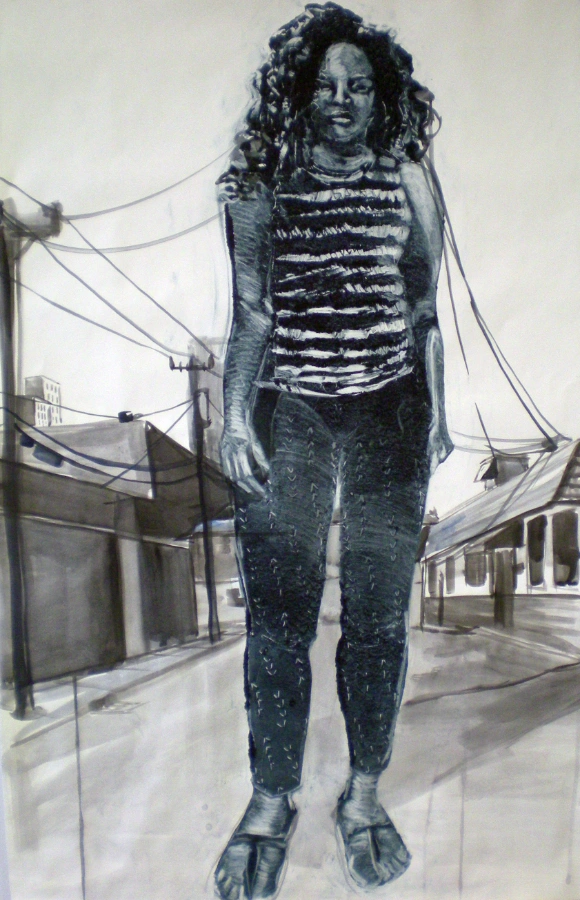
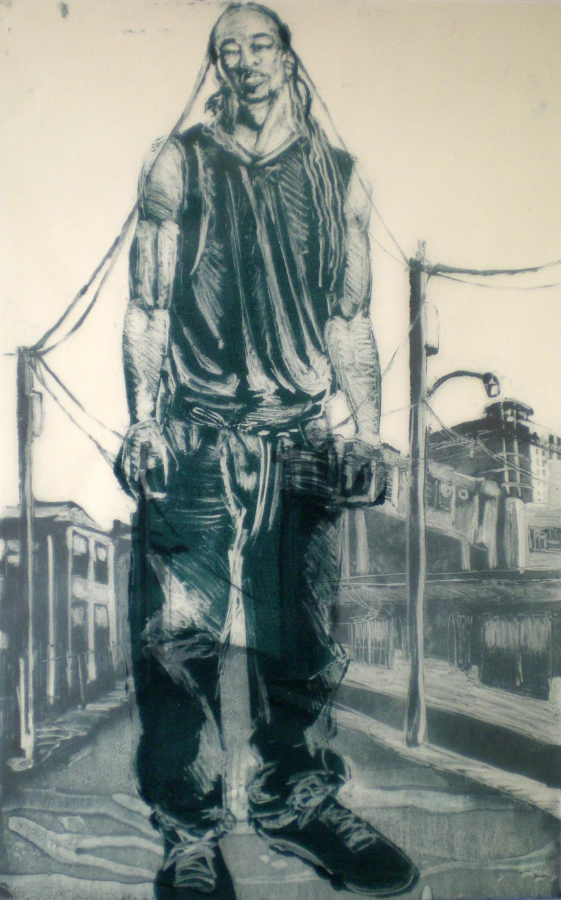
Kandy never set out to become a fibre artist. In fact, she is very clear that she follows boredom just as much as curiosity. When a material starts to feel familiar, she moves on. Paint led to printmaking. Printmaking led to collage. Collage led to thread falling onto a surface by accident.
What follows is a refreshingly honest account of how fibre entered her practice not through reverence for tradition, but through experimentation and necessity. She speaks about yarn as a constraint, about colour limitations, about the frustration of trying to depict skin tones with inadequate materials. It is precisely these limitations that keep her engaged.
There is something powerful here for any maker who feels pressure to specialise or perfect. Kandy makes it clear that learning, not mastery, is the point.
One of the most compelling parts of this conversation is how Kandy talks about choosing her subjects. These are not anonymous faces. They are people she knows, people she loves, or people whose energy stops her in her tracks on the street.
She describes the nerves of approaching strangers, the importance of showing her work upfront, paying her sitters, and allowing them agency in the process. This is not about taking an image and disappearing. Kandy stays in touch with her subjects, shares the work with them, tags them, builds relationships. The portrait becomes a site of connection rather than consumption.
It is a quietly radical approach in a world where images are so often taken without permission or context.
Unlike much textile work that is carefully finished, framed and tidied away, Kandy leaves the back of her pieces exposed. Threads hang loose. Knots are visible. The reverse of the work tells a different story.
She speaks about this as both an aesthetic and political choice. The front may offer beauty and confidence, but the back reveals labour, violence, time and complexity. It speaks to histories of women’s work, craft, invisibility and effort. It also resists the idea that art should be neat, resolved or polite.
For anyone interested in stitch as a language rather than a decoration, this part of the conversation is particularly rich.
Kandy is also an Associate Professor, and she talks candidly about teaching as an extension of her practice rather than a separate identity. The classroom, like the studio, is a space for problem-solving, experimentation and failure.
She reflects on boundaries, on the physical and mental load of teaching, on sabbaticals and studio days, and on the realities of maintaining a creative practice alongside motherhood. There is no romanticising here, just honesty. Making is not always calm or gentle. Sometimes it is obsessive. Sometimes it is necessary.
This section will resonate deeply with artists navigating multiple roles and trying to give themselves permission to keep making.
Towards the end of the episode, Kandy speaks about what she hopes people feel when they encounter her work. The word she returns to is warmth.
Having grown up rarely seeing herself reflected in museum spaces, she wants her exhibitions to feel welcoming, inhabited and human. Not sterile. Not exclusive. Not coded for only a few. Her figures do not just take up space, they create it.
It is a powerful reminder that textile work, at its best, is not just about technique or aesthetics. It is about who is invited in, and how it feels to stand in the presence of something made with intention, care and courage.
Listen now to the full episode and don’t forget to follow Kandy G Lopez on Instagram or visit her website.
Joan Harrison Bursary
Apply for a bursary to study one of our skill Stage 2 accredited courses for FREE!
Textile Talk
For unmissable interviews with leading textile artists.
Study With Us
Begin your stitch journey and unlock your full potential.
Distance Learning
Interested in studying with us? Register your interest for a course brochure!
In this episode of Textile Talk, we are joined by...
Read More >>Textiles have always been a powerful form of artistic expression....
Read More >>There is something quietly compelling about embroidery that slows you...
Read More >>This article was originally published in 2022 and updated in...
Read More >>Be Inspired! Get beautiful and exclusive interviews with leading textile artists straight into your inbox.